South Africa: Overvalued or Underhyped?

When Anglo American announced its merger with Teck, it confirmed what many in Johannesburg had long suspected: South Africa’s gravitational pull in global mining is weakening. The deal will relocate Anglo’s headquarters to Canada, shift its strategic focus to copper, and further loosen its ties to the country where it was founded.
Veteran South African miner Bernard Swanepoel reflected on the shift, noting that Anglo has transitioned from a South African-based company to one that is diversifying away. Yet, he argued, South Africa is not necessarily worse off. The spin-out of Valterra, a platinum group metals producer, is a win for the country, allowing it to make independent capital decisions rather than waiting for approval from London.
Swanepoel’s pragmatism captures the mood of a sector suspended between immense geological promise and waning investor confidence. Mark Cutifani, former Anglo CEO and a long-time advocate for South African mining, was unequivocal in his assessment: the sector is underrated. He emphasized the need for clear rules and a government that actively encourages innovation and investment. While acknowledging the challenges, Cutifani maintained that South Africa still holds great potential—realizing it, however, requires deliberate and strategic action.

To ask whether South Africa is overhyped or undervalued is to admit that it is both. It is overhyped in the sense that its constraints—bureaucracy, infrastructure, and policy volatility—are finally priced in. Yet it remains undervalued because its mineral wealth is among the most significant on the planet.
South Africa’s ore body is formidable. According to the Department of Mineral Resources and the US Geological Survey, its reserves are worth over US$2.5 trillion. The country holds 88% of the world’s platinum-group metals, 80% of manganese, 72% of chromite, and 13% of gold. For sixteen commodities, South Africa ranks in the global top ten by reserves. Yet exploration—the lifeblood of future mining—has nearly ground to a halt.
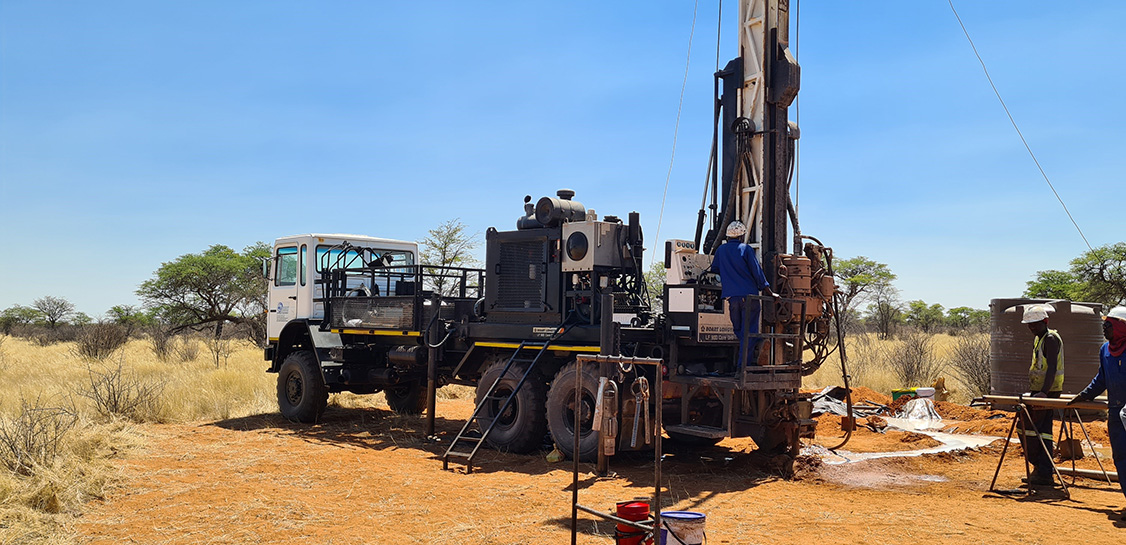
Swanepoel lamented that in the past 25 years, South Africa has done virtually no greenfield exploration. He attributed this to a lack of incentives and a generation of mine managers rather than explorers. Capital, he said, flows to places where it is welcomed, where returns are possible, and where incentives are compelling—none of which have been consistently present in South Africa.
The country’s licensing regime, shaped more by bureaucracy than competition, has turned discovery into a test of endurance. Mhlana Solomzi, a diplomat at the South African High Commission, told Mining Magazine that policy uncertainty has compounded the problem. Frequent regulatory changes have discouraged major players, pushing exploration capital northward to Zambia and Namibia.
In response, the government has begun to co-invest in discovery. The Junior Mining Exploration Fund, launched last year and expanded in September with R240 million (US$13 million) in grants, offers black-owned juniors between R10 million and R50 million (US$574,000–US$2 million) for early-stage work. Successful applicants can convert grants into equity or profit share if they discover viable ore bodies. Though modest, this initiative marks a philosophical shift: exploration is no longer seen merely as a compliance issue but as an economic imperative.
South Africa’s new Critical Minerals and Metals Strategy, announced in May, places exploration at the heart of industrial revival. It targets lithium, cobalt, manganese, and rare earths—minerals central to the global energy transition.
However, another challenge looms: the decline of human capital and technological infrastructure. South Africa’s mining R&D was once world-leading, particularly in deep-level gold extraction. But innovation has slowed, and gold production has plummeted from 605 tonnes per annum in 1994 to just 133 tonnes two decades later, even as global prices tripled.
A healthy mining ecosystem requires a diversity of players, but South Africa’s junior segment has been stifled by financial and regulatory barriers. Swanepoel noted that while majors control the big ore bodies, juniors have no space to operate.
The pipeline of new discoveries is empty. Sipho Ngwenya, a junior miner who relocated to Zimbabwe, said South Africa is unfriendly to small-scale mining. In Ghana and Zimbabwe, artisanal miners are legal and productive. In South Africa, compliance and land negotiations can cost half a million dollars before any digging begins. Corruption, he added, is another barrier, with officials often asking, “What’s in it for me?”
This absence of a functioning junior market partly explains why South Africa sees few new discoveries despite its geological richness. Exploration capital prefers jurisdictions with lower entry costs and clearer tenure. It also helps explain the rise of illegal mining, as small operators pushed out of the formal system re-enter it informally.
Valterra offers a partial counterexample. As the world’s lowest-cost, most profitable PGM producer, its independence from Anglo American demonstrates that locally run, focused miners can thrive. Swanepoel sees Valterra’s success as proof that South African mining can work—if given the right conditions.
Cutifani, however, views Valterra’s success through a different lens. As a shareholder, he’s pleased with the 32% increase in share price since Anglo’s divestment. Yet he still believes in the long-term value of major diversified companies, suggesting that Valterra’s success doesn’t negate the broader challenges.
The phrase “difficult jurisdiction” has become synonymous with South Africa.
Cutifani believes this reputation is overstated, arguing that the world doesn’t see the reforms underway. But tangible issues like corruption, energy outages, and logistical failures remain. Solomzi pointed out that intermittent power supply and Transnet’s inefficiencies raise operational costs and erode investor trust.
Mining is capital-intensive and infrastructure-dependent. Years of load-shedding, rail congestion, and port delays have turned inefficiencies into unpriced risks. Investors who once tolerated these challenges now see them as deal-breakers.
Yet perception matters. Global capital is impatient and comparative. If the government can fix logistics and power, sentiment will shift faster than geology. The opening of rail corridors to private operators and reforms at Eskom are steps in the right direction.
The real question is whether these reforms will arrive in time to reprice South Africa’s risk. As the world reorganizes its mineral supply chains around criticality, South Africa’s new strategy aims to position the country within this realignment—linking mining, beneficiation, and trade under the African Continental Free Trade Area.
South Africa still ranks fifth globally for mining’s contribution to GDP and remains among the top three producers of PGMs, manganese, and ferrochrome. But without intervention, its role as Africa’s mining epicenter could shift northward.
In the end, South Africa is geologically undervalued and politically overhyped. If reforms can unlock exploration, empower juniors, and repair infrastructure, capital will return. If not, the country risks becoming a museum of mining—rich in history, poor in discovery.
As Swanepoel put it, “After 130 years of mining, South Africa has a much deeper and longer history than most other jurisdictions. But the hype is sort of remembering the past.”
Share this content: