Africa G20 Hosts Bid to Become Mineral Powerhouse
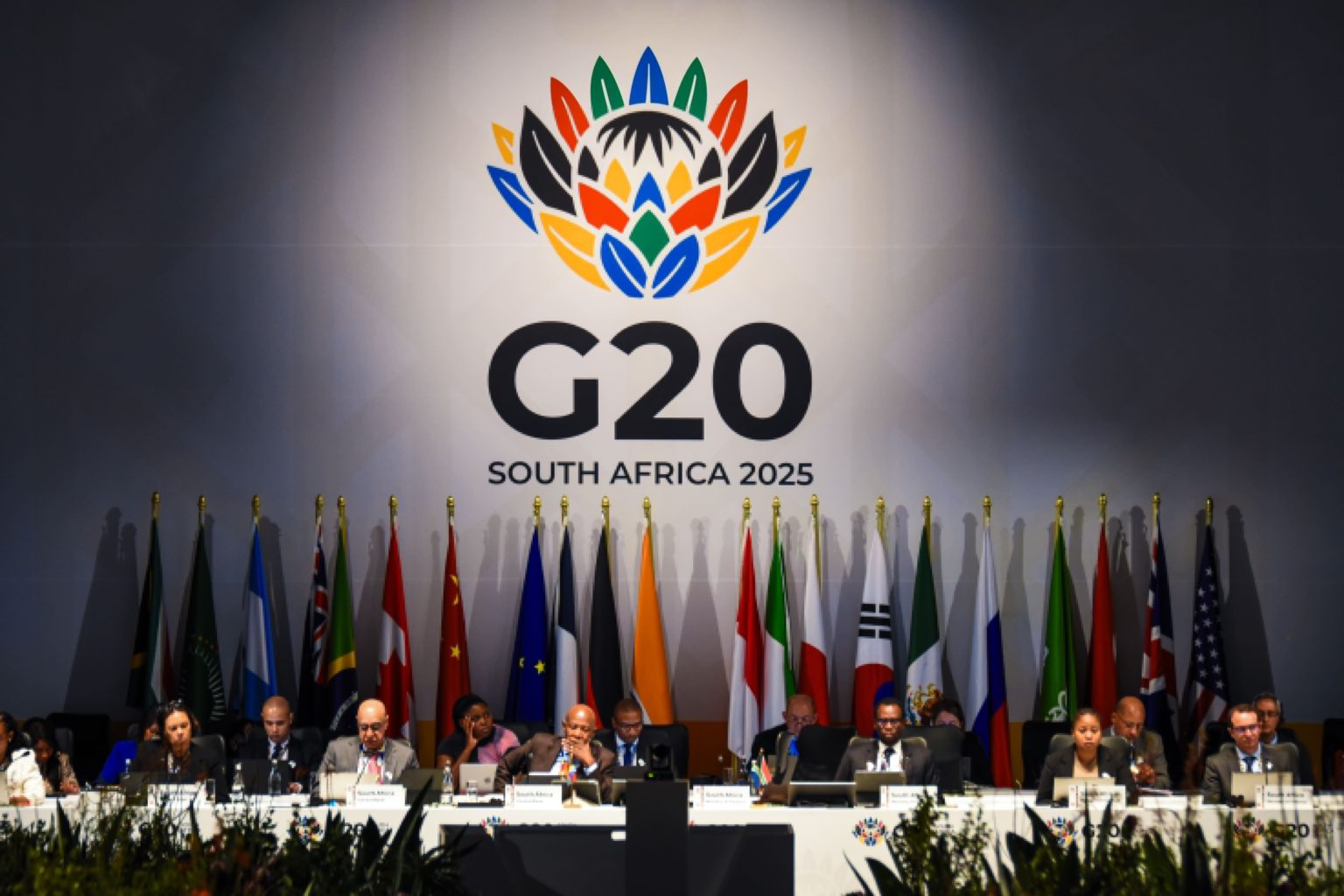
G20 South Africa Finance Ministers and Central Bank Governors meeting held earlier this year. Credit: UNDP
Johannesburg – As global leaders arrive in South Africa for the first G20 summit ever held on African soil, the streets of Johannesburg have filled with climate protesters demanding that ordinary citizens gain greater control over the continent’s vast reserves of critical minerals. Their call echoes a growing consensus among African leaders and mineral experts: the summit represents a historic opportunity to ensure that resources such as lithium and cobalt deliver real benefits to the countries where they are found.
Lazola Kati, campaign manager for Fossil Ad Ban, an initiative of Fossil Free South Africa, stressed the importance of community inclusion in the G20 process. “It’s important to have a G20 that includes communities so proper conversations can be had about the development of Africa,” she said, adding that Africa’s mineral wealth should translate into job creation, skills transfer, and the development of a homegrown energy sector.

Africa holds roughly 30 percent of the world’s critical minerals essential for the transition to clean energy technologies and the digital infrastructure underpinning artificial intelligence. Yet the continent has long suffered from the so-called “resource curse,” where abundant natural wealth has often led to conflict, corruption, and slower economic growth.
The G20, which brings together leaders representing 80 percent of the global economy, is being hosted in Africa for the first time. With the African Union now a permanent member since 2023, policy experts believe the continent has greater leverage to demand investment in local mineral processing and manufacturing.
Maxwell Gomera, UNDP’s resident representative in South Africa, likened the current situation to exporting flour instead of bread, urging African nations to capture more value from their resources. “The world is in a new scramble for Africa’s minerals,” he warned. “We must make sure the new green order doesn’t become the old colonial order.”
Deprose Muchena of the Open Society Foundations emphasized that Africa must negotiate as a bloc to maximize its bargaining power. He pointed to the Africa Green Minerals Strategy, endorsed by the African Union in 2025, which promotes responsible mining, skills development, and investment in beneficiation. Several countries, including the Democratic Republic of Congo, Nigeria, and Namibia, have already restricted or banned raw mineral exports to encourage local processing. Zambia and the DRC are establishing special economic zones to manufacture batteries using domestic resources.
Despite these efforts, Africa currently captures less than five percent of the value generated from energy technologies, according to the International Energy Agency. South African President Cyril Ramaphosa underscored the urgency of moving up the value chain, signing what he described as an “unprecedented” minerals deal with the European Union during the summit.
Still, challenges remain. Neither US President Donald Trump nor Chinese President Xi Jinping—leaders of countries with major stakes in global minerals—are attending the summit. Some activists see their absence as an opportunity for Africa to define its own development agenda before global powers re-engage.
Muchena cautioned that mining is only one element of Africa’s development, noting that resources are finite and demand may eventually decline as new technologies emerge. He estimated that Africa exported $250 billion worth of critical minerals between 2023 and 2024, with revenues projected to reach $1.6 trillion over the next 25 years. “If these are the numbers, they should be finding their way back into the communities to transform them, to provide energy directly,” he said, pointing to the 600 million Africans who still lack reliable electricity.
At the protests, Congolese bishop and activist Raphael Bahebwa delivered a stark reminder of the human cost of mining abuses in the DRC, which supplies around 70 percent of the world’s cobalt. “Everyone carrying a cellphone is carrying the blood of our people,” he declared. “When mining companies come with their contracts, the people must be honoured on their land so that they can benefit as well.”
The Johannesburg summit, with critical minerals as one of its central themes, highlights both the promise and the peril of Africa’s resource wealth. Whether the continent can turn its mineral abundance into sustainable industrialization remains the defining question of this new era.
Share this content: