African Development Bank Program Offers Pathways Out of Child Labour in Cobalt Supply Chain
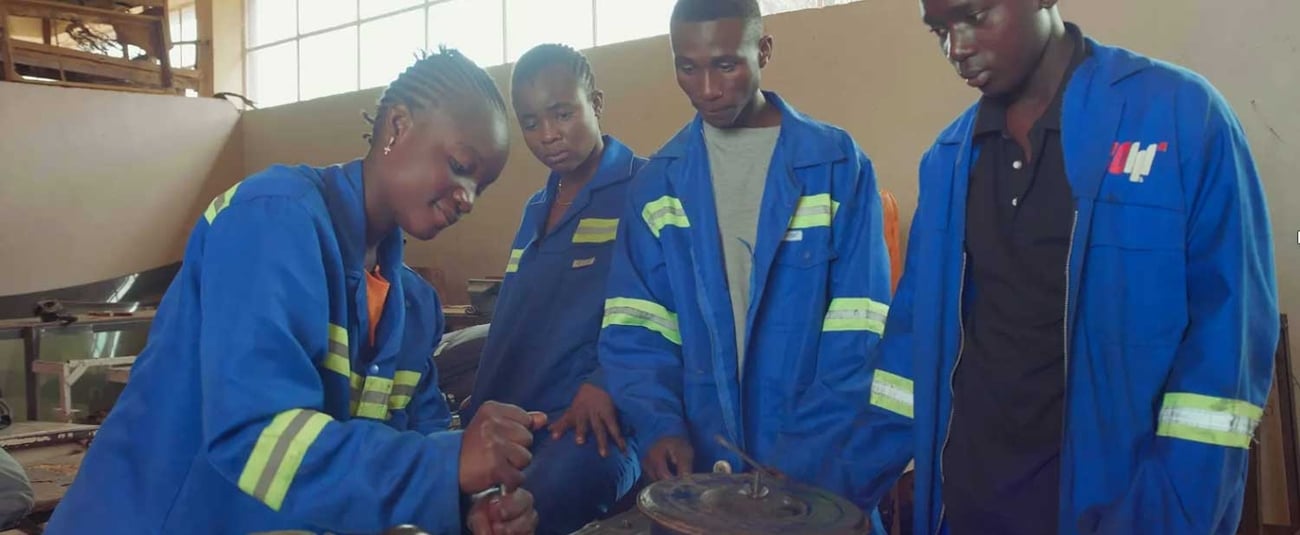
Former child mine worker Divine Komba is now a teenager learning to become a mechanic through the Bank-financed school and vocational skills program.
As global demand surges for battery-powered consumer electronics and electric mobility solutions, cobalt has become one of the world’s most strategically important minerals. Yet in parts of Africa, particularly the Democratic Republic of Congo (DRC), its extraction has long been associated with hazardous child labour driven by poverty and limited economic alternatives.
A Bank-financed initiative led by the African Development Bank (AfDB) is now working to break that cycle by providing education, vocational training and income-generating opportunities to families affected by artisanal cobalt mining.

The Alternative Well-Being Support Project for Children and Youth Involved in the Cobalt Supply Chain is helping thousands of vulnerable children transition out of mining and into schools and skills-based training programmes. The initiative forms part of the AfDB’s broader continent-wide push to strengthen human capital, with a particular focus on women and youth as drivers of Africa’s long-term economic transformation.
One beneficiary is Divine Komba, a former child mine worker who spent years in small-scale cobalt mines in the DRC under dangerous conditions, earning little more than two dollars a day. Today, she is enrolled in automotive mechanics training at the Bank-supported Ruashi Social Promotion Centre in Haut-Katanga Province.
“We worked in the mines to survive,” Komba said. “Mining made us sick. Now I earn a living fixing cars, and I encourage other girls to study and join the programme.”
The project operates in Lualaba and Haut-Katanga provinces, which together host more than 65 percent of global cobalt reserves. Cobalt is a critical input for lithium-ion batteries used in electric vehicles, mobile devices, medical imaging equipment and renewable energy technologies, linking local mining communities directly to global industrial and consumer value chains.
To date, the programme has identified more than 16,800 children at risk of child labour in cobalt mining and successfully reintegrated 13,587 children into formal education systems. The initiative aligns with the DRC government’s national strategy to eliminate child labour in copper and cobalt production and is co-supported by the German Corporation for International Cooperation (GIZ).
Thirteen-year-old Beni Ciel Yumba Musoya, who once worked collecting minerals at the Kasulo mine in Lualaba Province, is now back in school and aspires to become a doctor. Her family says the programme’s impact extends beyond individual children to entire communities.
“The children are back in school and dreaming again,” said Jocelyne Kazadi, a family member. “This support has transformed our lives.”
Agriculture as an economic alternative
Recognising that child labour is rooted in household poverty, the AfDB-supported programme also targets parents and young adults with sustainable income alternatives, particularly in agriculture. More than 10,500 young parents, over half of them women, have transitioned into agribusiness activities such as poultry farming, livestock rearing and small-scale farming.
Project partners have established 77 percent of a targeted 1,250 agricultural cooperatives, created two youth agribusiness centres, and installed shared-use agricultural machinery, livestock facilities and fish farms. Komba’s mother, for example, now participates in a poultry farming cooperative after receiving training and start-up support.
“The project shows that eliminating child labour also requires economic transformation at the community level, with a strong focus on empowering girls and women,” said Juliette Ayuknow Egbe, Gender Officer at the African Development Bank. “Gender equality is a catalyst for lasting change.”
Given the remote nature of many mining communities, the programme also supports the rehabilitation and construction of education, health, water and sanitation infrastructure, with 40 facilities targeted across the two provinces.
When fully implemented, the initiative is expected to generate 11,250 direct jobs, create thousands more indirectly, increase the share of locally produced staple foods from 10 percent to 50 percent, and directly benefit 1.4 million people, with a broader reach of more than 5.6 million beneficiaries.
“Providing economic options to parents is providing a future for their children,” said Alice Mirimo Kabetsi, the project’s coordinator. “Agriculture, particularly fast-return activities like poultry farming, offers families a practical and sustainable alternative to mining.”
Share this content: