Governments Revisit the Longstanding Question of Value Creation in African Mining

For decades, African policymakers have returned to the same unresolved question: how can the continent extract greater economic value from its mineral wealth rather than exporting raw materials and importing finished goods?
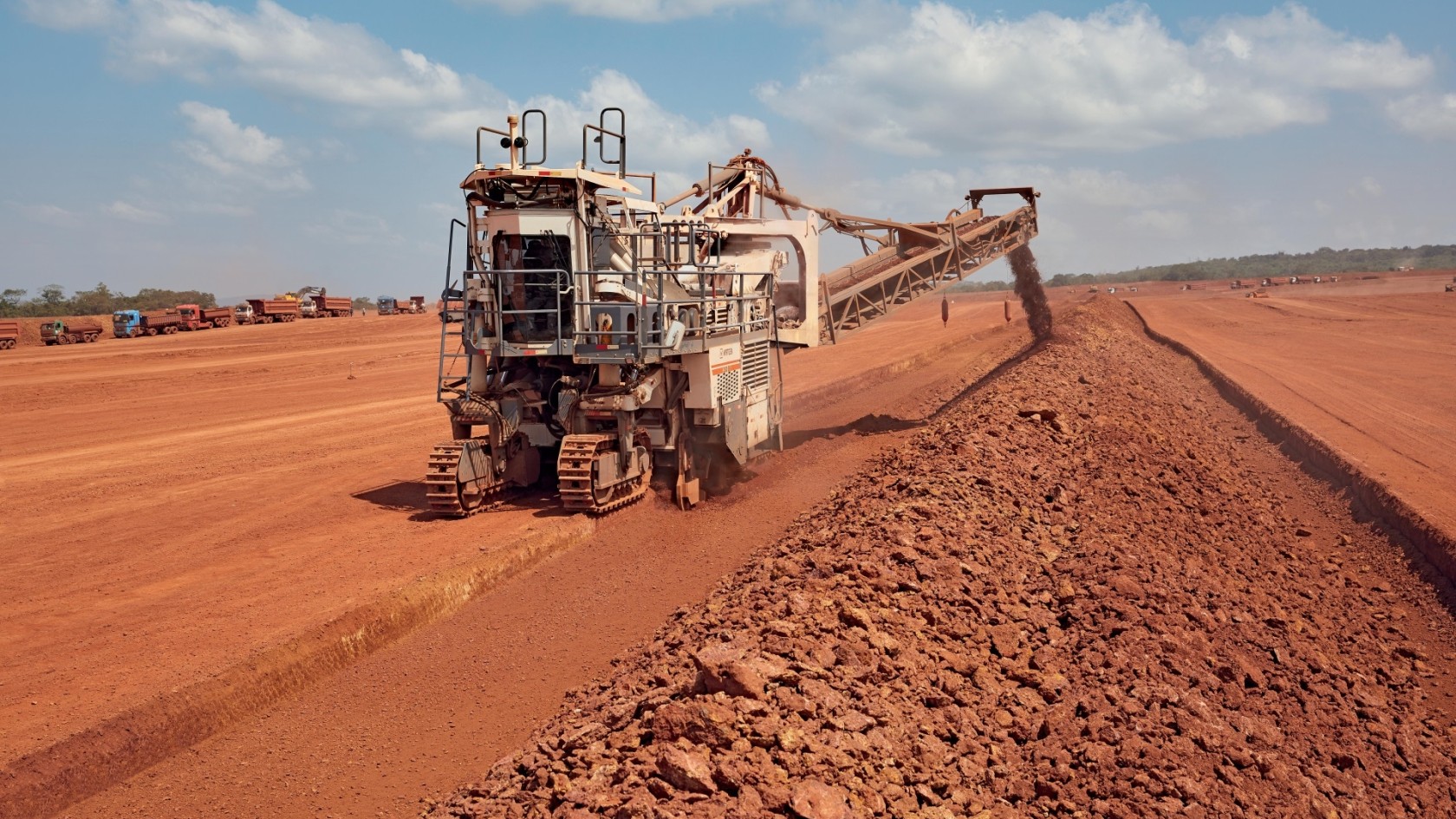
The structure of Africa’s mining sector has changed little since the colonial era. Minerals are typically extracted inland, transported via pit-to-port rail corridors, and shipped overseas for processing and manufacturing. The highest-value stages of the supply chain — refining, component manufacturing and industrial end-use — largely occur beyond Africa’s borders.
The result is a familiar imbalance. While Africa supplies the raw inputs that underpin global industrialisation, it captures only a fraction of the economic value generated downstream.

A renewed opportunity driven by critical minerals
The accelerating global demand for critical minerals linked to the energy transition and advanced technologies is once again bringing this issue to the fore. Africa holds an estimated 30 percent of global critical mineral reserves, including significant deposits of copper, cobalt, lithium, bauxite, iron ore and rare earth elements. Yet the continent captures around 10 percent of total value generated from these resources.
African leaders increasingly see this imbalance as unsustainable — and potentially reversible. By leveraging access to minerals that are essential to electric vehicles, renewable energy systems and digital infrastructure, governments hope to attract greater investment into local processing and manufacturing.
South African President Cyril Ramaphosa has placed mineral value addition firmly on the country’s G20 agenda. Speaking in Davos earlier this year, he committed to championing critical minerals through “green industrialisation” as a pathway to growth across Africa and the broader Global South.
Nigeria has also taken a more assertive stance. The government announced in 2024 that new mining licences would be tied to commitments for local processing, particularly as the country seeks to develop its emerging lithium sector while avoiding past extractive mistakes.
Tempering ambition with realism
Despite broad agreement on the logic of mineral beneficiation, experts caution that expectations must be grounded in economic realities.
Ekpen Omonbude, senior policy adviser at the Intergovernmental Forum on Mining, Minerals, Metals and Sustainable Development, argues that the debate should move beyond aspiration. “The question isn’t whether value can be added,” he says. “It’s where along the value chain a country has a competitive advantage — and how that advantage can be maximised.”
Several countries already offer targeted incentives. South Africa applies lower royalty rates to refined minerals, while Zambia provides capital allowances for processing equipment. These measures, however, often result in incremental gains rather than structural transformation.
More ambitious initiatives are emerging. Zambia and the Democratic Republic of Congo (DRC) are collaborating to build a regional battery materials value chain, leveraging their copper and cobalt endowments to support downstream manufacturing.
The challenge is scale — and competition. China has spent more than three decades securing dominance across global mineral processing value chains. An estimated 90 percent of cobalt mined in the DRC is refined in China, making displacement of this entrenched position exceptionally difficult.
Signs of progress on the ground
While the path is complex, Africa’s value-addition agenda is not standing still. Investment is beginning to flow into projects that move beyond extraction.
In Namibia, German investors inaugurated the HyIron Oshivela Plant, one of the world’s first facilities to produce “green iron” using hydrogen-powered processing. President Netumbo Nandi-Ndaitwah said the project could generate six to eight times more economic value than exporting raw iron ore, signalling the emergence of a domestic industrial base.
In Zimbabwe, Chinese firm Huayou plans to begin producing lithium sulphate in early 2026 at a $400 million facility. While the government has pushed for mandatory local processing, it has also shown flexibility in response to market downturns that threatened mine closures.
South Africa has also recorded a milestone, with ReElement Technologies announcing the continent’s first rare earths refining facility earlier this year.
Financing the midstream
According to Franklin Edochie, head of metals and mining at the Africa Finance Corporation (AFC), financing institutions are increasingly backing projects that incorporate processing facilities alongside mining operations.
AFC investments include a planned manganese smelter by Nouvelle Gabon Mining, a chemical refinery at Angola’s Longonjo rare earth project, and expansion financing for the Kamoa-Kakula copper complex in the DRC, which hosts Africa’s largest copper smelter.
Mining companies themselves often prefer early-stage processing at mine sites, which reduces transport costs and improves margins. “Most feasibility studies now include planning for midstream processing,” Edochie notes.
However, capital intensity remains a limiting factor. New mines can cost billions of dollars before processing infrastructure is considered, and financiers typically want to see operational performance before funding more advanced stages of beneficiation.
Lessons from Indonesia — and their limits
Indonesia is frequently cited as a model for mineral industrialisation. Between 2009 and 2020, the government progressively banned nickel ore exports, forcing miners to process domestically. The strategy worked largely because Indonesia already had sufficient industrial capacity and market leverage.
Attempts to replicate this approach elsewhere have been mixed. The DRC, which produces roughly 70 percent of global cobalt, has imposed export bans several times, most recently replacing an eight-month ban with a quota system. The results have been less transformative.
“Export bans can work, but only if the fundamentals are already in place,” says Silas Olan’g of the Natural Resource Governance Institute. Without reliable power, transport and industrial capacity, bans risk distorting markets rather than building industries.
Infrastructure as the real constraint
Across policy circles, there is broad agreement that infrastructure is the decisive factor. Reliable electricity, water supply and logistics networks are prerequisites for smelting and refining.
While large-scale investments are still limited, governments are increasingly focused on creating enabling conditions. “The right questions are now being asked,” says Omonbude, even if large capital flows have yet to materialise.
Africa’s renewable energy potential offers a strategic advantage. According to Climate Action Platform Africa, providing round-the-clock renewable power costs three times more in Germany than in Kenya. This cost differential is already shaping investment decisions in green industrial projects.
Infrastructure platform Africa50 recently raised $118 million for its Alliance for Green Infrastructure in Africa Project Development Fund, with a target of $400 million to catalyse up to $10 billion in green infrastructure investments.
A long road, but a clearer direction
Building vertically integrated mineral industries will take time — possibly decades. There are no shortcuts to developing the industrial ecosystems required for sustained value creation.
Yet momentum is building. From green iron and battery materials to rare earths refining, Africa is beginning to move beyond extraction-only models. While the transformation will be gradual, the continent appears, at last, to be advancing in the right direction.
Share this content: