Hichilema Urges Africa to Lead IMF Programmes as Mining Takes Centre Stage at Indaba 2026

Zambian President Hakainde Hichilema has called on African countries to fundamentally rethink how they engage with the International Monetary Fund (IMF), urging governments to take ownership of their economic recovery strategies and position the IMF as a supporting partner rather than the lead architect of reform.
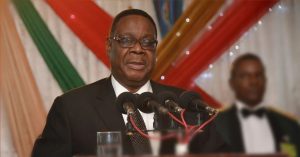
Delivering the keynote address at the opening of the Investing in African Mining Indaba 2026 in Cape Town, President Hichilema said Africa must design home-grown, growth-oriented recovery programmes that reflect the continent’s development priorities, particularly industrialisation and resource-based value creation.
“We must construct our own recovery programmes and ask the IMF to support us. Those programmes should be about growth, not just fiscal consolidation and macroeconomic stability,” President Hichilema told delegates.
The Mining Indaba, the continent’s largest mining investment forum, brings together governments, mining majors, financiers and development institutions at a time when Africa’s mineral endowment is increasingly central to global supply chains for energy transition and industrial manufacturing.

Mining as a Catalyst for Africa’s Economic Renewal
President Hichilema said mining remains one of Africa’s most powerful levers for economic renewal, job creation and global competitiveness, particularly if managed transparently and strategically.
He noted that Zambia’s New Dawn Administration has deliberately placed mining sector revitalisation at the heart of its economic recovery agenda, focusing on regulatory certainty, institutional reform, transparency and technology adoption to rebuild investor confidence and unlock long-term growth.
“Mining holds the key to revitalising Africa and ensuring the continent takes its rightful place at the forefront of the global economy,” he said.
Hichilema described the Mining Indaba as a symbol of Africa’s aspiration for transformative, mutually beneficial partnerships, arguing that no single country can achieve economic transformation in isolation.
“Zambia agrees that we are stronger together. We all have capabilities, endowments, skills and experience, but no single one of us has enough to deliver the total package for our economies,” he said.
Zambia’s Mining Reforms and Investment Momentum
Highlighting Zambia’s progress, President Hichilema said his government inherited a mining sector facing declining output, policy uncertainty and investor withdrawal. Since then, reforms have helped reverse the trend, unlocking over US$12 billion in new mining investment.
He cited major operations including Kansanshi, Lumwana, Mopani and Konkola Copper Mines (KCM) as examples of assets that are now stabilised and expanding.
According to the President, copper production increased by 12 percent in 2024 and a further 8 percent in 2025, reflecting renewed operational momentum. Zambia has set an ambitious medium-term target of producing three million tonnes of copper annually within the next decade, positioning the country as a cornerstone supplier for the global energy transition.
To support this goal, the government is expanding geological surveys and opening new exploration areas, while simultaneously investing in infrastructure and regulatory institutions to support sustainable mining growth.
“New investors are entering Zambia. We are building the infrastructure and institutions to make it happen,” Hichilema said.
He emphasised that mining growth must translate into broad-based development, noting that increased production would deliver more jobs, higher government revenues and expanded opportunities for local suppliers and communities.
“For every Zambian, more mining means more jobs, more revenue for schools and clinics, and more opportunities for local businesses,” he said.
Africa’s Voice in Global Mining and Finance
President Hichilema stressed that Africa must demonstrate leadership and clarity to attract long-term partners and capital.
“We have to take leadership. If we do that, others will support our strategies. It is easy to support people with a clear vision, but we must get organised so we can be worthy partners in the global community,” he said.
His remarks echoed broader calls at the Indaba for African unity in negotiating mining, beneficiation and financing arrangements, particularly as demand for critical minerals accelerates.
Supporting this view, South Africa’s Minister of Mineral and Petroleum Resources Gwede Mantashe said Africa must act collectively when engaging the global mining industry.
- “Trade unionists understand that workers cannot negotiate alone. The same applies to Africa. We must negotiate mining and beneficiation deals with the rest of the world as a single economy,” Mantashe said.
Redefining Africa–IMF Engagement
Hichilema’s comments come amid renewed debate across the continent about the structure and impact of IMF-supported programmes, many of which have historically prioritised fiscal tightening overgrowth and industrial expansion.
By calling for Africa-led IMF programmes, the Zambian leader aligned mining-driven growth with macroeconomic reform, arguing that natural resources, if properly governed, can underpin debt sustainability, industrialisation and social investment.
As African economies seek to balance fiscal discipline with development ambition, Hichilema’s message at Mining Indaba 2026 positions mining-led growth, regional cooperation and policy ownership as central pillars of the continent’s economic future.
Share this content: