Infrastructure: The Missing Link in Africa’s Mining Renaissance

As Africa enters a new era of mineral opportunity, infrastructure remains the continent’s most persistent bottleneck. Despite abundant resources and rising global demand for critical minerals, the continent’s ability to connect its countries, markets, and people is constrained by underdeveloped transport, energy, and digital networks. Without these connections, Africa’s mining sector cannot fully thrive.
A new report by the Africa Finance Corporation (AFC), State of Africa’s Infrastructure 2025: Mobilising Domestic Capital, offers a compelling roadmap for how the continent can finance its infrastructure needs from within. The report reveals that Africa holds over $4 trillion in institutional savings—including pension funds, insurance assets, sovereign wealth funds, and public development banks. Yet most of this capital remains locked in low-risk, short-term instruments, leaving transformative infrastructure projects underfunded.
The infrastructure gap is stark. Africa’s road density averages just 2.76 km per 100 km², compared to 138 km per 100 km² in India. Nearly 90% of railways are publicly owned and suffer from limited investment capacity. Thirteen countries lack direct rail access to the sea, and only the SADC region has achieved meaningful integration. These deficits hinder the movement of minerals, equipment, and people—slowing industrialization and regional trade.

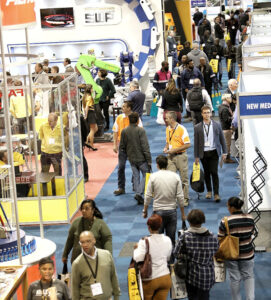
Recognizing this challenge, Investing in African Mining Indaba 2026 has placed infrastructure at the heart of its agenda. With the theme “Stronger Together: Progress Through Partnerships,” the event will convene governments, capital owners, and industry leaders to forge the connections—both physical and strategic—that Africa needs to unlock its mining potential.
“Infrastructure is the engine of transformation,” says Zeinab El-Sayed, Head of Government Partnerships for Mining Indaba. “African mining stakeholders are stronger together, but building integration requires roads, rail, communication, energy networks, and air links.” Laura Nicholson, Content and Communities Director, adds that infrastructure is one of the cornerstones of a thriving mining sector. “Reliable transport and energy networks are essential for new mining projects, and strategic investment can transform Africa from a raw material exporter into a dynamic centre for innovation and long-term growth.”
The AFC report also highlights that Africa’s infrastructure default rate is the lowest in the world, at just 1.9%, compared to 4.6% in Western Europe, 6.6% in North America, and 12.4% in Eastern Europe. This data challenges the perception that African infrastructure is too risky for institutional investors. Former Kenya central bank governor Patrick Njoroge notes that recovery rates for infrastructure debt often outperform corporate debt, making it a viable long-term investment.
To mobilize domestic capital, AFC calls for aggregation platforms that syndicate institutional investors, commercial banks, and sovereign funds. AFC President Samaila Zubairu emphasizes that the challenge is not the absence of capital, but fragmentation and risk aversion. “We need to build structures that unlock Africa’s wealth for its own development,” he says.
Mining Indaba 2026 will showcase how infrastructure investment can catalyze industrial growth, regional integration, and inclusive development. It is a call to action for African stakeholders to harness their financial strength and build the backbone of a new mining economy.
12, 2026, at the CTICC in Cape Town
Share this content: