Anglo CEO Reaffirms Africa’s Role in Mining Future Despite Shrinking Footprint

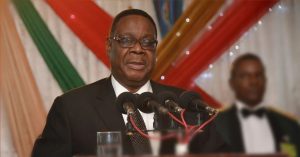
Duncan Wanblad, CEO of Anglo American. (Image courtesy of Anglo American |Flickr.)
Anglo American may be reducing its operational footprint in South Africa, but Chief Executive Officer Duncan Wanblad insists the continent remains central to the company’s long-term strategy. Speaking today at a mining conference in Johannesburg, Wanblad emphasized that Africa’s vast reserves of critical minerals make it indispensable to the global energy transition.
Over the past two years, Anglo American has undergone significant restructuring. The company has exited its coal and platinum operations in South Africa — the country where it was founded more than a century ago — and is in the process of selling its iconic diamond subsidiary, De Beers. These moves mark a decisive pivot toward copper, a metal increasingly vital for renewable energy infrastructure, electric vehicles, and global decarbonization efforts.

Currently, Anglo’s only major South African asset is Kumba Iron Ore, but Wanblad stressed that this does not signal a retreat from the continent. Instead, he described South Africa as a “gateway” to Africa’s under-explored mineral wealth. “I look at what the world needs in terms of minerals, I think Africa is the place to be,” he told delegates. “Hopefully, we’ll be as big as we were in Africa in a couple of years’ time.”
Africa is home to some of the world’s largest untapped deposits of copper, cobalt, lithium, and rare earth elements — all essential for solar panels, batteries, and electric vehicles. Wanblad’s comments reflect Anglo’s strategy to align itself with the clean energy transition while leveraging Africa’s geological potential.
he company’s repositioning comes after it successfully fended off a takeover bid from Australian rival BHP. In September, Anglo announced a landmark agreement to merge with Canada’s Teck Resources, creating one of the world’s largest copper producers. Analysts say the deal underscores Anglo’s determination to dominate the copper market, while still keeping a foothold in Africa’s broader mining landscape.
On the subject of De Beers, Wanblad struck an optimistic tone. After three years of depressed diamond prices, the market is showing signs of recovery. Anglo has already attracted interest from at least six potential investors, including Angola’s state diamond company Endiama, which confirmed a bid for a minority stake last month. “These are parties that know the industry, that know the assets, that love diamonds. And that’s all very positive,” Wanblad said.
For Anglo American, the message is clear: while its South African portfolio has narrowed, Africa remains a cornerstone of its growth ambitions. With global demand for critical minerals accelerating, the company is betting that the continent’s resources will secure its relevance in the decades ahead.
Share this content: