Broken Promises by Wealthy Nations Africa must finance its own energy addition then manage the transition

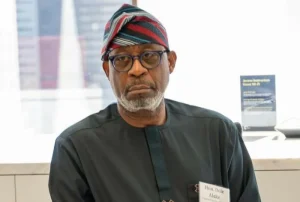
By NJ Ayuk, Executive Chairman, African Energy Chamber
The world’s climate diplomacy is splintering. While African leaders prepare to attend COP 30 in Belém, the United States has closed its office of climate diplomacy and signalled a renewed focus on expanding domestic energy production. That contrast matters: wealthy countries are financing their energy additions and prioritizing energy dominance rather than waiting for global climate funding to catch up.
A central pledge from COP15 in Copenhagen in 2009 acknowledged that low‑income countries could not shoulder the full cost of a global energy transition. The Copenhagen Accord set a path: developed countries would mobilize at least USD 30 billion annually for three years and scale up to USD 100 billion a year by 2020. That commitment created the reference point around which future climate finance negotiations would revolve.

But the pledge went unfulfilled. Developed countries repeatedly missed the USD 100 billion target. Even when reported totals rose—$83.3 billion in 2020 and $89.6 billion in 2021—distribution was skewed, with only a small fraction reaching low‑income countries and Africa receiving roughly a quarter of the total. Much of what has been labelled “climate finance” has come as loans, not grants, increasing debt burdens for countries already under fiscal pressure.
The UN’s response has been to call for even more money—now asking developed nations to double adaptation funding amid rising costs and more people at climate risk. Yet faith in that approach is rightly waning. Given past performance, it’s unrealistic for Africa to rely on wealthy nations to suddenly deliver the scale and type of finance needed.
Africa needs a different path: market‑based, self‑funded solutions that harness the continent’s own resources to pay for both energy expansion and the eventual transition.
Practical priorities for African energy strategy
• Develop hydrocarbons responsibly: Countries with oil and gas reserves should scale production where it makes economic sense, capturing revenue to fund infrastructure and the energy transition while reducing operational emissions intensity through best‑practice technologies.
• Build domestic gas and power systems: Invest hydrocarbon revenues in domestic gas markets, gas‑fired power plants, LPG for households, and CNG for transport. Expand pipelines and distribution networks to tackle energy poverty and create the grid capacity required for future renewables and hydrogen blends.
• Strengthen local capacity and value addition: Use development projects to transfer technology, train local workforces, and expand downstream industries such as refining and petrochemicals to maximise economic benefits.
• Prioritize pragmatic emissions reductions: Emulate projects that cut Scope‑1 and Scope‑2 emissions and adopt cleaner fuels and lower‑leakage operations, demonstrating that hydrocarbon development and emissions control can advance together.
A continental financing vehicle: the African Energy Bank
Africa is already laying the groundwork for independent solutions. In May 2022 Afreximbank and the African Petroleum Producers Organization agreed to create a dedicated African Energy Bank (AEB). The AEB’s structure—backed by APPO member equity and Afreximbank co‑investment—aims to mobilize capital more predictably across both fossil and renewable projects and to extend support across a wider set of African states.
This model could channel public and private capital to where it’s most needed, provide financing tailored to Africa’s development priorities, and reduce dependence on externally driven funding models that have repeatedly fallen short.
Why these matters
Relying on broken pledges and slow international transfers is no longer viable. Africa must use its resources strategically: finance energy additions now, build the infrastructure and institutions that enable cleaner alternatives later, and invest in its people and industries so the continent benefits from its own wealth.
The global debate over climate finance will continue, but African countries cannot wait for perfect solutions from abroad. The pragmatic course is clear: develop responsibly, capture the value of domestic resources, build domestic markets and capacity, and create Africa‑led financing mechanisms to drive an inclusive, sustainable energy future.
No more waiting for promises. It’s time for Africa to fund its own energy addition and manage the transition on its terms.
Share this content: