Guinea Shifts from Mines to Digital with Simandou 2040 Pillar 3
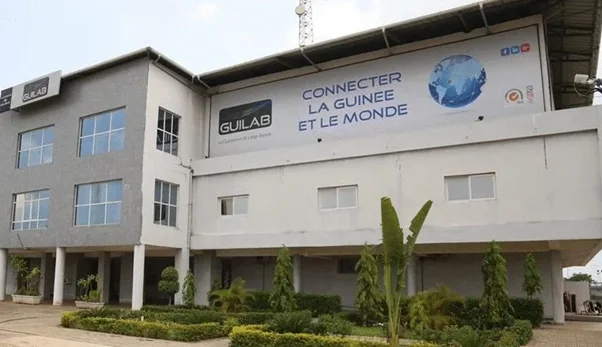
Long dependent on its mineral wealth, Guinea is deliberately pivoting toward a digital future that aims to widen economic opportunities and reinforce national sovereignty. The launch of Pillar 3 of the Simandou 2040 programme at the 2025 Transform Africa Summit in Conakry showcased that shift, framing technology as a central engine of the country’s socio-economic transformation.
Building the backbone
Guinea has invested heavily in the physical and institutional foundations needed for a digital economy. A nationwide fibre‑optic network stretching some 12,000 km and a national Tier III data centre are intended to reduce technological dependence and support domestic data processing. More than 500 schools are already connected through the GIGA partnership with the ITU and UNICEF, and a second submarine cable—backed by the World Bank—is being linked to the national network. Regional interconnections with Mali, Sierra Leone and Côte d’Ivoire are operational, and talks continue with neighbours from Senegal to Guinea‑Bissau. Each regional capital will host digital hubs that serve as innovation and training centres for youth, while a 20‑hectare Technopole at Symphonia is planned to incubate start‑ups and attract international investors. To speed delivery and remove obstacles, the government has created a Delivery Unit tasked with clearing bottlenecks and ensuring results.

People and inclusion at the centre
Guinea’s strategy pairs infrastructure with people‑centred programmes. Digital skills training and inclusion initiatives are scaling rapidly, particularly for women and rural communities. The R‑CUN programme has trained more than 300 women in digital tools to create home‑based businesses, with a target of 1,500 trainees this year. Start‑up support is expanding too: hundreds of applications were received for the Sweden Grand Prix competition, with winners receiving technical and financial backing, and several Guinean firms won recognition at international forums such as the World Summit on the Information Society.
Pillar 3: scope and ambition
Pillar 3 packages 12 projects with a combined estimated investment of $3.4 billion, linking digitalisation, infrastructure and industrialisation. The ambition is to build a self‑sustaining digital economy that serves local firms, improves connectivity and fosters African artificial intelligence built on local data. New agencies for digitalisation, cybersecurity and inclusion, together with fiscal incentives, have been created to attract investors and safeguard technological sovereignty. Cooperation with Rwanda and other partners signals a desire to craft African solutions to African problems.
Measurable progress and future outlook
Already, more than 200 public services have been digitised, mobile penetration exceeds 100 percent, and the digital sector’s contribution to GDP is forecast to rise from about 4 percent today to between 14 and 20 percent by 2040. For policymakers and practitioners, the challenge now is execution: translating infrastructure and pilot programmes into sustainable businesses, jobs and services that reach the whole population.
A model for diversification
Guinea’s approach demonstrates how a resource‑rich country can pursue economic diversification by investing simultaneously in infrastructure, human capital and enterprise support. By emphasising inclusion—especially for women and youth—building training and innovation hubs, and strengthening the institutions that govern the sector, Guinea aims to become a regional hub for connectivity and digital innovation. If it succeeds, the country will show how African nations can leverage technology to reshape their development trajectories and claim greater technological sovereignty.
Share this content: