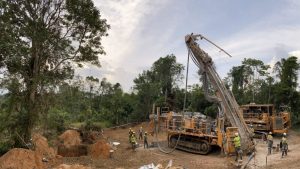
Namibia Unveils High-Grade Critical Minerals Discovery at Uis Project

Namibia—Africa’s largest uranium producer—has reinforced its position in the global mining landscape following a major critical minerals discovery at the Uis Project by Askari Metals.
The Australian-listed firm reported strong Phase 1 trenching results, confirming extensive polymetallic mineralisation across its 100%-owned project. The findings include high-grade concentrations of lithium, tin, tantalum, and rubidium—minerals essential for modern technologies, including electric vehicles, electronics, and renewable energy systems.
High-grade results signal strong potential

Initial trenching along a 2.2-kilometre pegmatite trend revealed significant assay results, with lithium and tin grades exceeding common industry benchmarks.
Key highlights include:
- Lithium oxide grades reaching 0.57%
- Tin concentrations of up to 8,340 ppm
- Tantalum at 299 ppm and rubidium at 2,380 ppm
These results support the project’s potential for future resource definition, with further drilling planned for later in 2026.
Strategic importance for global supply chains
The discovery positions Namibia as an emerging critical minerals hub, complementing its established production of uranium, diamonds, and base metals.
With global demand for battery and clean energy materials accelerating, lithium and tantalum are becoming increasingly strategic. Their presence at Uis strengthens Namibia’s role in supplying minerals essential to the global energy transition.
Economic upside and investment appeal
The Uis Project also benefits from proximity to existing mining infrastructure, including the Walvis Bay deepwater port, enhancing its commercial viability.
Rising global tin prices—currently around $46,000 per ton—further improve the project’s economic outlook, with potential to:
- Boost export revenues
- Attract foreign direct investment
- Create employment opportunities
- A growing role in Africa’s mining future
As Namibia seeks to diversify beyond uranium, discoveries like Uis highlight its expanding footprint in Africa’s critical minerals sector. Alongside countries such as Democratic Republic of Congo and Zambia, Namibia is positioning itself as a key player in global supply chains for the technologies of the future.
Share this content: