Liberia and ArcelorMittal Sign Long-Term MDA Extension to 2050, Unlocking Major Iron Ore Expansion

The Liberia and ArcelorMittal have signed an amended Mineral Development Agreement (MDA) extending the company’s mining rights to 2050, with an option to renew for a further 25 years, following ratification by Liberia’s legislature.
The revised agreement secures ArcelorMittal’s long-term expansion plans in Liberia while advancing government objectives to open the Tokadeh–Buchanan rail corridor to multiple users under a regulated framework.
Expansion Anchored by Major Beneficiation Investment

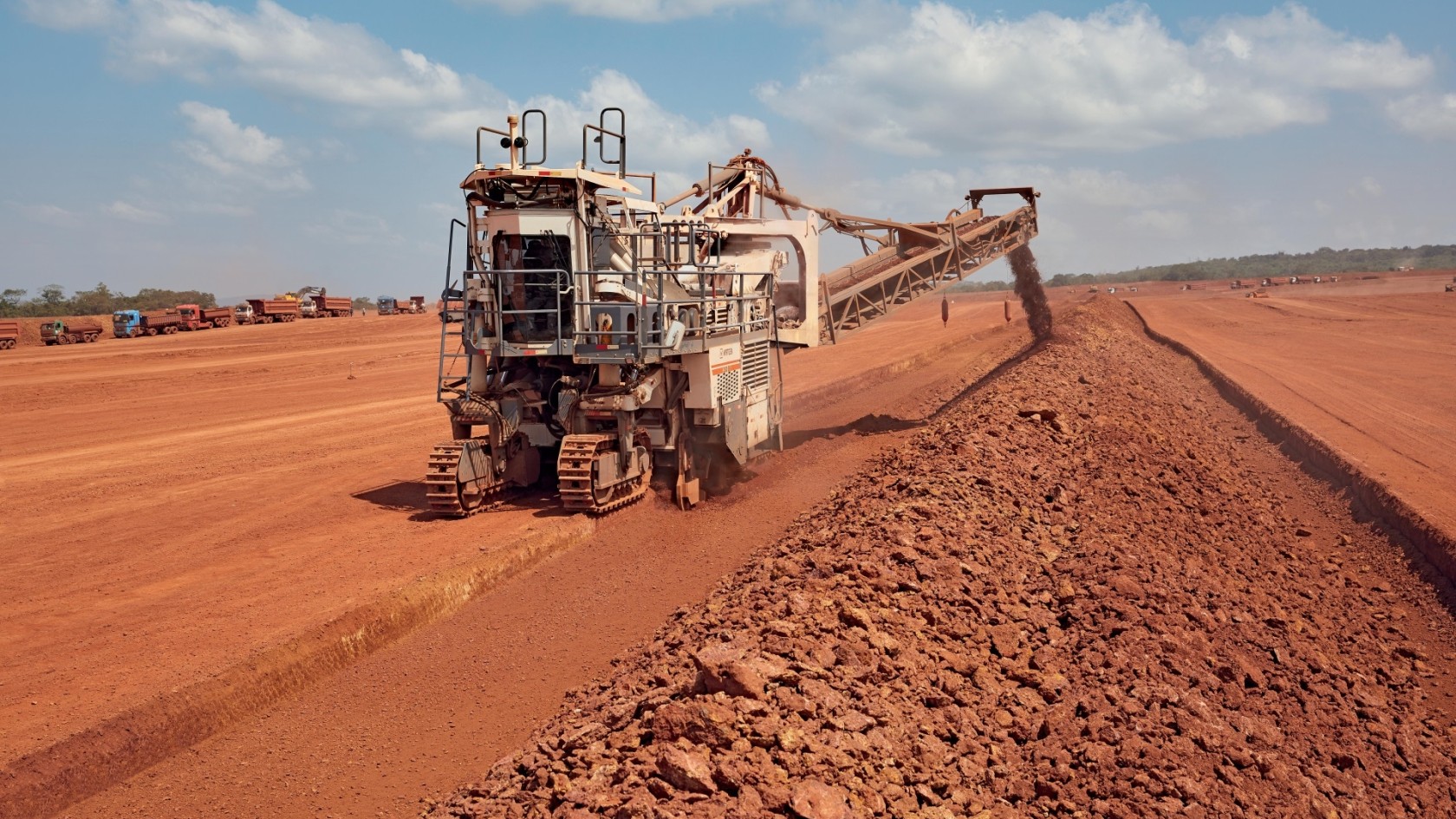
The agreement follows the June 2025 inauguration of ArcelorMittal’s 20 million tonne-per-year iron ore concentrator at Tokadeh, one of the largest and most technologically advanced beneficiation facilities in Africa.
The concentrator is the centrepiece of a US$1.8 billion expansion programme, lifting ArcelorMittal’s total investment in Liberia to approximately US$3.5 billion—the largest foreign direct investment in the country’s post-war history.
Beyond the concentrator, the expansion includes:
- Significant upgrades to the 250-kilometre Tokadeh–Buchanan railway
- Port infrastructure improvements at Buchanan Port, including construction of an additional berth
- Construction of two power plants and other supporting infrastructure
Production to Quadruple in 2026
Once the expansion is fully operational, iron ore shipments are expected to rise from historical levels of around 5 Mt/y to 20 Mt/y in 2026, alongside a shift toward higher-grade, higher-value products.
ArcelorMittal is also undertaking feasibility studies for further expansion, including:
- A phased increase to 30 Mt/y of production capacity
- Potential production of direct-reduced iron (DRI) quality concentrate, aligned with global decarbonisation trends in steelmaking
Under the revised mining plan, the operation will produce a mix of sinter feed and high-grade concentrate. Of the targeted 20 Mt/y, approximately 75% (15 Mt) will be sinter feed produced through blending, while 25% (5 Mt) will be high-grade concentrate.
Multi-User Rail Access Framework
A key feature of the amended MDA is provision for multi-user access to the rail infrastructure. While ArcelorMittal is expanding the railway to support up to 30 Mt/y of iron ore transport—capacity that will be reserved for its own use—other potential users will be required to co-invest in further expansion to meet their needs.
The agreement also provides for the establishment of an independently operated railway from October 2030, aimed at improving efficiency and governance while supporting broader economic use of the corridor.
Financial and Economic Impact
Under the new agreement, ArcelorMittal will pay US$200 million to the Government of Liberia in exchange for extended mining rights and reserved rail capacity linked to the company’s infrastructure investments.
President Joseph Boakai said the agreement would significantly boost Liberia’s economy through expanded production, employment, and community development.
ArcelorMittal Executive Chairman Lakshmi Mittal described the agreement as a defining moment for both parties, reaffirming the company’s long-term commitment to Liberia following two decades of operations.
Jobs, Revenues, and Community Benefits
ArcelorMittal currently provides direct and indirect employment to around 8,000 people in Liberia, is one of the country’s largest taxpayers, and has invested heavily in housing, healthcare, and education initiatives.
The amended MDA is expected to deliver substantially higher royalties and tax revenues over the next 25 years, with the quadrupling of output and exports in 2026 projected to support GDP growth, local procurement, and the expansion of small and medium-sized enterprises across the country.
Outlook
The agreement positions Liberia as a strategic iron ore hub in West Africa, combining large-scale beneficiation, export infrastructure, and long-term policy certainty. For ArcelorMittal, it secures a cornerstone asset with room for growth; for Liberia, it marks a significant step toward leveraging mineral resources for sustained economic transformation.
Share this content: