Ramaphosa Targets R2 Trillion Investment to Accelerate South Africa’s Critical Minerals Expansion

South Africa is positioning itself at the forefront of the global energy transition with an ambitious plan to mobilise R2 trillion in new investment over the next five years to expand exploration, beneficiation, manufacturing and exports of critical minerals.
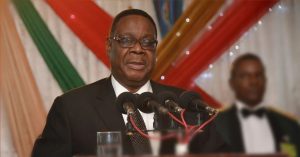
President Cyril Ramaphosa announced the capital-raising strategy during his recent State of the Nation Address, signalling renewed momentum in a sector that has experienced years of declining exploration spending.
The investment drive aims to reinforce South Africa’s dominance in platinum group metals (PGMs) and chrome while expanding production of rare earth elements and other strategic minerals essential to electric vehicles (EVs), battery technologies and clean energy systems.

Mining Repositioned as a “Sunrise Industry”
South Africa remains the world’s largest producer of platinum group metals and a major supplier of chrome and manganese. According to Ramaphosa, the country’s iron ore reserves alone are valued at more than R40 trillion — underlining mining’s strategic role in long-term economic growth.
“With global demand for critical minerals projected to quadruple by 2040, we are dedicating funds towards geological mapping and exploration to harness our critical mineral reserves,” the president said.
The policy pivot reflects growing global competition for energy transition metals as supply chains shift away from concentration in a handful of countries.
Exploration Funding Gains Fresh Momentum
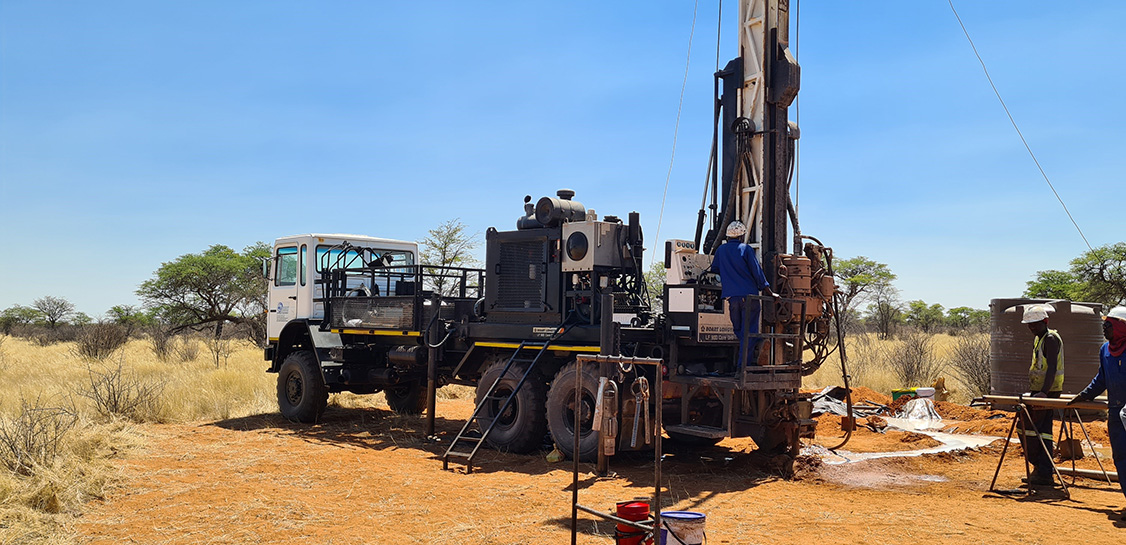
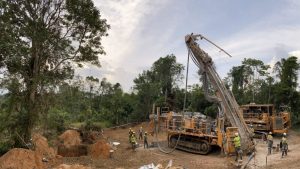
A central pillar of the R2 trillion strategy is revitalising early-stage mineral exploration.
Over five South Africa Investment Conferences, the government secured R1.5 trillion in commitments, with more than R600 billion already flowing into active projects. The renewed investor confidence is translating into new mines, processing facilities and manufacturing plants.
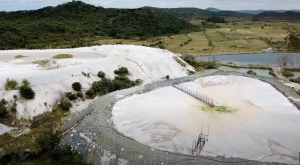
The state-owned Industrial Development Corporation (IDC) committed over R300 million in February to the Frontier Rare Earth Project in the Northern Cape. The project targets annual production of approximately 3,038 tonnes of neodymium-praseodymium (NdPr) oxide, along with dysprosium and terbium — key inputs for permanent magnets used in electric motors and wind turbines — with first production anticipated by 2030.
To stimulate junior mining activity, the Junior Mining Exploration Fund has been expanded to R2 billion, supported by a R600 million commitment from Anglo American. This move is expected to unlock previously underexplored deposits and diversify South Africa’s mineral base beyond established operations.
Infrastructure and Energy Reform Critical to Growth
While mineral endowment is not in question, infrastructure bottlenecks have historically constrained export growth.
Ramaphosa acknowledged ongoing rail and port inefficiencies but emphasised that reforms are underway. The government is modernising logistics corridors and expanding electricity generation capacity to support mining and downstream processing.
State logistics operator Transnet has secured significant international financing over the past year, including €300 million from France’s AFD and €350 million from the European Investment Bank, alongside R94.8 billion in government-backed funding for a five-year modernisation programme.
On the energy front, renewable energy is targeted to account for 40% of generation capacity, supported by independent transmission projects attracting private capital. Strengthening electricity reliability remains essential for energy-intensive mining and beneficiation activities.
Incentivising Downstream Manufacturing
Beyond extraction, the government is seeking to deepen beneficiation and manufacturing capacity.
From March 2026, companies investing in new energy vehicle production will qualify for 150% tax deductions, a move designed to stimulate domestic EV manufacturing and battery component assembly.
This aligns with global supply chain shifts, as automakers and battery manufacturers seek diversified and secure sources of critical inputs.
By integrating mining with value-added manufacturing, South Africa aims to transition from a primary commodity exporter to a fully integrated clean energy minerals hub.
Strategic Global Positioning
Rising geopolitical competition over supply chains has elevated the importance of mineral-rich economies. South Africa’s strategy positions the country as a stable, long-term supplier of platinum, rare earths and battery metals to global markets seeking alternatives.
If successfully implemented, the R2 trillion investment plan could:
- Drive job creation across mining and manufacturing
- Expand export earnings
- Strengthen South Africa’s role in global EV and renewable energy supply chains
- Boost industrial diversification
However, success will depend on sustained policy consistency, infrastructure reform and improved regulatory certainty to attract both domestic and international investors.
With global critical mineral demand accelerating, South Africa is betting that its resource base — combined with structural reforms — can reposition mining as a growth engine for the next decade.
Share this content: