China Urges Firms to Manage Zimbabwe Risks After Lithium Export Ban

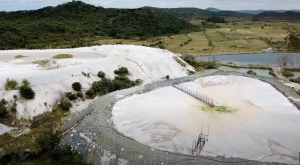
Credit: Bikita Minerals
The China government has warned its companies operating in Zimbabwe to strengthen risk management and compliance following the country’s suspension of raw mineral and lithium concentrate exports.
The advisory comes after Zimbabwe, Africa’s top lithium producer, imposed the export ban on February 25, citing concerns over mineral leakages and irregular practices in the sector.

Chinese Firms Told to Strengthen Compliance
In a statement, the Chinese embassy in Harare urged businesses to fully comply with local laws and carefully assess investment risks.
“Investors should conduct a comprehensive assessment of the local business environment, industrial policies, and regulations before making investments,” the embassy said.
Companies were also advised to safeguard their interests through legal channels and remain vigilant against policy shifts that could impact operations.
Major Chinese Players Dominate Zimbabwe’s Lithium Sector
Chinese companies play a dominant role in Zimbabwe’s mining industry, particularly in lithium and chrome production. Key players include:
- Zhejiang Huayou Cobalt
- Sinomine Resource Group
- Chengxin Lithium Group
- Yahua Group
- Tsingshan Holding Group
These firms have invested heavily in Zimbabwe’s battery metals sector, helping secure supply chains for electric vehicle production and energy storage technologies.
Zimbabwe’s Lithium Export Ban and Its Impact
Zimbabwe’s decision to halt exports of raw minerals and lithium concentrates is part of a broader strategy to promote local value addition and beneficiation.
The move is expected to:
- Encourage domestic processing of lithium
- Increase local industrial capacity
- Capture more value from mineral resources
However, it also introduces uncertainty for foreign investors and could disrupt established supply chains.
China’s Strategic Investment in Zimbabwe
China has become a major investor in Zimbabwe’s economy, particularly since the early 2000s, when Harare’s relations with Western countries deteriorated.
Since 2021, Chinese firms have invested over $1.4 billion in Zimbabwe’s lithium sector, reinforcing China’s position as a global leader in battery metals.
In 2025 alone, Zimbabwe exported 1.128 million tonnes of lithium-bearing spodumene concentrate to China, accounting for roughly 15% of China’s total lithium concentrate imports.
Environmental and Governance Concerns
Chinese mining operations in Zimbabwe have faced criticism from local non-governmental organizations over alleged environmental and labour practices.
However, the Chamber of Chinese Enterprises in Zimbabwe has rejected these claims, maintaining that its members comply with local regulations.
Global Implications for Battery Metals Supply
Zimbabwe’s export ban highlights a growing trend among resource-rich countries to restrict raw exports and promote domestic processing.
For China, which relies heavily on imported lithium to power its electric vehicle and battery industries, the move underscores the importance of securing stable supply chains while managing geopolitical and regulatory risks.
Conclusion
China’s warning to its firms reflects rising uncertainty in Zimbabwe’s mining sector following the lithium export ban. While the policy aims to strengthen local industry, it also signals a shift that could reshape global battery metals supply chains.
For investors, the message is clear: navigating Africa’s resource-rich markets requires not only capital—but also strong risk management and regulatory awareness.
Share this content: