Looking Beyond “Useful Africa” at the Mining Indaba
(Opinion | 4-minute read)
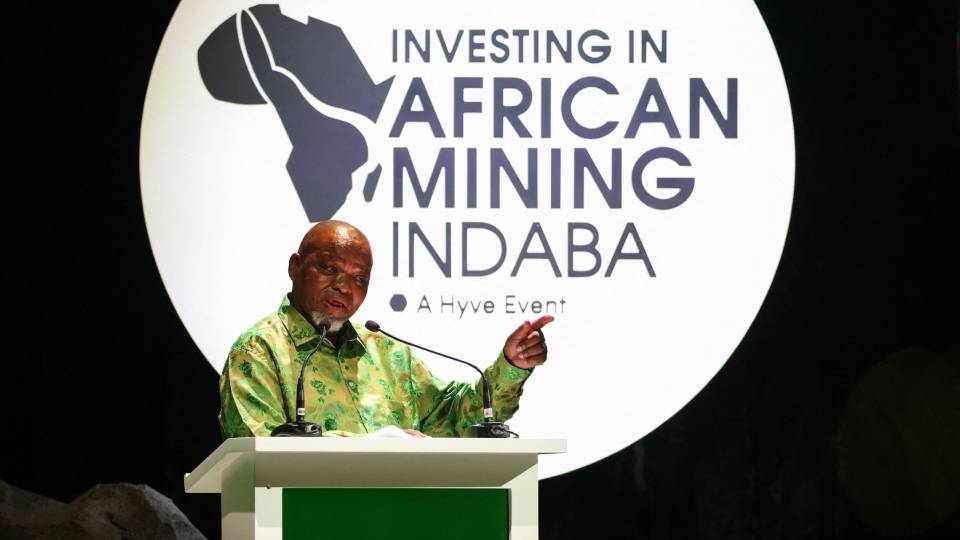
Each year, the African Mining Indaba in Cape Town positions Africa as indispensable to the global economy — first for gold and diamonds, now for lithium, cobalt, platinum and rare earths.
The narrative is familiar: Africa is “open for business,” rich in critical minerals, and central to the clean-energy transition. But beneath the rhetoric lies a more uncomfortable framing — that of a “useful Africa.”

A continent valued primarily for what it can supply.
The Critical Minerals Moment
As decarbonisation accelerates across Europe, China and North America, demand for battery metals and industrial minerals is surging. African countries hold significant reserves of cobalt, manganese, platinum group metals, bauxite and copper. This resource endowment is now being recast as a strategic asset in global geopolitical competition.
Yet the conversation at high-level forums often revolves around speed — how quickly projects can be licensed, financed and brought into production — rather than structure: who owns, who benefits, and who bears long-term risk.
The result is a persistent imbalance. Africa is positioned as a supplier of raw materials rather than a participant in value chains.
From Extraction to Transformation
Looking beyond “Useful Africa” requires shifting the frame from extraction to transformation.
That means:
- Building domestic processing and refining capacity
- Strengthening geological institutions and regulatory oversight
- Negotiating fiscal regimes that capture fair value
- Ensuring mine-closure planning is enforced from day one
- Linking mining revenues to industrialisation strategies
Countries such as South Africa, Gabon and Namibia have signalled ambitions to move further downstream, particularly in battery and green hydrogen value chains. But ambition must translate into coordinated industrial policy, skills development and infrastructure investment.
The Governance Question
Another missing dimension in many Indaba conversations is what happens after extraction peaks.
Across the continent, abandoned or poorly rehabilitated mines remain a visible reminder that mineral wealth can leave long-term liabilities. Environmental degradation, water contamination and social dislocation often outlive commodity booms.
If Africa is to avoid repeating past cycles, closure planning, rehabilitation financing and community development agreements must be treated as central pillars of investment — not peripheral compliance requirements.
Bargaining Power in a Fragmented Market
Individually, African countries often compete for the same pool of capital. Collectively, however, they hold significant leverage.
Regional coordination through bodies such as the African Union could strengthen negotiating positions, harmonise standards and prevent a regulatory “race to the bottom.” The African Continental Free Trade Area (AfCFTA) also presents an opportunity to build regional mineral value chains rather than exporting unprocessed ore.
The clean-energy transition has created a rare window of structural leverage for resource-rich economies. The question is whether that leverage will be exercised strategically.
Redefining “Useful”
Africa’s minerals are undoubtedly useful — to global supply chains, to electric vehicles, to renewable energy infrastructure.
But Africa itself must not be reduced to utility.
Looking beyond “Useful Africa” at the Mining Indaba means asking harder questions:
- Is value being added locally?
- Are fiscal regimes resilient across commodity cycles?
- Are environmental safeguards credible and enforceable?
- Are communities partners in development, or collateral in transition?
- The future of African mining should not be defined solely by how indispensable the continent is to others, but by how effectively mineral wealth contributes to diversified economies, industrial capability and long-term social stability.
The Mining Indaba remains a powerful platform. But real transformation will depend not on the number of deals announced, but on whether Africa’s resource narrative evolves — from useful supplier to strategic economic actor.
Share this content: