China Backs Africa’s Push to Process Minerals Locally with More Than $16 Billion in Investments

China is strengthening its involvement in Africa’s drive to process more minerals locally, with Chinese investors backing projects worth more than US$16 billion aimed at expanding refining, processing and mineral-based manufacturing across the continent.
The investment reflects growing efforts by African governments to capture a larger share of the economic value generated by their natural resources instead of relying predominantly on exports of unprocessed minerals.
A report by Beijing-based consultancy Development Reimagined found that Chinese investors had committed US$41.2 billion to 32 mining, exploration and development projects across 15 African countries by June 2026.

Of these, 19 projects included mineral value addition activities, with investments totalling US$16.3 billion.
African governments seek greater value from mineral resources
Africa supplies major minerals to international markets, including copper, cobalt and iron ore. However, much of the continent’s mineral wealth has historically been exported in raw or minimally processed form, limiting opportunities for domestic industrial development.
Countries including the Democratic Republic of Congo, Guinea and Zimbabwe have introduced export bans or restrictions on selected minerals to encourage local processing and attract investment in downstream industries.
The Development Reimagined report found that approximately 40% of the total investment value tracked was associated with projects involving mineral value addition.
These initiatives include processing, refining and manufacturing activities within Africa rather than focusing exclusively on extraction.
The report also highlighted that the value of projects with confirmed processing commitments remains uneven. Some large developments have substantial investment commitments, while the extent of their planned domestic processing is still limited or yet to be confirmed.
China expands its role in African mineral processing
China’s investments are linked to commitments made under the action plan adopted at the 2024 Forum on China-Africa Cooperation summit.
Beijing has increasingly presented support for local mineral processing as part of its broader cooperation with African countries, including financing, mining technology and industrial development.
Chinese President Xi Jinping reinforced this position during a meeting with Botswana’s President Duma Boko, saying that Africa’s mineral resources belong to Africa.
Xi also offered support for mining development, financing and technology transfer to help African countries retain more value from their mineral resources.
However, analysts say China’s approach also serves commercial and strategic interests by strengthening its position in global mineral supply chains and creating opportunities for Chinese manufacturing and infrastructure companies.
John Calabrese, a non-resident senior fellow at the Washington-based Middle East Institute, said greater cooperation in higher-value production could reinforce China’s existing position while opening additional opportunities for its companies.
Simandou highlights the scale of investment
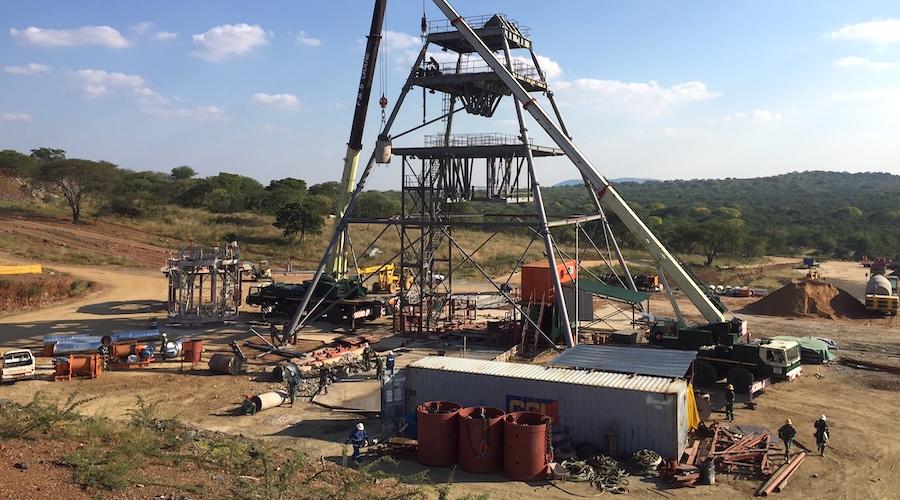
One of the major developments featured in the report is the US$23 billion Simandou iron ore project in Guinea, described in the article as the world’s largest development of its kind.
The project illustrates the scale of Chinese-linked investment in Africa’s mineral sector and the potential for large mining developments to support infrastructure and industrial activity.
However, the extent to which such investments translate into domestic processing, skills development and technology transfer remains an important consideration for African governments.
Global competition creates opportunities and risks
China is not the only major power seeking stronger access to Africa’s critical mineral resources.
The United States has also intensified efforts to secure mineral supply chains, including through an agreement signed in December 2025 that provides American companies with preferential access to designated mining assets in the Democratic Republic of Congo.
US-linked bidders are also competing for development rights at Kenya’s Mrima Hill, which contains significant rare earth and niobium resources.
Growing competition between international investors could give African governments more options when negotiating financing, infrastructure and technology partnerships.
However, Calabrese cautioned that greater investor interest does not automatically translate into better outcomes for resource-producing countries.
Financing arrangements, mineral access agreements and offtake contracts can limit the ability of governments to determine where resources are processed and where the resulting economic value is captured.
He argued that enforceable commitments covering local processing, skills development and technology transfer would be necessary to ensure that investment supports African industrialisation.
Local processing must become a measurable commitment
The report calls on international partners, including Western investors, to support mineral processing and refining in Africa rather than treating mineral investment primarily as an arena for geopolitical competition.
It also urges non-Chinese mining companies operating on the continent to invest in domestic refining capacity.
For African countries, the challenge is to translate rising global demand for critical minerals into industrial capacity, employment and stronger domestic supply chains.
This will require more than attracting capital for mine development. Governments must also negotiate investment agreements that provide for processing facilities, workforce training, technology transfer and access to reliable infrastructure.
China’s more than US$16 billion commitment to African mineral value addition demonstrates the growing scale of investment in this area. Whether these projects deliver lasting benefits will depend on how effectively African countries secure and enforce commitments to retain more value from their mineral resources.
Share this content: