Africa Pushes for Mineral Beneficiation to Drive Industrialisation and Inclusive Growth
Africa must move beyond exporting raw minerals and accelerate local processing, manufacturing and regional industrial cooperation to ensure its mineral wealth delivers lasting economic benefits, leaders and industry stakeholders have said.
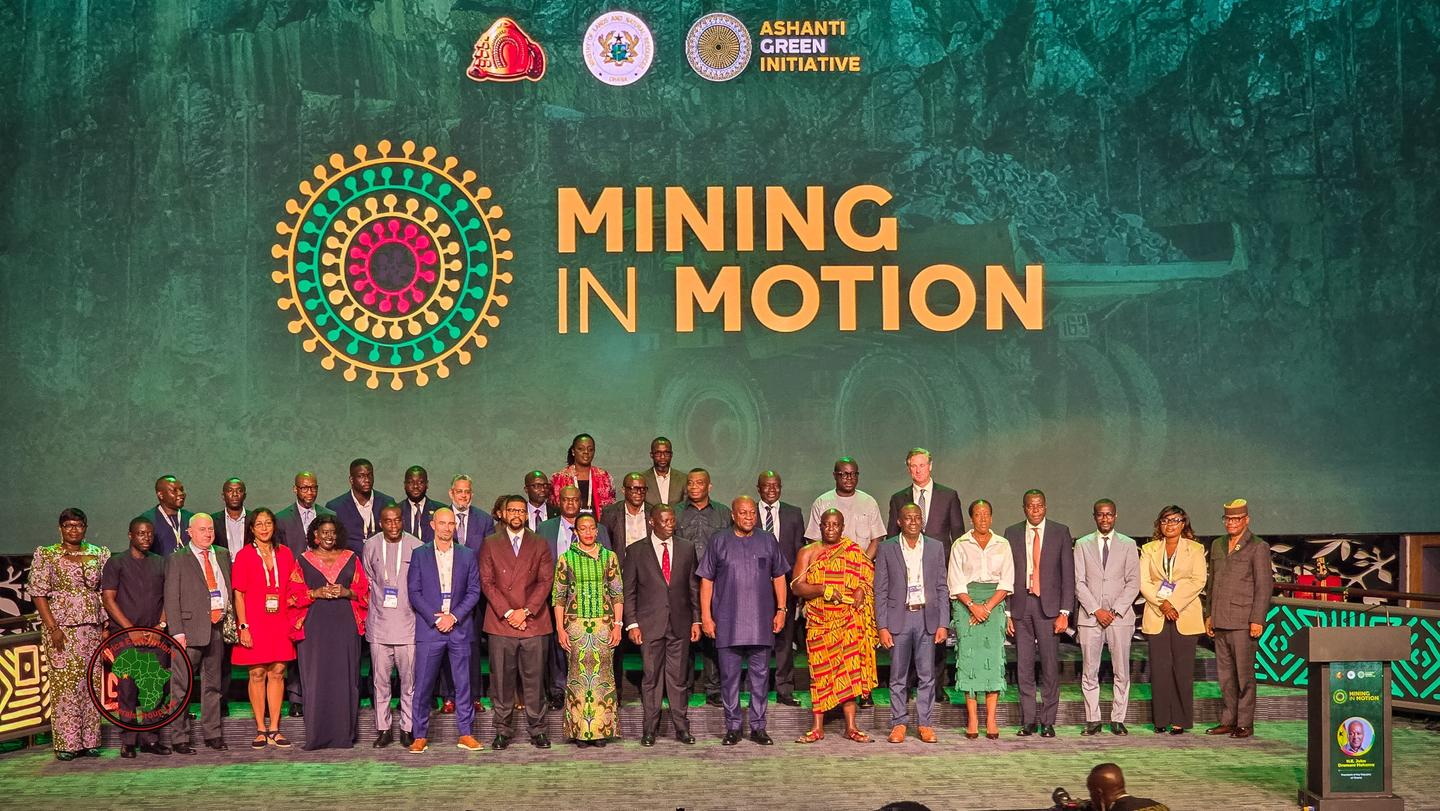
The call was a central theme at the African Minerals Policy Forum, Mining in Motion 2026, held under the theme “One Continent. One Voice on Minerals: Aligning Africa’s Mineral Future.”
Held under the patronage of His Majesty Otumfuo Osei Tutu II, Asantehene, the three-day forum brought together African leaders, government ministers, investors, mining companies and development partners to explore how the continent can use its mineral resources to create jobs, strengthen industries and promote inclusive economic growth.

Africa holds approximately 30% of global critical mineral reserves, more than half of the world’s cobalt and 90% of platinum group metals. However, much of the value generated from these resources continues to be captured outside the continent, with African countries importing finished products manufactured from minerals extracted locally.
Ghana Targets End to Raw Mineral Exports by 2030
Opening the forum, Ghanaian President John Dramani Mahama outlined the country’s ambition to end exports of unprocessed mineral ores by 2030, covering commodities including bauxite, manganese, iron ore and lithium.
The planned transition will be supported by legal reforms and mineral-specific requirements aimed at expanding domestic processing and strengthening local value chains.
Institutions such as the Ghana Integrated Aluminium Development Corporation (GIADEC) and the Ghana Integrated Iron & Steel Development Corporation (GIISDEC) are expected to play a central role in connecting the country’s mineral resources to domestic refining and manufacturing.
The government is also proposing a US$10 billion investment plan to modernise the Volta Aluminium Company (VALCO) and strengthen Ghana’s aluminium industry.
In the gold sector, the establishment of the Ghana Gold Board (GoldBod) in April 2025 has strengthened the regulation of small-scale gold exports while supporting the expansion of domestic refining capacity.
President Mahama also announced plans to increase contract mining opportunities for indigenous Ghanaian companies. He called on universities and training institutions to develop the engineers, geologists, technicians and managers required to support a mineral-processing economy.
Responsible Mining and Stronger Governance
Participants emphasised that mineral-based industrialisation must be underpinned by responsible mining practices, effective regulation and environmental and social safeguards.
Ghana’s Minister for Environment, Science and Technology, Dr Zanetor Agyeman-Rawlings, highlighted the importance of fair fiscal arrangements, local value addition, common environmental and social standards, and greater investment in scientific research, skills development and geological data.
She also called for stronger enforcement of mining laws and closer cooperation between government, traditional authorities, mining companies and small-scale miners.
At the continental level, the African Union’s African Green Minerals Strategy, adopted in 2025, seeks to position Africa as a producer of higher-value mineral products rather than merely a supplier of raw materials.
Francisca Tatchouop Belobe, AU Commissioner for Economic Development, Trade, Tourism, Industry and Minerals, stressed the need to develop competitive African industries capable of transforming mineral resources into higher-value products and services.
“Our ambition must be to move from minerals to materials, from materials to markets and to competitive African enterprises,” she said.
Regional Cooperation Key to Mineral Beneficiation
Delegates agreed that individual African countries cannot independently develop all the infrastructure, processing capacity and markets required to compete in global mineral value chains.
A ministerial roundtable on beneficiation, co-hosted by the United Nations Development Programme (UNDP), highlighted the importance of regional cooperation in developing shared infrastructure and industrial capabilities.
Dr Jide Okeke, Director of UNDP’s Regional Programme for Africa, emphasised the need for effective governance, reliable geological information, strategic investment and stronger regional partnerships.
Liberia’s Minister for Mines and Energy, R. Matenokay Tingban, identified opportunities for shared railways, ports, electricity systems and mineral-processing facilities involving Liberia, Guinea and Sierra Leone.
He also called for a fully resourced African Minerals Development Centre to help translate the African Mining Vision into practical outcomes.
Greater alignment of fiscal policies and local value-addition requirements could also prevent African countries from competing against one another for investment on unfavourable terms.
Financing Remains a Major Constraint
Access to finance emerged as another critical requirement for developing Africa’s mineral-processing and downstream manufacturing industries.
Participants noted that geological potential alone is insufficient to attract investment. Investors also require predictable policies, dependable infrastructure, commercially viable projects and mechanisms to reduce investment risks.
Without these conditions, African countries could struggle to secure the capital needed to establish processing facilities and develop competitive manufacturing industries.
The discussions also highlighted the importance of improving financing and technical support for artisanal and small-scale miners.
President Mahama disclosed that 11 small-scale mining cooperatives had been trained, while GoldBod was financing the adoption of more environmentally friendly technologies.
Ngone Diop, Director of the United Nations Economic Commission for Africa’s Subregional Office for West Africa, proposed establishing a regional processing hub for artisanal and small-scale mining.
The proposal would align with the African Mining Vision and leverage opportunities under the African Continental Free Trade Area (AfCFTA).
Mining Communities Must Share in the Benefits
Beyond industrialisation and investment, the forum emphasised that mineral development must deliver tangible benefits to communities where mining takes place.
Participants called for stronger technical and legal capacity to negotiate mining agreements, greater transparency in contracts and beneficial ownership structures, and more effective enforcement of commitments made by mining companies.
They also stressed the importance of involving traditional leaders and local governments in decisions affecting mineral-producing communities.
For these communities, resource sovereignty must translate into local employment, business opportunities, fair revenue distribution and protection of essential natural resources, particularly water.
Participants argued that community welfare should be considered alongside national revenue generation and industrial expansion when assessing the success of mineral development.
Africa Seeks a Unified Mineral Development Agenda
At the conclusion of the three-day forum, delegates agreed that Africa has the mineral resources needed to support a new generation of industries, but unlocking this potential will require coordinated policies, strategic investment, skilled labour, shared infrastructure and stronger negotiating capacity.
Oheneba Nana Kwaku Duah, CEO of the Ashanti Green Initiative, said recommendations from the ministerial discussions would be compiled and submitted to President Mahama to help inform Ghana’s forthcoming African Union chairmanship agenda.
The forum reinforced the need for African countries to adopt a more coordinated approach to mineral development, ensuring that resource extraction supports domestic industrial capacity rather than perpetuating dependence on raw material exports.
Ultimately, the success of Africa’s mineral industrialisation agenda will be measured by the amount of mineral processing undertaken within the continent, the growth of regional industries, employment opportunities created for African citizens and the benefits delivered to mining communities.
With its substantial reserves of critical minerals, Africa has an opportunity to become a major participant in global industrial value chains. Realising that ambition will depend on building the institutions, infrastructure and partnerships needed to transform mineral wealth into sustainable and inclusive economic growth.
Share this content: