Nigerian Startup Terra Industries Builds AI Drones to Protect Africa’s Power, Mining and Oil Infrastructure

Images: Nigerian startup Terra Industries
A Nigerian technology startup is developing artificial intelligence-powered drones designed to protect Africa’s critical infrastructure, including power plants, mining operations and oil facilities.
Terra Industries, a robotics and manufacturing firm based in Abuja, is building autonomous surveillance systems that help monitor and secure key industries across the continent.

The company says its drone technology is already helping safeguard billions of dollars worth of strategic infrastructure in Africa and internationally.
Rising Attacks on Africa’s Infrastructure
Attacks on key infrastructure across Africa have increased in recent years, highlighting the need for improved security systems.
In 2025, insurgent militants forced the temporary shutdown of a tin mine in the Democratic Republic of the Congo, while fighting linked to the civil war in Sudan caused a fire at the country’s largest oil refinery.
Such disruptions can damage local economies and discourage the foreign investment needed for large infrastructure projects.
“These are critical attacks carried out on strategic infrastructure which directly impact economic development,” said Oluwole Ojewale of the Institute for Security Studies.
He pointed to Nigeria as an example, where repeated terrorist attacks on oil pipelines have prevented the country from meeting its crude oil production targets.
As a result, both governments and private companies are increasingly turning to autonomous surveillance systems to strengthen infrastructure protection.
Africa’s Largest Drone Manufacturing Facility
Terra Industries was founded in 2024 by young Nigerian entrepreneurs Maxwell Maduka and Nathan Nwachuku.
In February 2025, the startup launched what it describes as Africa’s largest drone factory, a 15,000-square-foot manufacturing facility located on the outskirts of Abuja.
Although the plant is still expanding production, it has the capacity to manufacture up to 30,000 drones per year.
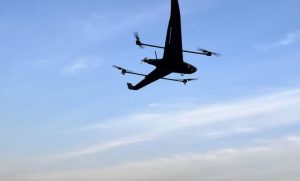
The company produces a range of autonomous systems, including:
- Long-range drones for surveillance missions
- Quadcopters for rapid response and data collection
- Self-driving ground vehicles for security patrols
- Multi-Million Dollar Security Contracts
The company’s technology is already being deployed to secure major infrastructure projects.
In May 2025, Terra Industries secured a $1.2 million contract with private security firm NetHawk Solutions.
The project involves installing AI-powered drones and surveillance towers at two hydroelectric power plants in Nigeria to detect and monitor potential threats such as bandit attacks.
According to CEO Nathan Nwachuku, Terra Industries’ systems are currently protecting around $11 billion worth of assets.
These include:
- Power plants
- Lithium mines
- Gold mines
- Oil refineries
The company already exports its drones to eight African countries as well as Canada.
AI Software Powers Surveillance System
A key part of Terra’s technology is its proprietary AI platform called ArtemisOS.
The system collects data from drones and surveillance equipment and analyses it in real time to detect potential threats.
“It collects all the surveillance data from different systems and analyses it looking for threats in real time,” Nwachuku said. “Once a threat is identified, it alerts the appropriate response teams.”
The AI platform has attracted international attention for its ability to integrate multiple surveillance systems into a single monitoring platform.
Focus on African Manufacturing and Data Sovereignty
Terra Industries has also prioritised local manufacturing and African data control.
While some sensors and cameras are imported from countries such as South Korea, most of the system components — including airframes, propellers and lithium-ion battery packs — are manufactured locally.
The company has also partnered with African cloud provider PipeOps instead of global technology firms to maintain data sovereignty.
“We must keep the data within African hands,” Nwachuku said, adding that local data storage helps prevent global security breaches while supporting African technology companies.
Local manufacturing also reduces costs. Terra says its systems can be up to 55% cheaper than competing international products, making the technology more accessible to African clients.
Growing Demand for Infrastructure Protection
Security analysts expect the market for infrastructure protection technologies in Africa to expand rapidly.
Oluwole Ojewale says more companies are likely to enter the sector as demand grows across the continent.
“The continent is wide — from Angola to Mozambique to Nigeria — all critical infrastructure will need to be protected,” he said.
As Africa continues investing in energy projects, mining operations and industrial infrastructure, companies like Terra Industries could play an important role in developing locally built security technologies for the continent’s strategic assets.
Share this content: