$1.3 Billion Committed to Zambia Rail Project Linking Copper Mines to Global Markets
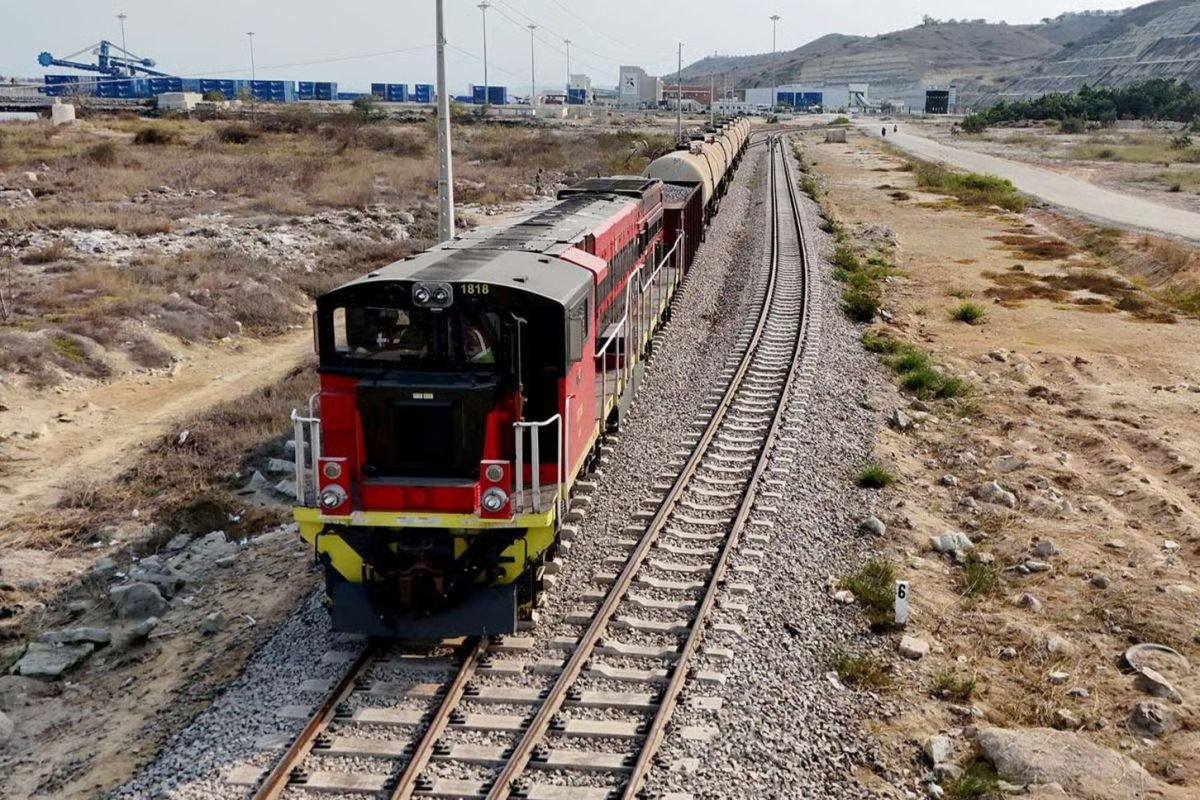
Credit: Lobito Atlantic Railway
Major development financiers have pledged $1.3 billion toward a strategic railway project that will link Zambia’s copper mines to international markets via Angola’s Atlantic port of Lobito, strengthening critical minerals supply chains.
The Africa Finance Corporation and the African Development Bank have each committed $500 million to the project, while Italy will contribute an additional $320 million, according to AFC executive Sameh Shenouda.

The rail development forms part of the broader Lobito Corridor initiative, designed to improve export routes for copper and cobalt—key minerals used in electric vehicle batteries, as well as defence and aerospace industries. The project is also backed by the European Union and the United States as part of efforts to strengthen alternative supply chains in Africa.
Spanning approximately 830 kilometres, the railway will connect Zambia’s Northwestern and Copperbelt provinces to existing rail infrastructure in Angola, linking onward to the port of Lobito. The total cost of the project is estimated at up to $5 billion, with construction expected to begin in 2026 and completion targeted for 2030.
The development includes the rehabilitation of an existing rail line from Lobito to southern Democratic Republic of Congo, alongside the construction of a new rail spur into Zambia. This will mark the country’s largest rail infrastructure project since the 1970s.
According to project developers, the railway will require transport volumes of between 2.5 million and 3 million tonnes to remain commercially viable. Current commitments already cover around one million tonnes, with strong prospects of exceeding five million tonnes in the near term.
Nine international engineering, procurement and construction (EPC) firms have already conducted site visits, with bidding expected to conclude in the coming months. The selected contractor is anticipated to be announced by mid-2026, with groundbreaking scheduled shortly thereafter.
Once operational, the rail line is expected to significantly reduce cargo transit times from 16 days to just seven, while generating an estimated $3 billion in economic impact for both Zambia and Angola.
The Lobito Corridor is increasingly viewed as a critical infrastructure project that will unlock regional trade, support mining exports and position Southern Africa as a key player in global energy transition supply chains.
Share this content: