Africa’s $29.5 Trillion Mineral Wealth Set to Drive Mining Jobs and Industrial Growth
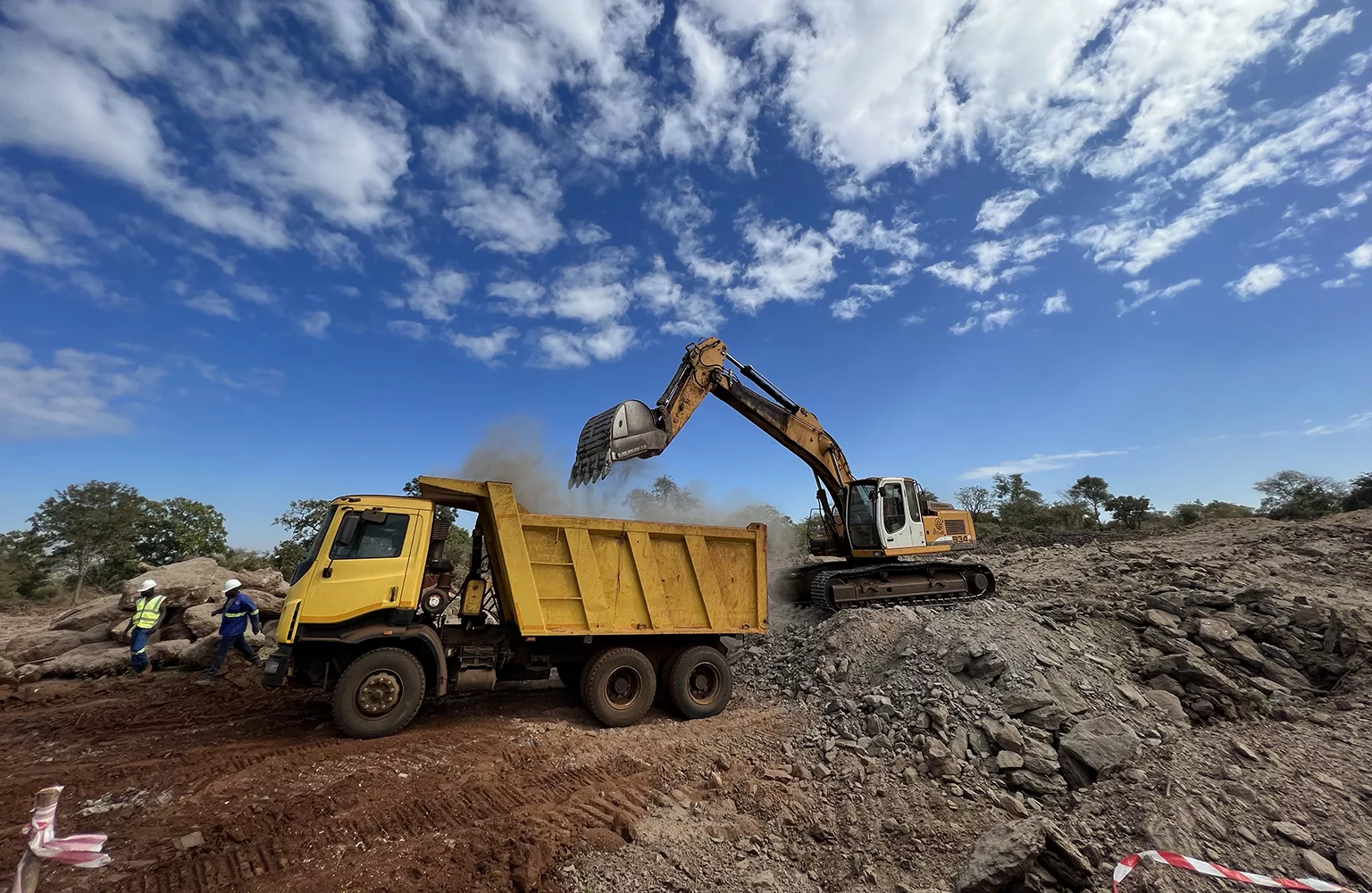
Africa’s vast $29.5 trillion mineral wealth is positioning the continent as a global powerhouse in critical minerals, with the potential to significantly expand mining sector jobs, industrialization, and downstream value addition.
According to the Compendium of Africa’s Strategic Minerals 2026 released by Africa Finance Corporation (AFC), Africa holds approximately 20% of global mineral reserves, with an estimated $8.6 trillion in untapped resources. The report underscores a major opportunity for African nations to accelerate job creation by strengthening value chains in aluminium, fertilizers, battery materials, alloys, and other mineral-based industries.
As global demand for critical minerals intensifies—driven by clean energy, electric vehicles, and advanced technologies—Africa’s mining sector is emerging as a key employment engine.

Expanding Mining Production Strengthens Employment Across Africa
Namibia: Uranium Revival and Critical Minerals Diversification
In Namibia, renewed uranium production in 2025 and 2026 is fueling sector growth. Speaking in Cape Town, Deputy Minister Gaudentia Krohne confirmed that the country’s mining sector employed 20,843 workers at the end of 2024.
Namibia is also diversifying into rare earth elements, copper, and lithium, alongside finalizing a new minerals bill aimed at attracting foreign direct investment. The government has introduced finance schemes and training programs to support small-scale miners and equip workers with skills aligned to emerging mineral markets.
This strategy positions Namibia to expand workforce participation while strengthening its role in global critical minerals supply chains.
South Africa: R2 Trillion Investment to Boost Mining Jobs
In South Africa, the government plans to mobilize R2 trillion over five years to expand exploration, project development, manufacturing, and skills training within its critical minerals value chain.
Mining employment remained stable in 2025, with approximately 468,000 formal workers recorded mid-year. The investment drive aims to deepen beneficiation, enhance export growth, and reinforce mining as a pillar of national employment.
Zambia: Copper Expansion Creates New Jobs
Zambia continues to rely on mining as a major employment driver, supporting over 73,000 jobs in 2025. Planned greenfield and brownfield copper expansions are expected to further increase workforce numbers.
Key investments include:
- US startup KoBold Metals’ $300 million Mingomba Mine development, projected to create more than 700 jobs.
- Vedanta Resources’ $1.5 billion investment in Konkola Copper Mines.
- First Quantum Minerals’ $1.25 billion Kansanshi S3 Expansion project.
These capital inflows demonstrate how large-scale mining investments directly translate into job creation across local communities.
Translating Mining Investment into Sustainable Employment
At African Mining Week 2025 (AMW 2025), Molebogeng Mazibuko, Associate Vice President of Investment at AFC, emphasized the importance of partnerships between African investors and global financiers to unlock funding for mining projects.
To date, AFC’s $700 million in mining investments has generated more than 15,000 jobs, with up to 70% allocated to critical minerals projects.
The data highlights a clear link between mineral investment, industrial development, and employment growth.
Global Critical Minerals Race Boosts Africa’s Job Prospects
The global competition among the U.S., Europe, and China to secure African mineral supply is further strengthening employment prospects.
In December 2025, the United States signed a minerals agreement with the Democratic Republic of the Congo (DRC) focused on extraction, value addition, and trade. The DRC’s mining sector already supports over 100,000 jobs, according to Minister of Mines Louis Watum Kabamba at AMW 2025.
With only 10% of the DRC’s estimated $24 trillion mineral reserves currently exploited, expanded partnerships with the U.S. and China could significantly scale mining-led job creation.
Addressing Investment Gaps to Unlock Mining Employment
Despite strong growth prospects, access to capital remains a challenge—particularly for local operators and small-scale miners. Financing constraints slow project development and limit employment expansion.
Against this backdrop, African Mining Week 2026, scheduled for October 14–16 in Cape Town, aims to connect global investors with bankable mining opportunities across Africa. By catalyzing partnerships and facilitating deal-making, the event seeks to transform capital inflows into project execution, industrial growth, and sustained job creation.
Africa’s Mineral Wealth: A Catalyst for Long-Term Economic Transformation
With $29.5 trillion in mineral reserves and $8.6 trillion still untapped, Africa stands at a pivotal moment. By accelerating beneficiation, strengthening value chains, and attracting strategic investment, the continent can convert its mineral wealth into sustainable mining jobs, industrial expansion, and long-term economic resilience.
The mining sector is no longer just an extractive industry—it is increasingly central to Africa’s employment strategy and participation in the global critical minerals economy.
Share this content: