Angola’s Cabinda Refinery Begins Operations to Strengthen Fuel Supply and Reduce Imports
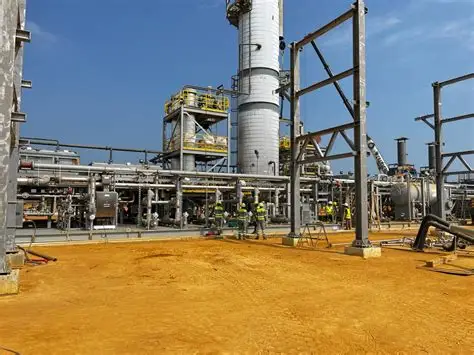
Angola has officially started operations at the Cabinda Refinery, marking the country’s first refinery built since independence and one of the few major refining projects developed in Africa in recent decades.
The refinery has begun supplying diesel to the domestic market while exporting heavy fuel oil and naphtha to international buyers, strengthening Angola’s efforts to improve energy security and reduce reliance on imported refined petroleum products.
Developed at a cost of more than US$470 million, the refinery is located in Angola’s oil-producing Cabinda province and is majority-owned by Gemcorp Capital LLP, which holds a 90% stake in the project.

The facility currently processes approximately 30,000 barrels of crude oil per day, enough to cover an estimated 10% of Angola’s domestic fuel demand.
Gemcorp plans to expand the refinery’s capacity to 60,000 barrels per day during a second development phase expected to cost around US$700 million. The expansion will also include a hydrocracking unit designed to produce additional diesel and jet fuel.
The project reflects a broader continental push to strengthen Africa’s refining capacity as countries seek to reduce dependence on imported fuels despite being major crude oil exporters.
According to the African Petroleum Producers’ Organisation, Africa exports roughly three-quarters of its crude oil while importing nearly 70% of its refined petroleum products, creating an imbalance estimated to cost the continent about US$50 billion annually.
Angola currently imports around 72% of its fuel requirements, equivalent to approximately 3.3 million metric tons per year, according to Sonangol.
The Cabinda refinery forms part of Angola’s wider downstream energy strategy aimed at increasing domestic refining capacity and retaining more value within the country’s petroleum sector.
Sonangol already operates a refinery in Luanda and is pursuing additional projects, including a planned 200,000-barrel-per-day refinery in Lobito and another 100,000-barrel-per-day refinery in Soyo.
The expansion of refining infrastructure across Africa has gained momentum in recent years, driven by projects such as the Dangote Petroleum Refinery in Nigeria, which is among the world’s largest single-train refineries.
Industry analysts say improved refining capacity could help African countries reduce fuel import bills, improve energy resilience and create stronger regional fuel supply chains.
Gemcorp is also reportedly exploring further expansion opportunities at the Cabinda site, including a possible petrochemicals facility as Angola seeks to strengthen its role within regional energy and industrial markets.
Share this content: