Zimbabwe’s Lithium Export Earnings Triple as Local Processing Strategy Gains Momentum
ZIMBABWE – Zimbabwe has more than tripled its lithium export earnings during the first half of 2026 as government policies encouraging domestic mineral processing begin delivering stronger returns from the country’s rapidly expanding battery minerals sector.
According to Finance Minister Mthuli Ncube, Zimbabwe generated US$782 million from lithium exports between January and June 2026, compared with US$237 million during the corresponding period last year. The sharp increase reinforces Zimbabwe’s position as Africa’s leading lithium producer and reflects the country’s growing importance within the global electric vehicle battery supply chain.
The improved performance follows a series of government measures aimed at reducing exports of raw lithium and encouraging investment in local beneficiation.

Earlier this year, authorities suspended exports of lithium concentrates before introducing a quota and compliance framework. Zimbabwe plans to fully prohibit concentrate exports from January 2027, requiring producers to process more lithium domestically before exporting finished or semi-processed products.
The policy forms part of the country’s broader mineral value-addition strategy, which seeks to capture greater economic benefits from its vast lithium resources while creating local industries, employment opportunities and additional export revenue.
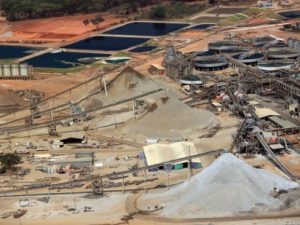
Zimbabwe currently produces more than 2 million tonnes of lithium annually, accounting for roughly 80% of Africa’s mined lithium output. Production growth has been supported by significant investments in major operations including Bikita Minerals and the Arcadia Lithium Mine, alongside billions of dollars invested by Chinese mining companies in mining and downstream processing facilities.
Lithium has become one of Zimbabwe’s fastest-growing mineral exports, contributing approximately 12% of total mineral export earnings during the first six months of the year, behind only gold and platinum group metals.
While export revenue increased by approximately 230% year-on-year, production volumes grew by only around 7%, indicating that stronger prices and increasing production of higher-value lithium products played a much larger role than higher mining output.
Data released earlier by the Minerals Marketing Corporation of Zimbabwe (MMCZ) estimated first-half lithium export earnings at US$746 million, including approximately US$672.8 million from spodumene concentrate exports and US$73.2 million from lithium sulphate.
Although concentrates still account for the majority of export revenues, Zimbabwe is gradually expanding downstream processing capacity.
A major milestone was reached in April with the commissioning of the country’s first lithium sulphate processing plant, creating an entirely new export category. Lithium sulphate generated more than US$70 million in export revenue during the first half of 2026, demonstrating the commercial potential of local beneficiation.
Government projections indicate lithium production will reach approximately 2.14 million tonnes in 2026, slightly below the 2.2 million tonnes produced in 2025. The modest production outlook suggests future export growth will increasingly depend on processing more lithium domestically rather than significantly expanding mine output.
Chinese investors continue to dominate Zimbabwe’s lithium industry. Major companies including Zhejiang Huayou Cobalt, Sinomine Resource Group, Chengxin Lithium Group, Sichuan Yahua Industrial Group, and Tsingshan Holding Group have invested heavily in mining operations and processing infrastructure across the country.
Industry analysts believe the next stage of Zimbabwe’s lithium sector will depend on expanding refining capacity and producing more battery-grade chemicals rather than exporting raw concentrates.
If the planned export ban takes full effect in January 2027, mining companies will be required to invest further in local processing facilities, allowing Zimbabwe to retain a larger share of the battery minerals value chain and strengthen its position as a regional critical minerals processing hub.
The strategy reflects a broader trend across Africa, where governments are introducing export restrictions and beneficiation policies designed to maximise the economic value of critical minerals essential to the global clean energy transition.
Share this content: