Global Cooperation Key to Mining’s Future, Report Warns
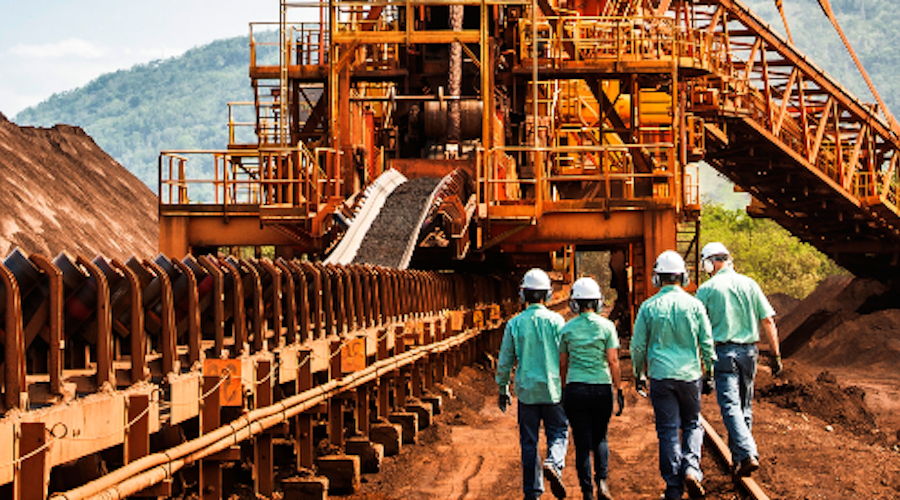
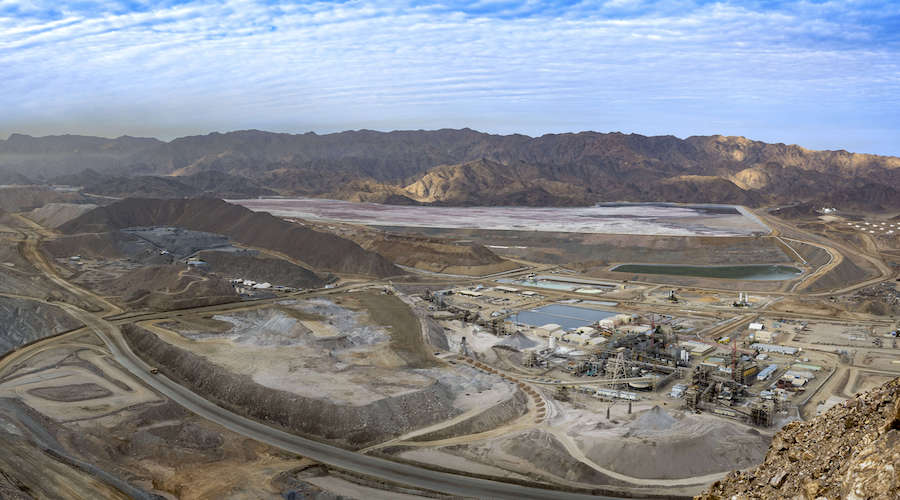
Image: The Salobo copper and gold mine located at Carajás, Pará. (Image courtesy of Vale.)
International cooperation, technological innovation and stronger governance will play a critical role in shaping the mining industry’s ability to meet growing mineral demand while reducing environmental and social impacts, according to a new report developed by Systemic and ERM in collaboration with the International Council on Mining and Metals (ICMM).
Funded by the Gordon and Betty Moore Foundation, the report examines three possible scenarios for the global mining and metals industry through to 2050. It explores how geopolitical tensions, regulatory decisions, technological advances and international cooperation could influence mineral supply, investment and the environmental footprint of mining.

The analysis comes as the industry faces mounting challenges, including weather-related disruptions, labour shortages, lengthy permitting processes and growing competition among countries to secure strategic mineral supplies.
The report draws on more than 20 expert interviews, a survey of 16 industry leaders and a review of existing research. Its scenarios are not intended as predictions, but as tools to help companies, governments and investors assess risks and prepare strategies for different possible futures.
Cooperation Could Reduce Mining’s Environmental Footprint
The report’s Flywheel scenario describes a globally connected mining industry in which technological innovation, transparent markets and effective governance help meet rising mineral demand while limiting environmental and social costs.
Under this scenario, governments and mining companies work together to diversify supply chains, improve resource efficiency and accelerate innovation. Permitting processes become more efficient without compromising environmental safeguards, while miners able to demonstrate verified, lower-impact operations could benefit from price premiums and more affordable financing.
By 2050, the scenario projects copper demand to be 18% higher, alongside a 35% reduction in water consumption, 18% fewer mines and 25% less deforestation.
Achieving these outcomes would require sustained international cooperation and relatively stable geopolitical conditions. However, increasing emphasis on national mineral security could make that cooperation more difficult to maintain.
Fragmented Markets Could Increase Pressure on Resources
At the other end of the spectrum, the Fracture scenario envisages a world divided into competing regional blocs, with governments prioritising national security and domestic economic development over international collaboration.
According to the report, this environment would involve greater state intervention, slower technological progress and weaker market conditions. Restricted investment and declining productivity could make it more difficult for mining companies to develop new projects efficiently.
Under this scenario, global copper demand would be 30% higher than the report’s baseline assumptions by 2050, while water consumption would rise by 70%. The number of mines would increase by 25%, and deforestation would be 40% higher.
Independent mining companies could face greater difficulties securing capital, while tighter state control and limited international technology exchange could constrain innovation and efficiency.
Technology Race Could Deliver Uneven Results
The third scenario, Space Race, sits between the two extremes. It describes a world in which competition among major powers accelerates technological development but divides mineral markets along geopolitical lines.
Governments would direct investment towards strategic industries and domestic supply chains, encouraging innovation that strengthens national access to critical minerals. However, the benefits would be uneven, with some regions adopting advanced technologies to reduce environmental impacts while others expanding extraction using more damaging practices.
The report projects copper demand to rise by the same amount as in the Fracture scenario, while deforestation would decline by 3% by 2050. This suggests that technological progress could deliver some environmental gains even without broad international cooperation, although outcomes would vary across regions.
Decisions Made Today Will Shape Mining Through 2050
The report stresses that the scenarios are not fixed outcomes. The future of mining will depend on decisions made by governments, companies and investors over the coming years, particularly around investment, regulation, technology and cooperation.
For Africa, where mineral resources are central to economic development and the global energy transition, these issues have important implications. Fragmented markets could complicate access to capital, equipment and technology, while stronger international partnerships could support investment, improved resource efficiency and more resilient supply chains.
The report encourages industry leaders to test their business strategies against different geopolitical and economic conditions rather than relying on a single forecast. Its central message is that meeting future mineral demand responsibly will require mining companies and governments to balance supply security and economic growth with water conservation, biodiversity protection and community interests.
Share this content: