Congo Sees Limited Impact on Copper a Cobalt Output Despite Middle East Supply Disruptions
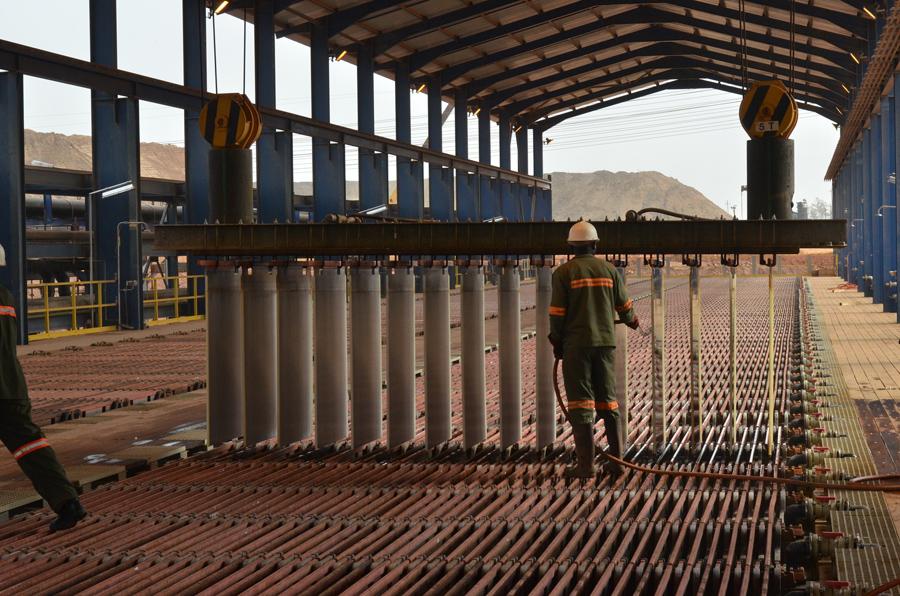
The Democratic Republic of Congo expects its copper and cobalt production to remain largely unaffected in 2026 despite concerns over disruptions to sulfuric acid supplies caused by recent conflict in the Middle East.
The positive outlook comes as global demand for critical minerals remains strong, with government officials expressing confidence that mining companies have sufficient measures in place to maintain production throughout the year.
Sulfuric acid is a key chemical used in the processing of copper and cobalt ores, making it an essential input for mining operations across Central Africa. Supply concerns emerged after the conflict between the United States and Iran disrupted regional supply chains, while neighbouring Zambia reduced sulfuric acid exports to prioritise domestic demand.

The restrictions prompted some mining companies operating in Congo to assess the potential impact on production following record export volumes during the first quarter of the year.
Despite these challenges, Grace Mabaya, a senior official in the Ministry of Mines, said authorities have not observed any significant effect on national mining production linked to shortages of critical processing materials.
According to Mabaya, most mining companies have secured long-term supply agreements, maintain strategic inventories or source chemicals from alternative regional suppliers, reducing the likelihood of major production disruptions.
He noted, however, that prolonged supply chain constraints could increase operating costs and extend delivery times for essential mining inputs if the situation persists.
The Democratic Republic of Congo remains the world’s largest producer of cobalt and the second-largest producer of copper, making stable production critical to global supply chains supporting electric vehicles, renewable energy technologies and battery manufacturing.
Official data showed the country exported 823,887 metric tonnes of copper during the first quarter of 2026, representing a 4.8% increase compared with the same period last year.
Cobalt hydroxide exports also recorded strong growth, rising 24.5% to 51,940 tonnes, equivalent to approximately 17,054 tonnes of contained cobalt metal. Gold exports reached 6.3 tonnes, generating an estimated US$732 million in export revenue during the quarter.
The government continues to strengthen its oversight of the cobalt sector through production quotas and export controls as part of broader reforms aimed at increasing the country’s influence over global cobalt markets and ensuring greater value from its mineral resources.
China’s CMOC remained the country’s largest exporter of copper and cobalt during the first quarter, while Glencore also continued to play a significant role in mineral exports.
With global demand for copper and cobalt expected to remain robust, Congolese authorities believe the mining sector is well positioned to sustain production, supported by stable operations, diversified supply arrangements and continued investment across the country’s mining industry.
Share this content: