Congo Tax Dispute Escalates as Authorities Seal Glencore Mine Offices
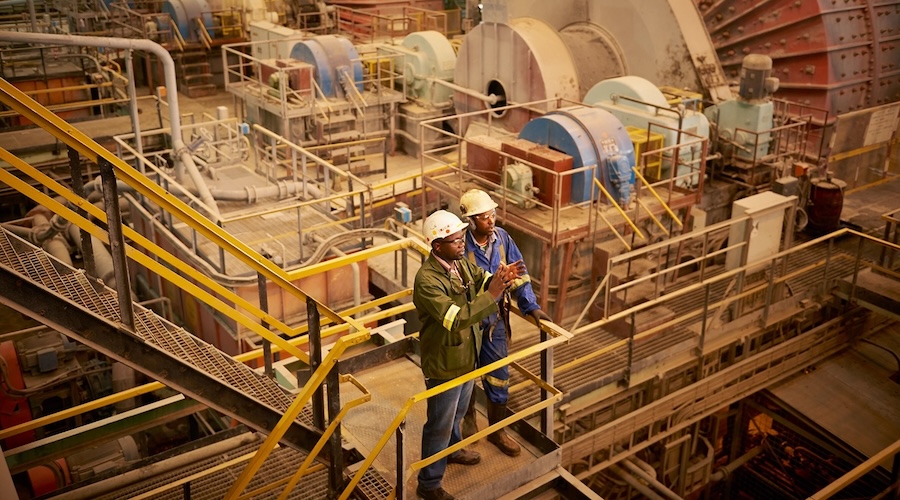
Copper-cobalt mine in DRC. (Image courtesy of Kamoto Copper Company.)
A tax dispute between the Democratic Republic of Congo (DRC) and globalmining giant Glencore has escalated after the country’s tax authority sealed offices belonging to Kamoto Copper Company (KCC), one of Africa’s largest copper and cobalt producers.
The action underscores the DRC government’s continued efforts to strengthen tax compliance and maximise revenues from its strategic mining sector, which plays a critical role in the global supply of energy transition minerals.

Tax Authorities Take Action
According to reports, officials from the DRC’s tax authority, known by its French acronym DGI (Direction Générale des Impôts), sealed Kamoto Copper Company’s administrative offices in Kolwezi, the mining hub of Lualaba Province.
The enforcement action follows unsuccessful negotiations between the tax authority and the company over what the government alleges are outstanding tax obligations amounting to billions of dollars.
Glencore has disputed the claims and confirmed that it remains engaged in discussions with the Congolese authorities to resolve the matter.
Mining Operations Continue
Despite the closure of the administrative offices, production at Kamoto’s nearby mining and processing facilities has not been interrupted.
Kamoto remains one of the Democratic Republic of Congo’s largest copper and cobalt operations, producing approximately 190,000 tonnes of copper in 2025, with plans to increase annual production to 300,000 tonnes in the coming years.
Maintaining uninterrupted production is particularly important given the mine’s strategic role in global critical mineral supply chains.
Strategic Importance of Kamoto
Glencore holds a 70% ownership stake in Kamoto Copper Company, while the remaining 30% is jointly owned by the Congolese government and state mining company Gécamines.
The operation is one of the world’s largest producers of both copper and cobalt—two minerals that are essential for electric vehicle batteries, renewable energy infrastructure and advanced technologies.
The Democratic Republic of Congo remains the world’s largest cobalt producer and the second-largest producer of copper, making the country’s mining industry central to the global energy transition.
Rising Demand for Critical Minerals
Global demand for copper and cobalt has continued to strengthen as investment in renewable energy, electric vehicles, battery manufacturing and artificial intelligence infrastructure accelerates.
Copper prices recorded significant gains during 2025 and have continued to rise in 2026 amid expectations of sustained long-term demand growth.
As a result, large-scale mining assets such as Kamoto have become increasingly important to international investors and manufacturers seeking secure supplies of critical minerals.
Investment Interest Continues
Earlier this year, Orion CMC, an investment vehicle backed by the U.S. International Development Finance Corporation (DFC), announced a preliminary agreement to acquire 40% of Glencore’s interest in Kamoto and another Congolese copper-cobalt operation.
The transaction has not yet been finalised but highlights growing international interest in securing access to the Democratic Republic of Congo’s mineral resources.
Balancing Investment and Revenue
The latest dispute reflects the broader challenge facing many resource-rich African countries as governments seek to increase public revenues from mining while maintaining an attractive investment environment.
For the Democratic Republic of Congo, strengthening tax collection and ensuring greater economic benefits from its vast mineral wealth remain key priorities.
At the same time, international mining companies continue to emphasise the importance of regulatory certainty and constructive engagement to support long-term investment in one of the world’s most important critical mineral jurisdictions.
Share this content: