DR Congo Enforces Local Ownership Rule For Foreign Mining Companies
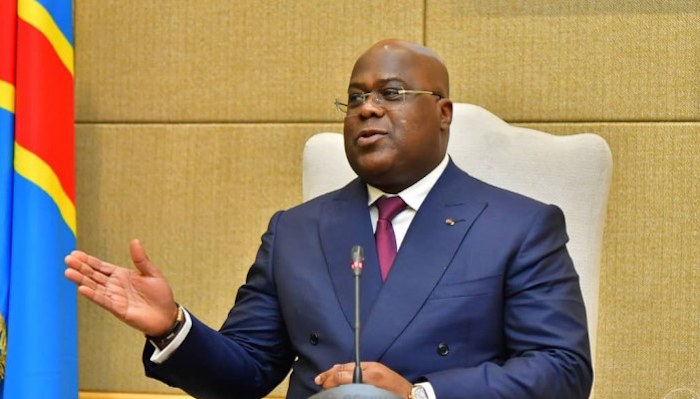
The Democratic Republic of Congo (DRC) is moving ahead with plans to increase local participation in its mining industry by enforcing a law requiring foreign mining companies to transfer part of their ownership to Congolese citizens.
The government has instructed all affected mining companies to comply with the regulation by 31 July 2026, warning that failure to do so could result in regulatory sanctions.
The requirement forms part of the country’s Mining Code reforms introduced in 2018, which aim to ensure that Congolese citizens receive a greater share of the benefits generated by the nation’s vast mineral wealth.

10% Equity Must Be Held by Congolese Nationals
Under the regulation, foreign-owned mining companies must transfer 10% of their equity to Congolese nationals. Half of that allocation—5%—must be reserved specifically for employees working within the company, giving workers a direct stake in mining operations.
The policy is intended to encourage broader local participation in an industry that has traditionally been dominated by multinational corporations despite the DRC being one of the world’s richest mineral-producing nations.
Several major international mining companies, including Glencore, Ivanhoe Mines, CMOC, and Huayou Cobalt, have reportedly received formal notices requiring them to demonstrate compliance before the deadline.
Government Rejects Further Delays
Mining companies have previously requested more time to implement the ownership transfers, citing uncertainty over issues such as company valuation, share dilution and the legal structure of the transfers.
However, following consultations between government officials and industry representatives, the Ministry of Mines confirmed that companies would be expected to comply with existing legal provisions while an ad hoc committee finalises the remaining technical details of the implementation decree.
Authorities have indicated that only limited amendments remain before the decree is officially signed.
Part Of A Broader Resource Nationalisation Strategy
The latest move reflects the DRC government’s broader strategy to secure greater economic returns from its mineral resources.
As the world’s largest producer of cobalt and Africa’s second-largest producer of copper, the country occupies a critical position in global supply chains supporting electric vehicles, renewable energy technologies, battery manufacturing and artificial intelligence infrastructure.
By increasing local ownership, the government hopes to strengthen wealth creation within the country while promoting skills development, employment and long-term economic participation for Congolese citizens.
Critical Minerals Remain In Global Demand
Demand for copper and cobalt continues to rise as industries expand investments in electric mobility, renewable energy systems, battery storage and advanced digital technologies.
Copper remains essential for electrical wiring, transmission infrastructure and data centres, while cobalt is a key component in many rechargeable batteries used in electric vehicles and consumer electronics.
With competition for critical minerals intensifying worldwide, the DRC is seeking to balance foreign investment with greater domestic participation in one of Africa’s most strategic industries.
The enforcement of the local equity requirement signals a significant shift in the country’s mining policy and reinforces its determination to ensure that future mineral development generates broader economic benefits for its people.
Share this content: