Six African Countries Push Back on Deep-Sea Mining as Global Race for Critical Minerals Intensifies
Six African countries are backing calls for a precautionary pause or moratorium on deep-sea mining, adding momentum to a global debate over whether the ocean floor should be opened to commercial extraction of critical minerals.
Mauritius, Mozambique and the Republic of the Congo joined Malawi, Kenya and Madagascar in supporting a precautionary approach during the 2026 discussions at the International Seabed Authority (ISA).
Their position comes as major economies, including China, India and the United States, increasingly look to the ocean as a potential source of minerals needed for electric vehicles, renewable energy systems and other strategic technologies.

For Africa, however, the debate is about more than environmental protection. It also raises questions about the future competitiveness of countries that already possess significant deposits of critical minerals on land.
Africa’s Deep-Sea Mining Debate
The growing African bloc is giving the continent a stronger voice in discussions at the ISA, the international body responsible for regulating mineral-related activities in the seabed beyond national jurisdiction.
The ISA’s 2026 session continued negotiations on regulations governing the exploitation of seabed mineral resources. The authority says commercial exploitation in the international seabed cannot begin until the relevant regulations have been adopted.
The six African countries supporting a pause are taking a precautionary position, arguing that the potential environmental consequences of mining ecosystems thousands of metres beneath the ocean surface require further scientific understanding.
Mauritius, for example, has stressed the importance of a healthy and resilient ocean to its sustainable development and has called for decisions on seabed mining to be guided by scientific evidence and the precautionary principle.
The concern is significant because deep-sea ecosystems remain relatively poorly understood.
What Is Deep-Sea Mining?
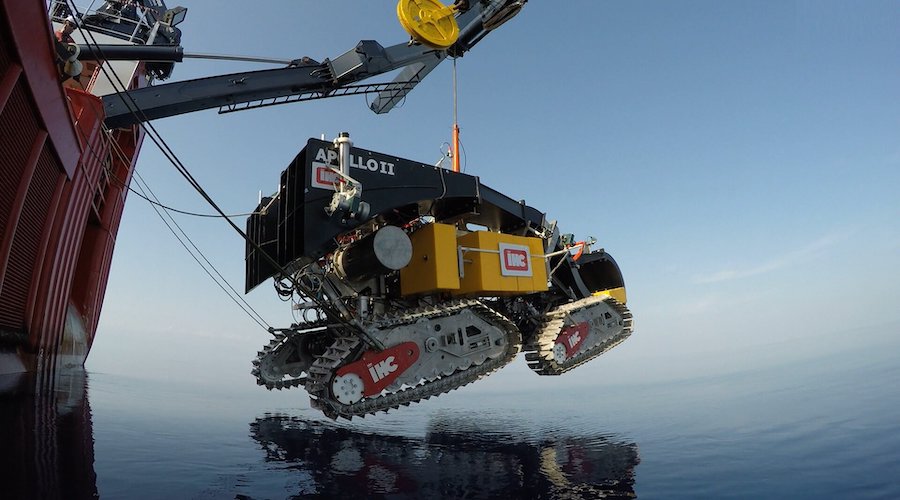
Deep-sea mining involves extracting mineral deposits from the ocean floor, particularly in areas beyond national jurisdiction.
One of the most discussed resources is polymetallic nodules, which contain minerals including nickel, cobalt, manganese and copper.
These minerals are increasingly important to industries involved in batteries, electric vehicles, renewable energy infrastructure and other advanced technologies.
The commercial opportunity is therefore substantial.
But the environmental risks remain a major point of contention.
Mining equipment can disturb the seabed and generate sediment plumes, potentially affecting marine organisms and ecosystems. Scientists and environmental groups argue that the long-term consequences remain uncertain.
The ISA says continuous environmental baseline studies, data collection and impact assessments are important to developing a science-based and precautionary regulatory framework.
The Global Race for Critical Minerals
The debate is taking place against the backdrop of an intensifying global competition for critical minerals.
The United States has been pursuing greater access to seabed resources, while China has invested heavily in deep-ocean exploration and technology.
India is also interested in securing additional seabed resources as it seeks to strengthen supplies of critical minerals and reduce dependence on imports.
Other major economies have taken a more cautious position. Countries including France, Germany, the United Kingdom and Canada have supported various forms of moratorium, precautionary pause or tighter restrictions.
The disagreement reflects a fundamental question: how should the world increase supplies of critical minerals without creating new environmental risks?
Africa’s Critical Minerals Advantage
For Africa, the answer is particularly complicated.
The continent is already home to major deposits of minerals that the global energy transition increasingly requires.
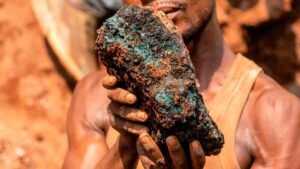
The Democratic Republic of the Congo is one of the world’s most important sources of cobalt, while South Africa, Zambia, Zimbabwe and other African countries have substantial mineral resources and long-established mining industries.
Much of Africa’s mineral wealth, however, remains underexplored or underdeveloped.
That creates a strategic argument for focusing on the continent’s land-based resources before turning extensively to the seabed.
If deep-sea mining eventually produces large quantities of cobalt, nickel, manganese and copper, it could introduce additional competition for minerals that African economies currently produce and export.
For countries dependent on mining revenue, foreign investment and mineral exports, changes in global supply could have significant economic consequences.
Not All African Countries Agree
Despite growing support for a precautionary pause, the African position is far from unified.
Major economies including South Africa, Nigeria, Egypt and the Democratic Republic of the Congo have not joined the six-country bloc calling for a pause.
That does not necessarily mean these countries support immediate commercial deep-sea mining.
Instead, it reflects the different economic calculations facing governments with significant mining sectors, large mineral reserves or interests in developing ocean resources.
South Africa and Nigeria, for example, have participated in discussions and capacity-building activities relating to deep-seabed resources, suggesting that they are keeping their policy options open.
The continent must therefore balance two competing considerations: protecting marine ecosystems while ensuring that African countries are not excluded from future opportunities created by the development of ocean resources.
A Question of Who Controls Future Mineral Supply
The deep-sea mining debate ultimately extends beyond environmental policy.
It is becoming part of a much larger competition over who will control the supply of minerals needed for the global energy and technology transition.
If seabed mining becomes commercially viable, countries and companies with access to the necessary technology could gain a new source of strategic minerals.
That could alter global mineral markets and potentially reduce the relative importance of some land-based deposits.
For Africa, this raises an important strategic question.
Should governments support the development of seabed mining, oppose it or adopt a wait-and-see approach while investing in better understanding of the technology and its environmental consequences?
There may not be a single answer for the entire continent.
Africa Needs a Strategic Approach
Rather than treating deep-sea mining as simply an environmental issue, African governments could approach it as part of a broader critical-minerals strategy.
That strategy should consider the value of Africa’s existing mineral deposits, opportunities for local processing, environmental protection, technology development and the continent’s long-term position in global supply chains.
African countries could also use their participation in the ISA to push for stronger environmental safeguards while ensuring that any future economic benefits from seabed resources are shared fairly.
The ISA itself describes deep-seabed resources as part of the common heritage of humankind and is working toward a regulatory framework intended to balance resource development with environmental protection.
The Decision Africa Faces
The growing support for a precautionary pause shows that concern about deep-sea mining is gaining traction across Africa.
For Mauritius, Mozambique, the Republic of the Congo, Malawi, Kenya and Madagascar, caution currently takes priority.
Other countries are keeping their options open.
As the global race for critical minerals accelerates, that debate is unlikely to disappear.
Africa already possesses many of the minerals the world needs for the energy transition. The challenge is to ensure that the continent does not simply remain a supplier of raw materials while others capture most of the value from processing and technology.
Deep-sea mining could eventually create another source of critical minerals. But before that happens, African governments will have to determine whether the economic opportunity outweighs the environmental risks — and, crucially, whether Africa’s own mineral wealth on land has been sufficiently developed.
For now, the continent’s emerging precautionary bloc is sending a clear message: the race for critical minerals should not come at the expense of the ocean’s future.
Share this content: