Komatsu South Africa Achieves TRL4 Certification For Surface Mining Collision Prevention
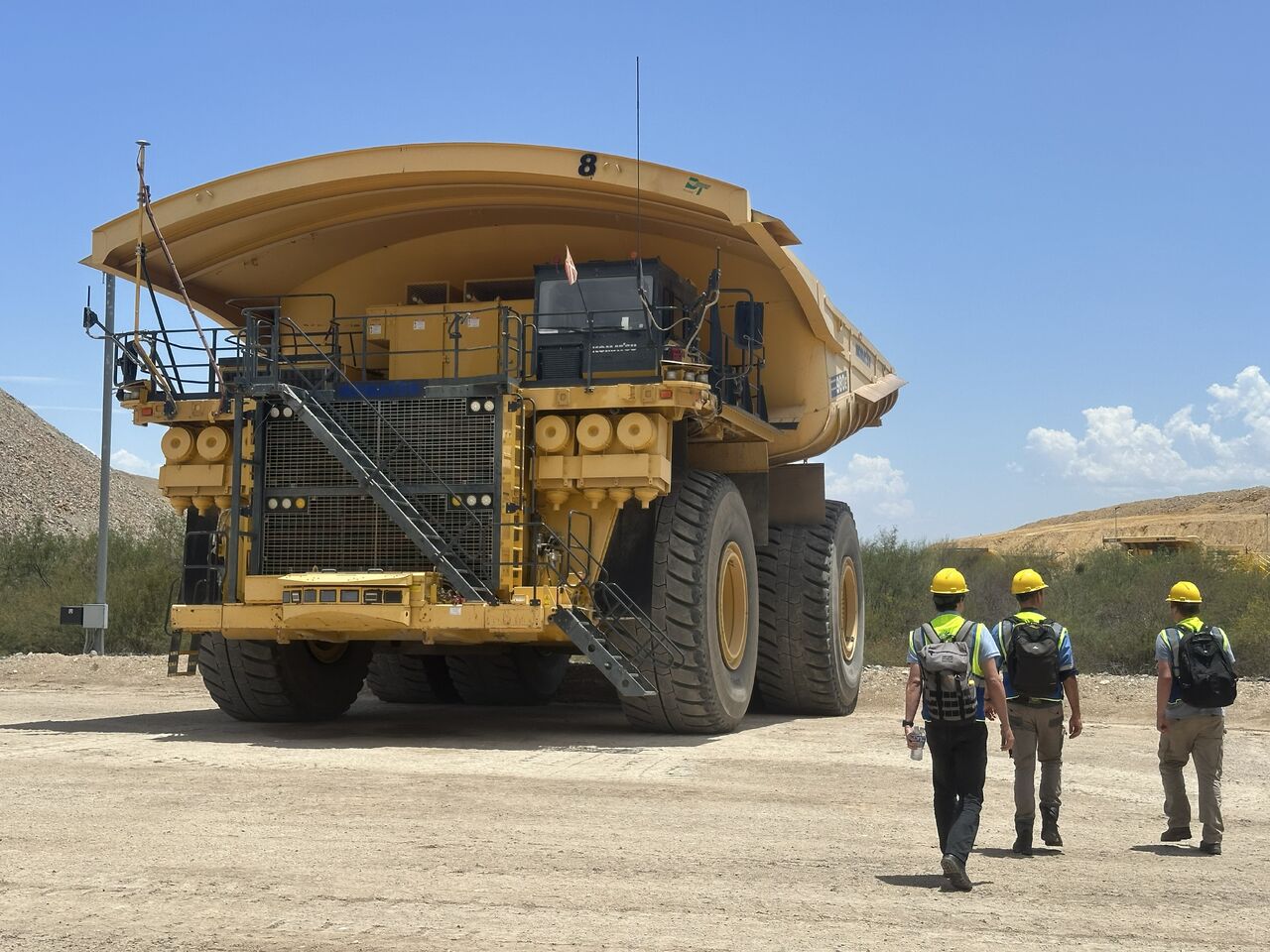
Komatsu South Africa has announced that it has become the first surface trackless mobile machinery (TMM) original equipment manufacturer (OEM) to achieve Technology Readiness Level 4 (TRL4) certification for its collision prevention technology.
The certification follows independent verification testing conducted by the University of Pretoria (UP) at the Gerotek Test Facilities in West Pretoria and at a mining customer site.
The achievement represents a significant development in the use of collision prevention technology across South Africa’s surface mining industry, where regulations increasingly require mines to adopt advanced systems designed to reduce the risk of vehicle-to-vehicle and vehicle-to-person collisions.

Independent Testing Verifies Collision Prevention Technology
The University of Pretoria conducts independent TRL4 verification testing for Collision Prevention Systems (CPS) and Collision Warning Devices (CxD).
The testing process begins under controlled laboratory conditions before progressing to light-vehicle testing at the Gerotek proving ground. The final stage takes place within a controlled, cordoned-off area at a customer mine site.
The testing is conducted under the Minerals Council South Africa’s Mine Occupational Safety and Health (MOSH) framework, providing an independent assessment of whether the technology can perform reliably in conditions relevant to mining operations.
According to Komatsu, its TRL4 certification confirms that its machinery can automatically inhibit propulsion or apply braking when an imminent collision hazard is detected.
The technology is designed to meet the requirements of ISO 21815, an international standard covering collision awareness and intervention systems for mining machinery.
Advancing Level 9 Collision Prevention
Komatsu said the certification provides mining companies with a proven, factory-integrated pathway towards Level 9 collision prevention.
Level 9 systems represent the highest level of vehicle intervention under South Africa’s mining safety framework, with technology capable of actively intervening to prevent or mitigate an imminent collision rather than simply warning an operator about a potential hazard.
The development is particularly important as mining companies continue to adopt automation, connected equipment and advanced safety technologies.
Komatsu said the achievement reinforces its commitment to supporting safer and increasingly autonomous mining operations while improving overall operational performance.
South Africa at The Centre of Collision Prevention Development
Komatsu’s announcement follows several other developments in South Africa’s rapidly evolving collision prevention technology sector.
In March, Hexagon Mining announced that the latest generation of its Vehicle Intervention System had become the first open-pit Level 9 solution to successfully pass the MOSH CPS TRL4 test specification following testing by the University of Pretoria.
In July, Mine Safe Global announced that it had achieved MOSH TRL4 verification from the University of Pretoria for both collision detection and machine intervention within a single integrated collision prevention product range.
The developments highlight South Africa’s growing importance as a testing and regulatory centre for advanced mining safety technologies.
Regulations Driving Mining Safety Innovation
The country’s regulatory environment has played an important role in accelerating the development and adoption of collision prevention systems.
In December 2022, South Africa’s Department of Mineral Resources and Energy brought Chapter 8 provisions of the Mine Health and Safety Act Regulations into effect. The regulations address Level 9 vehicle intervention for collision avoidance involving trackless mobile machinery in both surface and underground mining operations.
The regulatory requirements have encouraged mining equipment manufacturers and technology companies to develop systems capable of meeting increasingly demanding safety standards.
For mining companies, the development of factory-integrated collision prevention technology could simplify the transition towards compliant Level 9 systems while reducing the risks associated with interactions between heavy mobile equipment, light vehicles and personnel.
Komatsu’s TRL4 achievement therefore represents more than a technology milestone. It reflects the broader shift towards automated safety intervention in mining and the industry’s growing reliance on independently verified systems.
As mines move towards smarter and more autonomous operations, collision prevention is likely to become an increasingly important component of mine safety strategies.
Share this content: