Namibia Mining Sector Faces Weak 2026 Before Expected Recovery in 2027

Namibia’s mining industry is expected to remain under pressure for the rest of 2026, with declining gold and zinc production weighing on overall output despite strong international prices for key commodities.
The Chamber of Mines of Namibia says July was the first month this year in which national mining production exceeded the corresponding month of 2025. Even so, total production is expected to remain subdued through 2026.
The weakness is reflected in national economic data.

Namibia’s mining and quarrying sector contracted by 3.1% year on year in the second quarter of 2026, although the decline was less severe than the 7.1% contraction recorded during the first quarter.
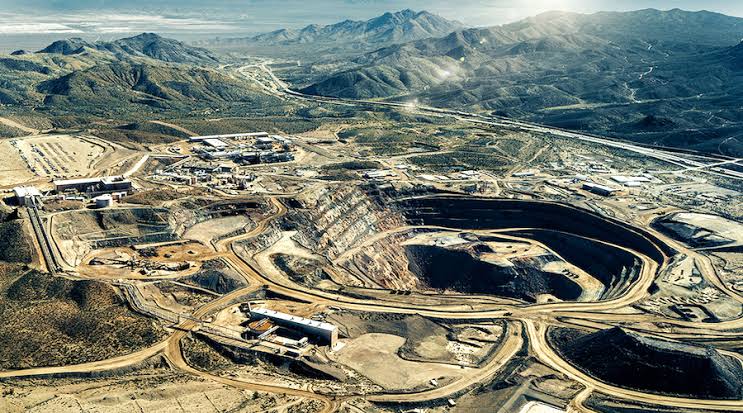
Gold has been one of the main contributors to the decline. Existing operations are transitioning from open-pit to underground mining, temporarily affecting production volumes as mines move between operating methods.
Zinc production has also remained subdued, while the country’s diamond industry continues to face weak global market conditions.
The production slowdown, however, has not translated into an equivalent collapse in export earnings.
Strong international prices for gold and uranium are providing an important cushion for mining companies and the Namibian economy. The Chamber of Mines has previously described 2026 as a transitional year, with commodity prices helping to support revenues and export earnings despite lower physical production.
Uranium is emerging as one of the most important components of Namibia’s medium-term mining outlook.
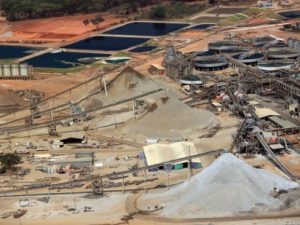
The continued ramp-up of the Langer Heinrich mine is expected to increase uranium production, while progress at Bannerman’s Etango project and Reptile Uranium’s Tumas development could further expand the country’s uranium industry from 2027 onwards.
Gold could also contribute to the recovery as new and expanding operations increase production capacity.
The Chamber has identified developments including Twin Hills, as well as underground projects at Navachab and Otjikoto, as part of a broader transition towards a more diversified production base.
This transition could be significant for Namibia because the country’s mining industry remains closely linked to exports, government revenue and investment.
Uranium and gold already represent substantial shares of the country’s export earnings, meaning increased production could strengthen the external sector as new projects move towards commercial output.
The diamond sector presents a different picture.
The Chamber does not expect a meaningful improvement in diamond production in the near term, reflecting continued weakness in the international diamond market. Namibia’s mining recovery is therefore likely to depend increasingly on uranium, gold and other commodities rather than a broad-based improvement across the entire sector.
There are also risks to the expected recovery.
The Chamber has warned that a prolonged slowdown in the global economy could reduce demand for minerals, while higher financing costs could make it more expensive to develop capital-intensive mining projects.
For Namibia, ensuring that projects already in the pipeline progress from development into production will therefore be critical.
The country’s mining sector enters 2027 with a potentially stronger project pipeline than the one supporting production in 2026.
If uranium expansions and new gold developments continue to advance as planned, Namibia could begin moving from a period of declining output towards a broader and more diversified mining industry.
For now, 2026 is shaping up as a year of adjustment.
The immediate numbers remain subdued, but the projects being developed today could determine whether Namibia’s mining sector enters its next growth cycle with greater production capacity, stronger export earnings and a more diversified mineral base.
Share this content: