Kenya’s Mrima Hill Project Highlights Africa’s Push for Local Mineral Processing
Africa’s next mining boom must deliver more than raw materials, with governments increasingly seeking to convert mineral wealth into jobs, industrial development and lasting economic benefits for local communities.
That is the argument advanced by Régis Hounkpè, founder and executive director of InterGlobe Conseils, who says the continent’s growing importance in critical minerals supply chains must be matched by greater investment in local processing, responsible technology and community development.
Kenya’s proposed development of the Mrima Hill deposit in Kwale County illustrates the opportunity. According to the country’s Ministry of Mining, the deposit contains indicated resources of 5.8 million tonnes of niobium ore and 48.7 million tonnes of rare earth ore.

Both niobium and rare earth elements are important to advanced manufacturing and technology supply chains, positioning the deposit as a potentially significant asset as demand for critical minerals grows.
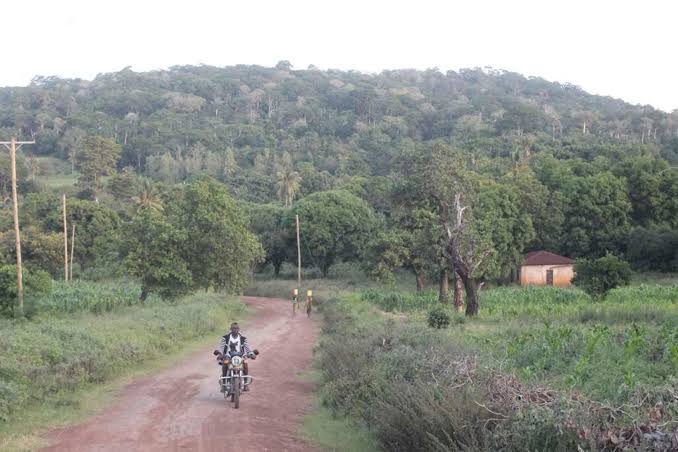
However, developing Mrima Hill will require careful consideration of its environmental and social setting. The deposit lies within the wider Mrima Hill forest ecosystem and near areas of cultural importance to local communities. Water use, waste management, land requirements, livelihoods and cultural heritage will therefore need to be central to project planning.
Hounkpè argues that these concerns should influence the design of the project from the outset rather than be treated as barriers to development.
Experiences from other countries underline the importance of effective environmental management in rare earth production. Operations such as Lynas Rare Earths in Malaysia have faced scrutiny over processing and waste management, while Australia’s Mt Weld operation illustrates the technical and environmental complexities associated with developing rare earth resources.
According to Hounkpè, advances in processing technology could give Kenya additional options. Newer water-based chemical processing approaches may offer alternatives to conventional solvent-based methods, potentially reducing requirements for land, water and chemicals, as well as the volume of waste generated.
However, the environmental performance of any proposed process would need to be independently assessed against Mrima Hill’s specific geological, ecological and community conditions. Technology alone cannot guarantee responsible mining, but processing choices can significantly influence a project’s overall footprint.
The decision will also affect the economic benefits available to Kenya. Processing minerals locally can create employment, develop technical skills and support related industries, while reducing dependence on overseas facilities.
There is an important distinction between producing a mineral concentrate and carrying out further refining. Moving towards finished rare earth oxides could allow Kenya to retain a larger share of the value chain than exporting material for processing elsewhere, although doing so would require suitable infrastructure, technical expertise, energy and investment.
The debate reflects a broader policy direction in Kenya, where the government has emphasised local processing, industrialisation and job creation in its management of natural resources. Hounkpè argues that Mrima Hill should be developed with the same ambition, ensuring that the resource supports domestic economic activity rather than serving solely as an export commodity.
Kenya’s mining framework also provides for mineral royalties to be shared between national and county governments and local communities, alongside provisions relating to local employment, training and development.
For communities in Kwale, the potential benefits will depend on how these arrangements translate into practical outcomes. Skilled jobs, local procurement, training opportunities and investment in surrounding communities could help spread the economic gains beyond the mine itself.
The challenge is to align those benefits with effective environmental safeguards. A project that manages water and waste responsibly, limits its physical footprint and creates opportunities for local businesses would be better positioned to deliver lasting value.
For Africa more broadly, the issue extends beyond a single deposit. The continent holds substantial resources needed for the global energy transition and advanced industrial production, but the long-term economic opportunity depends partly on how much processing, manufacturing and technical expertise can be developed within African economies.
Mrima Hill therefore presents Kenya with an opportunity to demonstrate how mineral development can combine investment, environmental responsibility and local value creation. The project’s eventual success will depend not only on the resources extracted, but also on the processing technology selected, the benefits retained within Kenya and the way local communities are involved.
Share this content: