Critical Mineral Deposits Becoming More Difficult to Extract as Mines Age, EY Warns
The mining industry is facing increasingly difficult extraction and processing conditions as mineral deposits mature, ore grades decline and operational complexity increases, according to a new report by professional services firm EY.
The report, Top 10 Business Risks and Opportunities in Mining and Metals 2027, identifies operational complexity as the industry’s leading business risk for 2027, followed by capital availability, supply chain disruptions, rising costs and geopolitics. Its findings are based on a survey of 400 senior executives in the global mining and metals industry.
EY Global Mining and Metals Leader Paul Mitchell said mining operations were becoming more challenging as existing deposits aged and reserves were depleted, while replacement deposits were increasingly difficult to mine and process.

The findings have significant implications for critical minerals, which governments increasingly regard as essential to industrial development, energy transitions and secure supply chains. Mining companies must replace declining reserves while managing more demanding geological conditions, higher operating costs and uncertainty over investment and government policies.
Declining ore grades increase operational pressure
Regulatory compliance delays were identified as the leading contributor to operational complexity in the survey, followed by variability in reserve grades, cited by 29% of respondents.
Labour availability, material handling, processing capacity, transport and equipment reliability were also significant concerns, each affecting between 24% and 26% of executives surveyed.
As mines mature, operators have fewer opportunities to adjust production schedules, blend ore or redirect material through processing facilities. This reduced flexibility makes it more difficult to manage disruptions, control costs and maintain output.
Developing replacement deposits brings additional challenges, as companies increasingly encounter mineral resources that require more complex extraction and processing methods.
Capital availability ranked as the industry’s second-largest risk. Although financing remains accessible, investors are becoming more selective as commodity markets diverge, forcing mining companies to reconsider how they fund new developments and maintain existing operations.
The survey found that 44% of companies were pursuing funding from original equipment manufacturers, while 39% were targeting sovereign wealth funds and another 39% were seeking government investment.
Mitchell said access to diversified funding sources would be important for mining companies seeking to maintain flexibility as market conditions change.
Supply chain disruptions and rising costs
Supply chain disruptions ranked third among the industry’s business risks, reflecting their impact on the delivery of mining inputs, processing operations and access to markets.
To reduce exposure, 53% of mining companies are investing in technology to improve supply chain visibility, while 52% are increasing inventories or stockpiles to protect operations against interruptions.
Rising costs are also placing pressure on producers. Higher commodity prices have not necessarily been sufficient to offset more expensive inputs and the additional demands associated with increasingly complex mining operations.
Mitchell said productivity improvements were more effective when managed across the entire value chain rather than through isolated cost-cutting initiatives within individual departments.
Government investment reshapes critical minerals supply chains
Geopolitical developments are adding another layer of complexity as governments increase efforts to secure supplies of critical minerals and strengthen domestic mining, processing and refining capacity.
According to EY, public financing commitments for critical minerals more than quadrupled between 2023 and 2025, reaching approximately US$65 billion.
The survey also found that 28% of mining executives expected direct government investment over the following 12 months.
Government-backed financing and incentives could create additional opportunities for mining developers, particularly those involved in minerals considered strategically important. However, changing trade relationships, industrial policies and investment conditions could also complicate long-term project planning.
Geopolitics ranked fifth among the industry’s risks, although its influence extends into capital allocation, supply chain decisions and the choice of countries in which companies develop new projects.
Mitchell warned that uncertainty would continue beyond individual political events, requiring mining companies to build greater flexibility into their investment and operational strategies.
Cybersecurity emerges as a growing mining risk
Technology, including artificial intelligence, automation and improved processing systems, could help mining companies manage operational complexity and improve productivity.
However, increasing digital connectivity also exposes mining operations to greater cybersecurity risks.
Cybersecurity entered EY’s top 10 business risks for 2027. The research found that 67% of mining and metals assets fell within a vulnerability zone characterised by below-average visibility and cybersecurity controls.
Carbon management, sustainability, changing business models and licence to operate completed the report’s ranking.
For critical minerals producers, the findings highlight the growing challenge of meeting government demand for secure mineral supplies while developing and operating increasingly difficult deposits.
Mitchell said companies should not wait for uncertainty to disappear, but instead reassess the assumptions behind their strategies, portfolios and capital decisions while building greater flexibility into their operations.
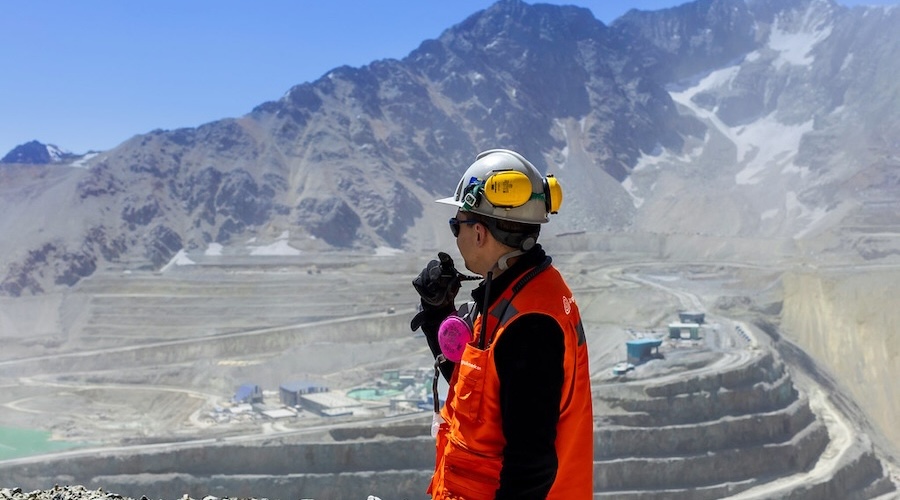
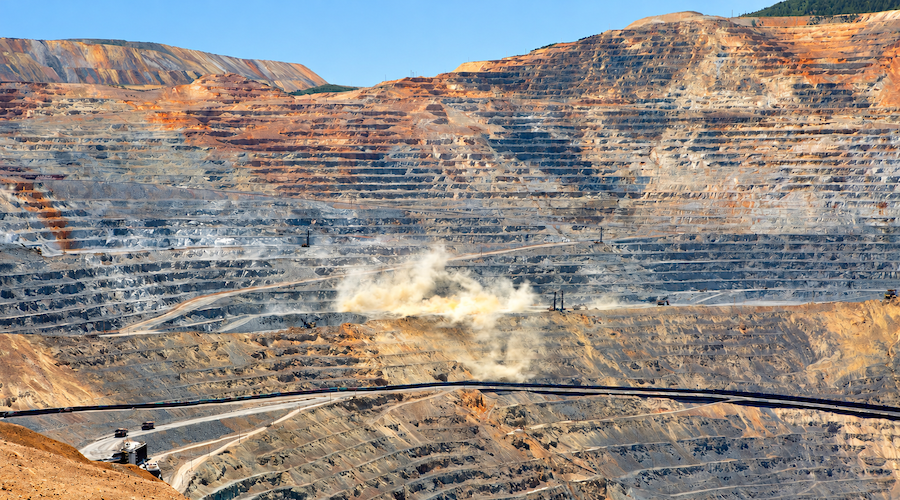
As mines age and reserves decline, producers face increasingly complex extraction and processing challenges. (Stock image of Bingham Canyon copper mine by Gracie.)
Share this content: