Mali Establishes Geology R&D Agency to Expand Gold Reserves and Boost Mining Production

Mali has established a state-owned Geology Research and Development (R&D) Agency to strengthen mineral exploration, identify new gold deposits and increase production as the West African country seeks to expand its position as a major gold producer.
Mali is stepping up efforts to strengthen its gold mining industry through a new government-backed geological research agency aimed at expanding the country’s mineral resource base and improving exploration targeting.
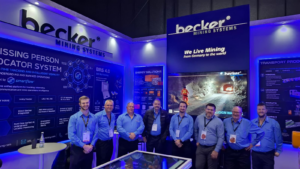
The announcement was made by Fousseni Tougela, President of the Mali Chamber of Mines, during Africa Mining Week in Cape Town, South Africa.

Tougela said the agency was established in September 2026 as part of broader measures to sustain the development of Mali’s mining industry, particularly its gold sector.
He explained that the country had been developing its mining industry since 1990 and was introducing additional measures to increase output and maintain its competitiveness.
The new agency will focus on geological research and identifying more promising exploration targets, while the government is also increasing the number of research and exploration permits issued to mining companies.
Mali expands exploration and state participation
The establishment of the Geology R&D Agency follows the creation in early 2026 of Société de Patrimoine Minier du Mali, a state-owned joint-stock company established to manage government holdings and commercial interests across the mining sector.
The government is also accelerating exploration activity through additional permits awarded between August and September 2026.
According to Tougela, 21 permits were announced during the two-month period, reflecting Mali’s efforts to expand geological investigations and attract further investment into mineral exploration.
The initiatives form part of a broader strategy to increase gold reserves, identify new deposits and strengthen the country’s long-term mining production capacity.
Formalising artisanal mining remains a priority
Beyond expanding industrial exploration, Mali is also seeking to improve the organisation and regulation of artisanal and small-scale mining.
The importance of formalising smaller mining operations was highlighted during discussions at Africa Mining Week, where Ghana’s experience provided a comparative example.
Charles Obeng Kwarteng, Senior Finance Manager at Zijin Golden Ridge Limited, said small-scale miners contributed 54% of Ghana’s total gold production in 2025.
However, he noted that the sector continued to face challenges involving environmental degradation, land reclamation and environmental, social and governance (ESG) compliance.
Ghana’s government is expanding training initiatives to help small-scale miners improve environmental management and address these challenges.
Government intervention key to sustainable mining growth
Hennie du Plessis, Senior Manager of Strategic Business Development (Industrial Division) at Lesedi, emphasised the importance of government involvement in creating a workable relationship between large-scale mining companies and smaller operators.
He said multinational mining companies would continue to play a significant role in driving investment and economic growth because of their operational scale and contribution to local and national economies.
However, integrating artisanal and small-scale miners into the formal economy remains an important challenge.
Du Plessis called for stronger government intervention to ensure smaller operators can participate in the mining industry safely and sustainably alongside larger companies.
Strengthening Mali’s long-term gold mining prospects
Mali’s new geological research agency expanded exploration permitting and state participation initiatives reflect a broader effort to strengthen the country’s mining sector.
Improved geological information and more targeted exploration could help identify additional gold resources, support investment decisions and create opportunities for future mine development.
At the same time, formalising artisanal mining and strengthening environmental standards will remain important to ensuring that increased production contributes to sustainable economic development.
For Mali, combining geological research, exploration investment, stronger state participation and improved mining governance could help reinforce the long-term contribution of gold to the national economy.
Share this content: