US Consortium Wins Bid for Kenya’s $60 Billion Mrima Hill Critical Minerals Project
US-based consortium Frontier Minerals has been selected to develop Kenya’s controversial Mrima Hill critical minerals project in Kwale County, beating competing bidders from China and Australia in a tender that has raised concerns over environmental protection, community rights and transparency.
Kenya’s Ministry of Mining announced Frontier Minerals as the successful bidder on Thursday, 19 November 2026, describing the award as a gateway to meaningful local partnerships and strict regulatory compliance.
The proposed mining and processing complex is expected to target niobium and rare earth elements, minerals used in aerospace, energy, electronics and other advanced industrial applications.

The award comes as the United States increases efforts to secure access to critical minerals in Africa, with Kenya emerging as an important destination for American investment. US officials have participated in high-level mining discussions in the country in recent months as Washington seeks to strengthen its critical minerals supply chains.
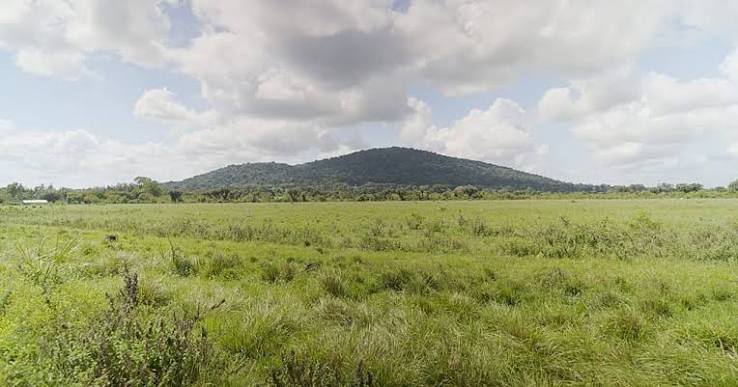
However, the project remains controversial because Mrima Hill is a 390-acre forest that contains sacred sites belonging to the local Digo community and supports surrounding livelihoods.
Mining potential and local concerns
Mrima Hill has long attracted interest because of its reported mineral wealth, with some estimates placing the value of potential deposits above US$60 billion.
However, experts involved in the tender process have cautioned that these figures remain unconfirmed and do not account for the substantial costs associated with mineral extraction and processing.
The forest has traditionally supported farming and other local livelihoods. Despite its natural resource potential, government data indicates that more than half of the surrounding population lives in extreme poverty.
The proposed development has raised concerns among residents about possible displacement, loss of access to traditional sites and whether local communities will receive a fair share of future mining revenues.
In 2025, US official Marc Dillard, who was then serving as interim ambassador to Kenya, visited Mrima Hill. Local residents also told AFP that Chinese nationals attempting to visit the site were turned away several months later.
Australian bidder challenges tender outcome
The award has also attracted objections from an unsuccessful bidder. Australian company RareX told AFP it intended to challenge the decision, alleging irregularities in the tender process.
The controversy follows earlier questions over transparency and public consultation after President William Ruto indicated that a mining agreement with the United States was nearing completion.
A Kenyan legal advocacy organisation subsequently sued the government over concerns that the process had not involved adequate public consultation and disclosure.
The latest development therefore places renewed attention on the government’s responsibility to ensure that the project complies with regulatory requirements and addresses community concerns.
Previous licensing controversy at Mrima Hill
The site has a history of disputes over mining rights. In 2013, Kenya revoked a mining licence issued to Cortec Mining Kenya, citing environmental and licensing irregularities.
Cortec challenged the decision in court, alleging that its licence had been revoked after the company refused to pay a bribe to then-Mining Minister Najib Balala. Balala denied the allegation.
Cortec’s head, Jacob Juma, was shot dead in his car in May 2016, on the day he filed formal legal submissions relating to the alleged bribery. The company subsequently lost several legal attempts to obtain compensation.
Kenya later imposed a temporary suspension of new mining licences in 2019 amid concerns about corruption and environmental degradation.
The country resumed issuing new licences in 2025, accompanied by government pledges of regulatory reforms, improved transparency and tax incentives to attract investment.
Kenya seeks larger mining contribution to the economy
The selection of Frontier Minerals comes as Kenya seeks to expand its role in global critical minerals supply chains amid growing competition between the United States, China and other industrial economies for resources needed in advanced manufacturing and technology.
The government wants to increase mining’s contribution from approximately 0.8% of gross domestic product to 10% by 2030.
Developing Mrima Hill could support this ambition through investment in mineral extraction and local processing. However, the project’s progress will depend on regulatory compliance, environmental considerations, community engagement and the resolution of concerns surrounding the tender.
The successful development of the deposit could create opportunities in Kenya’s critical minerals industry, but the unresolved questions over environmental protection, local participation and the tender process remain central to the project’s future.
Share this content: