Mining Indaba 2026: Event highlights Africa’s mining opportunity amid global competition
David Christianson
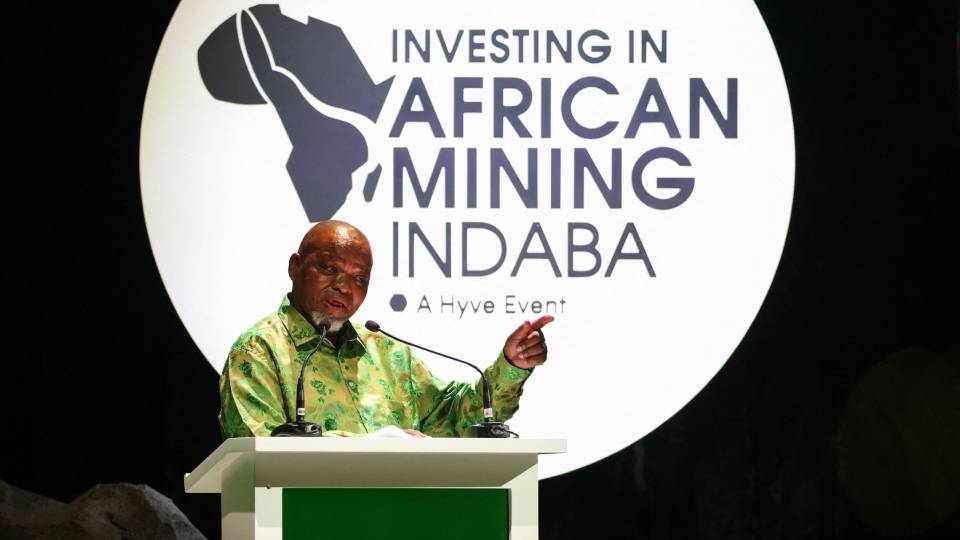
The 2026 edition of the Investing in Africa Mining Indaba, held in Cape Town from 9–12 February, reaffirmed its position as the world’s third-largest mining conference after gatherings in Toronto and Sydney. While each year’s event is built around a guiding theme — in 2026, “Stronger Together. Progress through Partnerships” — this year’s discussions were largely shaped by intensifying global competition over critical minerals supply chains, particularly the United States’ push to secure alternative sources.
The conference recorded its highest attendance to date, drawing more than 12,000 delegates to Cape Town. It also featured an unprecedented official US delegation, primarily made up of technical experts from agencies such as the US Trade and Development Agency and the US International Development Finance Corporation, alongside State Department officials and several US ambassadors to African countries.

With African mineral-producing nations currently being courted by both Western and Eastern powers, the overall tone among delegates was upbeat. Industry leaders pointed to strong commodity markets and growing global infrastructure demand as indicators of sustained opportunity.
Paul Dunne, president of the Minerals Council South Africa, argued that the sector is experiencing a durable upward commodity cycle. Meanwhile, Duncan Wanblad, CEO of Anglo American, described the current period as one of the most pivotal in recent years. He highlighted Africa’s vast mineral endowment and suggested that conditions are increasingly aligned to unlock that potential.
Wanblad noted that both the US and China are expected to invest close to $2 trillion over the next five years to modernise their electricity grids as they compete in artificial intelligence and data centre development. While he specifically mentioned copper as a key beneficiary, the broader implication is significant demand growth across multiple mineral categories. He framed mining as fundamentally synonymous with supplying critical minerals — effectively sidestepping ongoing debates over the precise definition of the term.
One factor that received comparatively little attention was the increasingly transactional and competitive nature of the global economy, particularly following the return of a second Trump administration. However, this shift predates that development. The 2022 Inflation Reduction Act under President Biden had already introduced “friend-shoring” policies, limiting incentives for critical minerals supply chains to US-aligned countries. President Trump’s approach has since taken on a more overtly nationalist tone, although at the Indaba, the US delegation maintained a measured and disciplined message.
Shortly before the Cape Town gathering, US Secretary of State Marco Rubio hosted the inaugural Critical Minerals Ministerial in Washington, explicitly aimed at reducing reliance on China. Of the 55 participating countries, seven were African. Notably absent, however, was South Africa, despite its status as the continent’s most established mining jurisdiction and host of the Indaba. Eleven countries — including Guinea and Morocco — signed cooperation frameworks with the US. The Democratic Republic of Congo had already entered into a similar arrangement in December 2025.
At the Washington event, US Vice President JD Vance argued that global critical minerals markets are not functioning effectively, referencing China’s dominance in mineral processing. He outlined a proposal for a preferential trade zone for critical minerals, protected by enforceable price floors. Such a framework would provide African governments with greater revenue certainty while also reducing risk exposure for mining companies.
The Ministerial followed the announcement of Project Vault, a $12 billion initiative to build a strategic stockpile of critical minerals to safeguard US national security against supply disruptions. The project is primarily financed by the Export-Import Bank of the United States and represents the largest single commitment on that institution’s balance sheet. Although direct investment in mining projects is anticipated — particularly in Angola, the DRC and Zambia — the US government has indicated a preference for offtake agreements rather than operational involvement in mining activities.
South Africa’s exclusion from the Washington Ministerial raised questions. Beyond geopolitical tensions, the country’s longstanding governance and regulatory challenges may have played a role. South Africa has consistently ranked near the lower end of the Fraser Institute’s mining investment attractiveness index. Despite its rich mineral base, the value of its mineral production has hovered around $50 billion for years, while several other African jurisdictions have experienced more rapid expansion.
A central issue raised during the Indaba was the degree of agency African governments possess amid favourable global demand conditions. While there were renewed calls for downstream value addition and industrialisation, practical challenges — particularly high and unreliable energy costs — were largely glossed over. Export restrictions on unprocessed minerals in countries such as the DRC (cobalt) and Zimbabwe (lithium) were acknowledged but not deeply examined.
Hakainde Hichilema, President of Zambia, delivered the opening keynote address and was widely regarded as one of the standout speakers. He emphasised regulatory clarity, institutional strength, transparency and technological adoption. He also underscored the importance of developing regional logistics corridors to strengthen value chains. On the geopolitical front, Hichilema maintained a neutral stance, avoiding explicit alignment between the US- and EU-backed Lobito Corridor and the Chinese-supported TAZARA railway modernisation.
By contrast, South Africa’s mining minister, Gwede Mantashe, was reportedly more outspoken. According to veteran journalist Peter Fabricius, Mantashe criticised the DRC’s agreement with the US, suggesting it undermined continental unity. Although he denied any dispute, DRC mining minister Louis Watum Kabamba later clarified that the agreement with Washington was simply a framework for dialogue and cooperation, not an alignment in broader US-China rivalry. He emphasised that the DRC would continue to pursue its own national interests.
Overall, Mining Indaba 2026 reflected an African mining sector undergoing a strategic recalibration. With increased global demand for critical minerals and renewed geopolitical competition, mineral-rich African nations now face a landscape offering more options than in the past. The challenge will be whether they can effectively leverage these shifting dynamics to translate mineral wealth into long-term economic transformation.
Share this content: