Middle East Crisis Highlights Strength of Omnia Holdings Supply Chains

The ongoing instability in the Middle East is once again exposing vulnerabilities in global supply chains—particularly for critical inputs used in mining and agriculture. Against this backdrop, South Africa-based Omnia Holdings is emerging as a key stabilising force, leveraging its robust logistics network and vertically integrated operations to maintain supply continuity across Africa and beyond.
Supply Chain Resilience in a Disrupted Global Market
With disruptions affecting key trade routes and input availability, Omnia’s established infrastructure is proving crucial. The company has built one of the region’s strongest supply chains for ammonia-based products, supported by:

- A fleet of approximately 200 ammonia rail tankers
- Significant ammonia storage capacity
- Integrated production across fertilisers, explosives, and chemicals
These capabilities have enabled Omnia to avoid major supply interruptions—even during past crises such as the Russia–Ukraine conflict and Suez Canal blockage—and now again amid Middle East tensions.
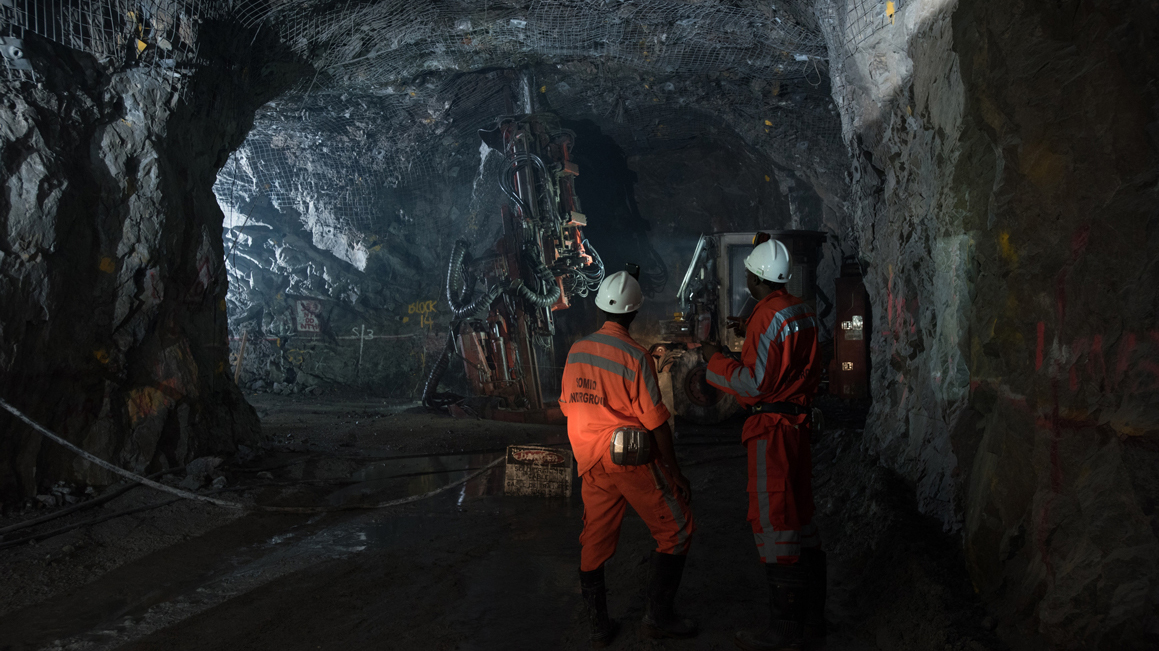
CEO Seelan Gobalsamy emphasized that teams are actively reallocating resources to ensure mines can continue blasting and farmers can plant without disruption.
Strategic Role in Mining and Explosives
Omnia has significantly expanded its mining explosives division, which has grown by over 40% in the past five years and recently surpassed its agriculture segment.
Key strengths include:
Advanced ammonia-based emulsion explosives
Strong detonator technology and supply capability
Global footprint across 23 countries
These capabilities ensure consistent blasting performance for mines—especially critical during supply uncertainty. The company’s investment in detonator and emulsion plants globally further supports its ambition to become a leading international explosives provider.
Supporting Food Security Across SADC
In agriculture, Omnia remains the largest producer of ammonia-based fertilisers in the Southern African Development Community (SADC). Its “nutriology” model integrates science, technology, and on-the-ground agronomy support to improve farm productivity.
Highlights include:
Half a million soil samples analysed annually
Advanced crop monitoring, including leaf sap analysis
Precision farming techniques that reduce water, fertiliser, and chemical use
This approach enables farmers to increase yields while improving sustainability—an increasingly critical factor amid global food security concerns.
Innovation in Sustainable Solutions
Omnia is also positioning itself at the forefront of environmentally responsible solutions:
Cleaner Explosives Technology
Through its BME division, the company is introducing hydrogen peroxide-based explosives in partnership with Hypex Bio Explosives Technology. These products decompose into water and oxygen, offering a greener alternative for mining operations.
Circular Economy in Mining Inputs
Omnia has developed a system to recycle used oil into emulsion explosives, reducing environmental impact while improving product stability—especially in reactive mining conditions such as copper operations in Zambia.
Renewable Energy and Water Efficiency
- Expansion of solar power generation at Sasolburg
- Recycling of up to 180 megalitres of water using reverse osmosis
- Ongoing efforts to reduce carbon emissions and chemical usage
- Strong Financial Recovery and Growth
Following financial strain in 2018–2019, Omnia has undergone a notable turnaround:
- Market capitalisation вырос from ~R2 billion to nearly R15 billion
- Zero debt position as of latest half-year
- Significant shareholder returns, including billions in dividends
The company has also invested heavily in human capital, including graduate programmes and broad-based employee share ownership.
Outlook: Positioned for Global Relevance
As geopolitical tensions continue to disrupt traditional supply chains, companies with strong regional infrastructure and diversified operations are becoming increasingly valuable.
Omnia’s combination of:
- Logistics independence
- Technological innovation
- Sustainability focus
- Dual exposure to mining and agriculture
places it in a strong position to not only weather global disruptions but also expand its influence internationally.
For Africa, this resilience is particularly important—ensuring that both food production and resource extraction remain stable despite external shocks.
Share this content: