Kenya Nears Critical Minerals Agreement with US as Push for Local Processing Gains Momentum
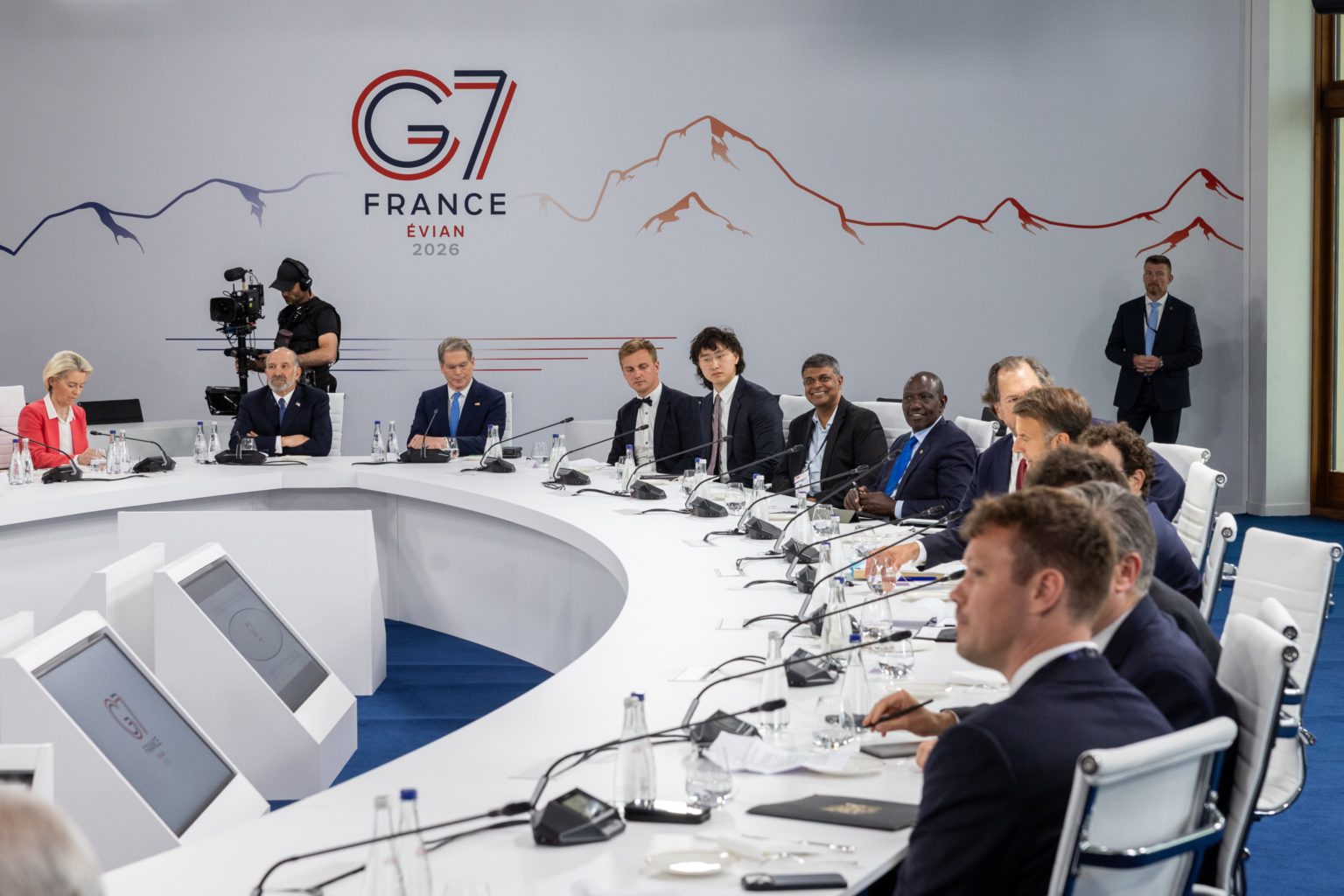
William Ruto at the G7 Summit in France. Credit: William Ruto via X
Kenya is on the verge of concluding a strategic critical minerals agreement with the United States that will prioritise domestic processing of mineral resources, marking a significant step in the country’s drive to increase value addition and industrial development.
Speaking on the sidelines of the G7 Summit in France, Kenyan President William Ruto said discussions with the US administration had advanced significantly and that an agreement covering rare earth elements and other strategic minerals could be finalised soon.

Kenya Prioritises Domestic Mineral Processing
According to Ruto, both countries have reached a broad understanding that minerals extracted in Kenya should be processed locally rather than exported in raw form.
“We have agreed that the minerals will be processed in Kenya,” Ruto said following meetings with several G7 leaders, including US President Donald Trump.
The proposed arrangement reflects Kenya’s broader strategy of ensuring that its natural resources contribute more directly to industrial growth, job creation and economic development.
The East African nation is believed to hold significant untapped deposits of critical minerals, including rare earth elements, lithium, graphite, copper, nickel and niobium, all of which are increasingly important for clean energy technologies, advanced manufacturing and digital industries.
Africa Pushes for Greater Value Addition
The negotiations come amid a growing movement across Africa to shift away from the long-standing practice of exporting raw minerals for processing overseas.
Governments across the continent are increasingly demanding that mineral wealth generates greater local economic benefits through processing, manufacturing and value addition within African borders.
Ruto noted that Kenya’s approach mirrors efforts being pursued by other resource-rich African countries, including the Democratic Republic of Congo, which has sought to secure more favourable agreements for its critical mineral resources.
“These natural resources can no longer be exported and processed elsewhere. They have to be processed in-country and in-continent. We have to create value out of them,” he said.
Strategic Competition Intensifies
The potential Kenya-US agreement emerges against a backdrop of growing global competition for access to critical minerals.
Western nations have been seeking to diversify supply chains and reduce dependence on China, which currently dominates many segments of the global critical minerals processing industry.
During the G7 Summit, member countries agreed to strengthen cooperation on critical minerals, including plans to coordinate strategic stockpiles and enhance collaboration through international institutions.
The minerals are considered essential for the global energy transition, supporting the production of electric vehicles, renewable energy systems, battery technologies and advanced electronics.
Shift from Aid to Investment
Ruto also used the summit to advocate for a new model of engagement between Africa and its international partners.
He argued that future partnerships should focus on investment, industrialisation and economic growth rather than traditional aid-based relationships.
According to the Kenyan leader, Africa is increasingly seeking partnerships that support domestic value creation, employment and sustainable development.
“We are going to reject any relationships that are based on extraction of our natural resources,” Ruto said.
He added that Kenya remains open to working with multiple global partners, including the United States, China and Europe, provided the arrangements align with national development priorities.
“There are opportunities for everybody,” he said.
Unlocking Capital for Development
Beyond mineral development, Ruto called on G7 leaders to support reforms aimed at improving Africa’s access to investment capital.
He argued that the continent is not suffering from a shortage of financial resources but rather from structural barriers that limit capital mobilisation and increase borrowing costs.
According to Ruto, African pension funds, insurance assets and sovereign reserves collectively hold significant pools of capital that could be deployed more effectively if supported by stronger risk-sharing mechanisms and financial guarantees.
The Kenyan president urged developed economies to strengthen African financial institutions and support innovative financing structures capable of unlocking investment across key sectors.
He highlighted the role of the African Trade & Investment Development Insurance (ATIDI) platform, noting that G7 countries had expressed support for deeper engagement with the institution.
Critical Minerals Central to Africa’s Industrial Future
The proposed agreement underscores the growing importance of critical minerals in Africa’s development strategy.
As demand for battery metals, rare earth elements and energy transition materials continues to rise globally, African countries are increasingly seeking ways to move beyond raw material exports and establish domestic processing industries.
For Kenya, the agreement could help position the country as a regional hub for mineral processing while supporting broader ambitions to expand manufacturing, attract investment and create skilled jobs.
“Africa is not a problem to be solved,” Ruto said. “It is an opportunity that can be harnessed for global progress.”
If finalised, the Kenya-US critical minerals agreement would represent another milestone in the continent’s push to capture more value from its natural resources and strengthen its role in global supply chains.
Share this content: