MOTA 2026 Highlights Africa’s Shift Towards Value Addition and Mining Industrialisation
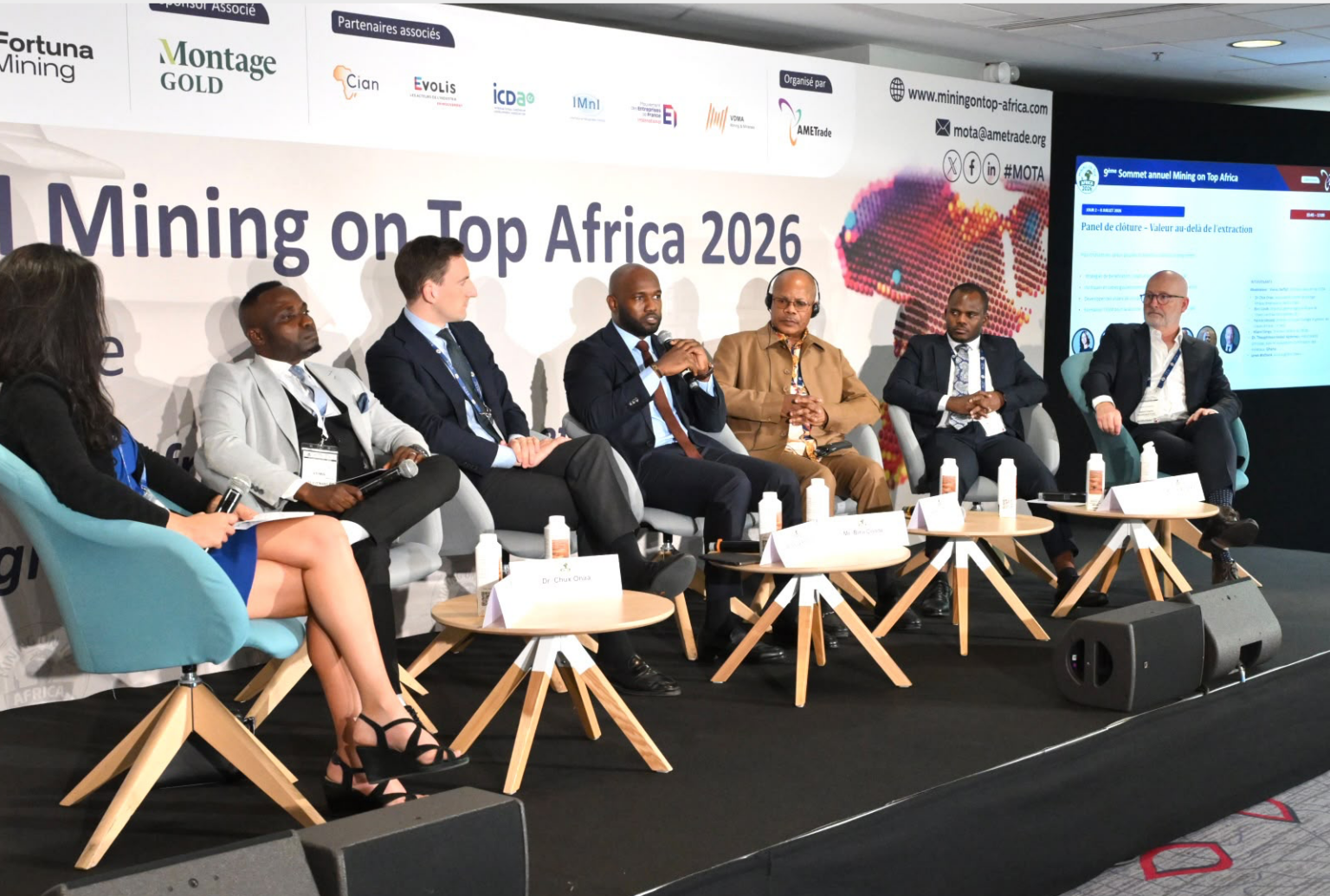
The 9th edition of Mining On Top Africa (MOTA) 2026 concluded in Paris with a clear message: Africa is determined to move beyond exporting raw minerals and instead build competitive mining industries centred on local processing, industrialisation and value addition.
Held on 9–10 July at the Paris Marriott Rive Gauche Hotel under the theme “Securing Africa’s Mining Future: Sovereignty, Sustainability, and Global Partnerships,” the summit attracted more than 260 delegates from 32 countries, including government ministers, financial institutions, development partners and executives from leading global mining companies.
The conference reinforced Africa’s growing ambition to position its mineral wealth as the foundation for industrial development rather than simply supplying raw materials to international markets.

A New Vision For African Mining
Throughout the summit, ministers and industry leaders emphasised the need to strengthen domestic beneficiation, develop downstream industries and create more value within African economies.
Opening the conference, representatives from AME Trade highlighted the importance of building partnerships that align investment with Africa’s long-term economic goals.
Jean-Claude Guillaneau, PanAfGeo Coordinator and representative of France’s Geological Survey (BRGM), remarked that Africa is no longer on the margins of global mining but now sits “at the center of global mineral transformation.”
Governments Push For Local Processing
The ministerial roundtable brought together senior government officials from Mauritania, the Republic of the Congo, Ghana and Guinea, who outlined national strategies focused on industrialisation and sustainable mining development.
Mauritania’s Minister of Mines and Industry, Edy Ould Zeine, said the country’s strategy prioritises investor confidence while expanding clean energy capacity to support mining and industrial growth.
Meanwhile, Republic of the Congo Minister of Mining Industries and Geology Urbain Fiacre Opo stressed the importance of improving transport and logistics infrastructure to support mineral processing, summarising the country’s vision as:
“Extract, evacuate, process.”
He also announced plans to bring a second potash operation into production before the end of 2026.
Unlocking African Investment Capital
A key discussion focused on financing Africa’s mining future.
Experts from institutions including the World Bank, Africa Finance Corporation (AFC), U.S. International Development Finance Corporation (DFC) and the International Energy Agency (IEA) noted that Africa possesses an estimated US$4 trillion in domestic capital that remains significantly underutilised.
Participants called for stronger legal frameworks, investment certainty and innovative financing mechanisms to mobilise more African capital into mining projects.
Côte d’Ivoire And Guinea Showcase Mining Growth
Côte d’Ivoire highlighted its rapid mining sector expansion, with investments increasing tenfold over the past decade.
Montage Gold confirmed that the Koné Gold Project remains on track to deliver its first gold production before the end of 2026, supported by approximately US$1 billion in secured financing.
State mining company SODEMI emphasised that sustainable mining growth depends on developing skilled local workforces and investing in modern equipment.
Guinea’s discussions centred on the transformational Simandou Iron Ore Project, where speakers highlighted how new rail and port infrastructure is creating opportunities that extend beyond mining into agriculture, logistics and regional economic development.
Infrastructure, ESG And Community Development
Delegates agreed that infrastructure and community engagement remain critical to the long-term success of mining investments.
Representatives from the International Finance Corporation (IFC) stressed that mining projects require strong relationships with local communities to maintain their social licence to operate.
Industry leaders also discussed climate resilience, renewable energy integration and Environmental, Social and Governance (ESG) standards as increasingly important factors influencing project financing and long-term competitiveness.
Several speakers emphasised that successful mining should leave lasting economic benefits through infrastructure, employment, education and local business development.
Critical Minerals Drive Global Interest
Critical minerals featured prominently during the second day of discussions as demand continues to rise for minerals essential to electric vehicles, battery storage and renewable energy technologies.
Experts warned that increased exploration and investment are urgently needed if Africa is to meet future global demand.
Rio Tinto representatives noted that Africa is evolving into both a major producer and an increasingly important consumer market, while speakers from the OECD and European Bank for Reconstruction and Development highlighted the strategic importance of building integrated mineral value chains across the continent.
Preparing for The Energy Transition
The conference concluded with a strong consensus that Africa’s mineral wealth will play a central role in the global energy transition.
However, delegates cautioned that export restrictions should only be introduced once sufficient domestic processing capacity has been established to support competitive local industries.
Participants agreed that equitable development, investment in human capital and stronger regional partnerships will determine whether Africa captures the full economic value of its abundant mineral resources.
With preparations already underway for the 10th anniversary edition of MOTA, scheduled for 7–8 July 2027 in Paris, the event reinforced Africa’s growing determination to transform its mining sector into a driver of industrialisation, sustainable development and long-term economic growth.
Share this content: