Cameroon’s Mining Moment Has Arrived
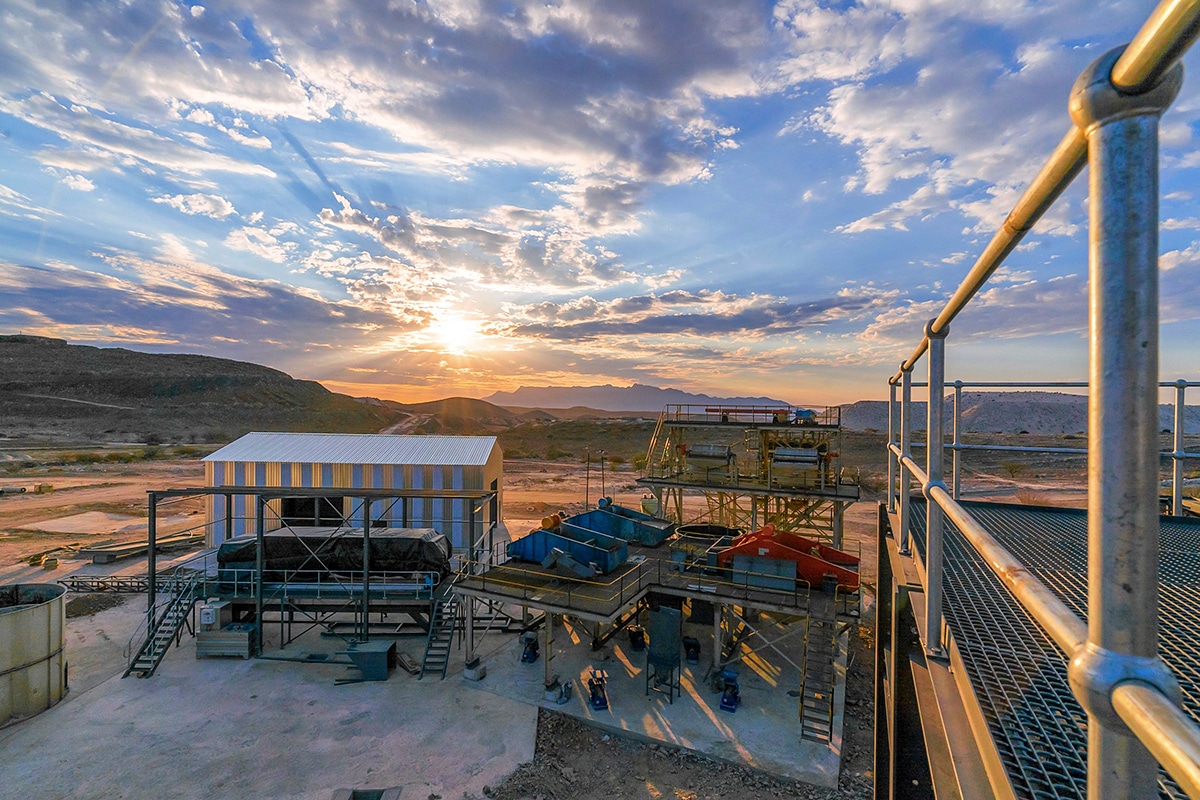
Untapped mineral wealth, a new mining code and growing global demand for critical minerals could position Cameroon as an emerging mining destination—but investor confidence will be key.
Cameroon may be approaching a turning point in the development of its mining sector, with significant untapped mineral resources, a revised mining framework and growing international demand for critical minerals creating a potentially attractive investment opportunity.
During April and May 2026, US Fulbright Specialist Rew R. Goodenow spent a month lecturing at the International Relations Institute of Cameroon, where discussions with students, academics and government officials highlighted both the opportunities and challenges facing the country’s mining industry.

Cameroon has substantial geological potential, yet much of its mineral wealth remains underexplored or undeveloped. The government has identified mining investment as an important component of its long-term development ambitions, including its strategy to transform the country by 2035.
A major development came in December 2023 with the introduction of a revised Mining Code through Law No. 2023/014. The legislation provides a framework for exploration, mining rights, investment and the development of mineral resources.
A growing investment opportunity
The government has increasingly sought to attract foreign investment into the sector. Minister of Mining, Industry and Technological Development Fuh Calistus Gentry, who previously worked in the private mining sector, has been vocal about both the opportunities and challenges involved in developing Cameroon’s mineral resources.
At the same time, authorities have been working to address illegal gold mining, which has complicated taxation, production monitoring and security. Bringing more mining activity into the formal economy could create greater opportunities for legitimate operators while improving government oversight and revenue collection.
Cameroon’s critical-minerals potential could further increase its attractiveness.
World Bank-funded geochemical mapping carried out through the PRECASEM programme has helped identify deposits and occurrences involving iron ore, bauxite, gold, diamonds, rutile, manganese, limestone, nickel and cobalt.
Further geological research and airborne surveys could reveal additional opportunities, particularly in the North, Northwest and Southwest regions. The latter two areas are associated with the Cameroon Volcanic Line, as well as geological structures that could prove prospective for critical minerals and gemstones.
Building a framework for investors
Cameroon has established procedures for companies seeking exploration and eventual mine development.
Exploration licences are issued for three years and can be renewed up to three times for periods of two years, potentially providing up to nine years for exploration where the holder can demonstrate progress.
Companies seeking to advance projects must also comply with requirements covering mining agreements, waste management, water treatment and environmental studies.
For commercial mining projects, a prefeasibility study using JORC standards is required as part of the process for obtaining a commercial mining permit. Environmental requirements must also be satisfied before operations can begin.
The framework provides investors with a pathway from exploration through to commercial production.
Investor confidence remains the test
The existence of mineral resources and a legal framework, however, does not automatically translate into investment.
One issue that could attract scrutiny from international mining companies is the requirement for a representative of state-owned mining company SONAMINES to sit on the board of a new licence holder.
SONAMINES also has responsibilities connected to exploration, mining and the collection of mining-related taxes. For international investors, ensuring that these overlapping responsibilities do not create conflicts of interest will be important.
Transparency and predictability are equally important.
Although the Mining Code contains provisions requiring transparency and disclosure of payments to the state, mining operating permits require approval from the Office of the President before they can be signed by the Minister of Mines.
For companies committing significant capital to projects that can take many years to develop, clear decision-making authority, predictable timelines and transparent permitting processes can be as important as the quality of the underlying geology.
A window of opportunity
Cameroon nevertheless has several advantages.
The country has considerable mineral potential, much of it still at an early stage of development, while its relative political stability compared with parts of the surrounding region provides another potential attraction for investors.
The global race to secure critical minerals could provide additional momentum.
As governments and mining companies seek new sources of minerals needed for energy, infrastructure and industrial development, countries with substantial unexplored resources have an opportunity to attract capital and technical expertise.
Cameroon now has an opportunity to establish itself as one of those jurisdictions.
The challenge will be converting geological potential into investable mining projects.
Continued improvements to the Mining Code, greater transparency, predictable permitting and clear safeguards around institutional roles could help strengthen investor confidence.
If Cameroon can achieve that balance, the country could move from being an underexplored mining jurisdiction to becoming a more significant participant in Africa’s growing mining and critical-minerals economy.
Share this content: