Moving Towards Better Closure of Open Pit Mines in South Africa
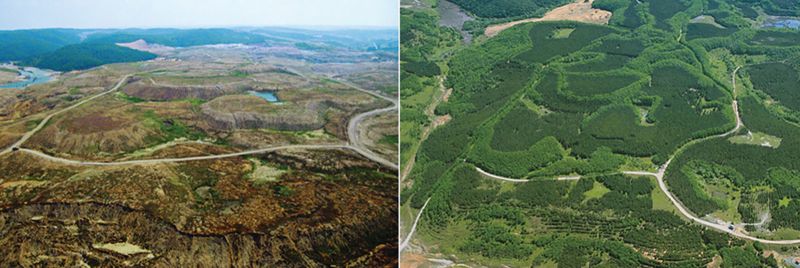
The closure of open pit mines has long been one of South Africa’s most pressing mining challenges. Poorly managed closures have left communities exposed to environmental hazards, safety risks, and economic stagnation. In 2025, the issue took center stage at the SAIMM Mine Closure Conference, where experts and policymakers debated strategies for more responsible and sustainable mine closure practices.
The Scale of the Challenge
South Africa faces a historic debt of R30 billion due to mine abandonment, but the financial figure pales compared to the social and environmental damage. Communities near abandoned pits struggle with water contamination, land degradation, and unsafe landscapes. These impacts highlight the urgent need for closure frameworks that go beyond compliance and prioritize long-term sustainability.

Emerging Strategies
Recent studies and conference discussions have emphasized several key approaches:
• Coordinated closure planning: Integrating government, mining companies, and community stakeholders to ensure accountability and transparency.
• In-pit disposal and rehabilitation: Using mined-out pits for safe disposal of waste materials, reducing long-term environmental risks.
• Socio-economic transition: Supporting communities with alternative livelihoods and skills development to mitigate the economic shock of mine closures.
• Science-based rehabilitation: Applying geotechnical and ecological research to stabilize pit walls, restore vegetation, and manage water systems.
Risks and Trade-offs
While these strategies promise better outcomes, challenges remain. Funding gaps often delay rehabilitation, and inconsistent enforcement of closure regulations undermines progress. There is also tension between short-term cost savings for mining companies and the long-term needs of affected communities. Without strong governance, closure plans risk becoming paper exercises rather than practical solutions.
Outlook
The momentum towards better closure practices reflects a broader shift in South Africa’s mining sector: from extraction-focused operations to responsible resource management. By embedding closure into the lifecycle of mining projects, the industry can reduce liabilities, protect communities, and restore ecosystems. The adoption of innovative practices such as in-pit disposal and climate-resilient rehabilitation models suggests that South Africa is moving closer to a sustainable closure framework.
In summary: South Africa’s mining industry is working to transform open pit mine closure from a neglected afterthought into a structured, science-driven, and community-focused process. The success of this transition will depend on consistent regulation, adequate funding, and genuine collaboration between miners, government, and local communities.
Share this content: