Zambia’s Konkola Reopens Chingola Copper Mine After 18-Year Shutdown

Restart Of Chingola “B” Mine Supports Zambia’s Push To Triple National Copper Output By 2031.
ZAMBIA – Zambia’s Konkola Copper Mines (KCM) has officially resumed operations at the Chingola “B” Mine after an 18-year shutdown, marking a major milestone in the country’s strategy to expand copper production and strengthen its position in the global critical minerals market.
The reopening forms part of Zambia’s broader ambition to increase annual copper production to 3 million tonnes by 2031 as demand for copper accelerates globally due to the energy transition, electric vehicle manufacturing, renewable energy infrastructure and digital technologies.

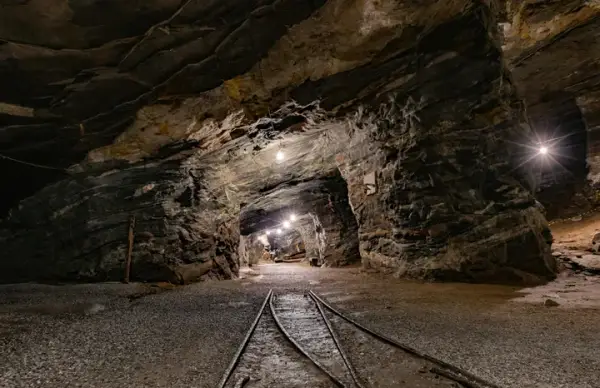
The Chingola “B” Mine, which forms part of the larger Nchanga mining complex in Zambia’s Copperbelt Province, restarted operations on Thursday after nearly two decades of inactivity.
According to KCM Chief Executive Officer Deshnee Naidoo, the mine is expected to produce more than 200,000 tonnes of ore per month under the renewed development plan.
The restart represents a significant increase compared with historical production levels. Between 1980 and 2003, the mine reportedly produced approximately 60,000 tonnes of ore per month at an average copper grade of 2.5%.
Zambia Accelerates Copper Expansion Strategy
The reopening comes as Zambia intensifies efforts to attract mining investment and expand production capacity across its copper sector.
Copper remains the backbone of Zambia’s economy, accounting for a large share of export earnings, foreign exchange inflows and mining sector employment.
However, despite its vast reserves, Zambia has struggled in recent years with declining production, underinvestment, operational disruptions and infrastructure challenges.
National copper production reached approximately 890,346 tonnes in 2025, below the government’s target of 1 million tonnes.
Authorities are now aggressively pursuing expansion projects, mine reopenings and new exploration investments to reverse declining output and position Zambia as a strategic supplier of critical minerals required for the global energy transition.
The country is competing with neighbouring Democratic Republic of the Congo, currently Africa’s largest copper producer, for investment into large-scale mining projects and downstream mineral processing.
Vedanta’s Return Revives Investment At KCM
KCM is currently owned 79.4% by Vedanta Resources and 20.6% by Zambia’s state investment company ZCCM Investments Holdings (ZCCM-IH).
The reopening follows renewed investment activity after Vedanta regained operational control of KCM assets following a lengthy dispute with the Zambian government.
Industry analysts say the restart of dormant mining assets such as Chingola “B” signals improving investor confidence in Zambia’s mining sector and could encourage additional capital inflows into copper, cobalt and critical minerals development.
KCM operates several mining and processing assets across Zambia, including facilities in Chingola, Chililabombwe, Kitwe and Nampundwe.
The company has been implementing operational recovery plans aimed at increasing ore production, restoring processing capacity and improving overall efficiency across its operations.
Copper Demand Driven by Global Energy Transition
The reopening also comes at a time of growing global competition for copper supply.
Copper is considered one of the most important minerals in the transition to cleaner energy systems due to its extensive use in:
- Electric vehicles
- Renewable energy infrastructure
- Transmission grids
- Battery systems
- Industrial machinery
- Digital infrastructure
Global mining companies and governments are increasingly investing in African copper projects as demand forecasts continue to rise.
Zambia and the Democratic Republic of the Congo together hold some of the world’s largest high-grade copper reserves, positioning Central and Southern Africa as strategically important suppliers to global manufacturing and energy industries.
Push For Local Beneficiation and Industrialisation
Like several African mineral-producing countries, Zambia is also seeking to capture greater value from its mineral resources through local processing, refining and industrial development.
The government has increasingly promoted policies aimed at strengthening beneficiation, expanding smelting and refining capacity, and developing regional mineral value chains under the African Continental Free Trade Area (AfCFTA).
Analysts say increased copper production could also support broader economic growth through infrastructure investment, export earnings, energy development and mining-related supply chain industries.
However, sector growth will still depend heavily on stable electricity supply, transport infrastructure upgrades, regulatory certainty and continued foreign investment.
The restart of Chingola “B” Mine is expected to contribute to Zambia’s longer-term objective of restoring the country as one of the world’s leading copper producers while supporting employment and economic activity across the Copperbelt region.
Share this content: