Africa Takes Control Of Critical Minerals Future at UN General Assembly
African countries are preparing to take their campaign for greater control over critical mineral value chains to the global stage, with a high-level summit planned in New York alongside the 81st United Nations General Assembly in September 2026.
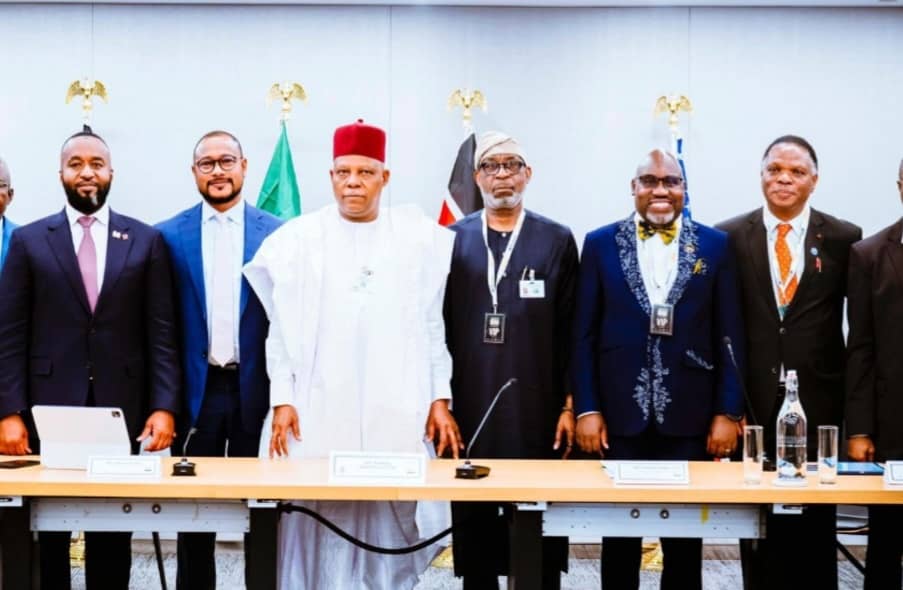
The Third High-Level Roundtable on Critical Minerals Development in Africa, organised by the Africa Minerals Strategy Group (AMSG), will bring together African leaders, development finance institutions and international private-sector executives to discuss how the continent can move beyond exporting raw minerals and capture more value from its vast natural resources.
The roundtable is scheduled for September 21 under the theme “From Resources to Wealth: Continental Cooperation for Mineral Value Addition.”

The meeting comes as several African countries introduce measures aimed at limiting exports of unprocessed critical minerals, including lithium, cobalt, copper and rare earth elements.
Africa Pushes for Mineral Value Addition
Nigeria’s Minister of Solid Minerals Development and Chairperson of the AMSG Ministerial Steering Committee, Dr Dele Alake, said Africa faces a strategic choice over how it manages its mineral wealth.
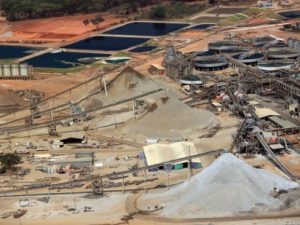
The continent has traditionally exported large quantities of raw and semi-processed minerals while importing higher-value finished products. African governments are increasingly seeking to change this model by developing domestic processing and refining capacity.
“Africa’s critical minerals are no longer simply a geological opportunity; they are a strategic economic opportunity,” Alake said.
Recent policy changes in countries including the Democratic Republic of Congo, Zimbabwe, Namibia and Tanzania demonstrate the growing push for greater domestic value addition.
The DRC has suspended exports of copper and cobalt concentrates, while Zimbabwe has introduced restrictions on exports of raw minerals and lithium concentrates. Namibia and Tanzania have also implemented measures aimed at retaining more value from their mineral resources within their economies.
Export Restrictions Are Only the Beginning
While restrictions on raw mineral exports can encourage domestic processing, African policymakers acknowledge that individual national measures will not be enough to transform the continent’s mineral sector.
Alake has argued that export restrictions should serve as a catalyst for broader continental integration rather than become an end in themselves.
Africa will need shared processing facilities, efficient transport corridors, coordinated regulations and reliable access to finance if it is to develop competitive mineral value chains.
A fragmented approach could make individual countries less competitive by increasing processing costs and creating regulatory barriers between neighbouring markets.
Continental cooperation, by contrast, could allow countries to combine mineral resources, infrastructure, capital and industrial capabilities to create larger and more competitive processing ecosystems.
New Framework to Mobilise Investment
A key outcome expected from the New York roundtable is the signing of the Continental Integration and Economic Assurance Declaration (CIEAD).
The framework builds on the Mutual Assured Development (MADE) initiative launched at the African Natural Resources and Energy Investment Summit in Abuja earlier in 2026.
CIEAD is intended to establish a coordinated framework for developing African mineral value chains, while a dedicated CIEAD Finance Window is expected to help mobilise investment for refining infrastructure, processing technologies and supply-chain logistics.
Access to capital remains one of the biggest obstacles to Africa’s ambitions for mineral beneficiation. Building refineries, processing plants, transport infrastructure and energy systems requires substantial long-term investment.
Development finance institutions and private investors will therefore play an important role in turning policy commitments into operating industrial capacity.
Critical Minerals and Africa’s Industrial Future
Africa possesses significant deposits of minerals that are increasingly important to the global energy transition, advanced manufacturing and technology industries.
Lithium, cobalt, copper, rare earth elements and other critical minerals are essential components of batteries, renewable energy systems, electric vehicles, electronics and other high-technology applications.
The growing global demand for these resources provides Africa with an opportunity to move beyond its traditional role as a supplier of raw materials.
Developing local processing and manufacturing capabilities could create jobs, strengthen industrial capacity, increase government revenues and allow African economies to capture a larger share of the value generated by their mineral resources.
The challenge is building the infrastructure and industrial ecosystems needed to make that transition commercially viable.
From Raw Materials to Global Industrial Power
The AMSG roundtable is therefore positioned as part of a broader effort to change Africa’s role in global critical mineral supply chains.
Rather than simply supplying raw materials to overseas processors, African countries are seeking to become active participants in refining, processing, manufacturing and technology-driven industries.
The success of this strategy will depend on whether countries can coordinate their policies and attract the investment required to develop competitive regional value chains.
The September summit provides an opportunity for African governments to align their approaches and engage directly with global investors and development finance institutions.
For Africa, the critical minerals opportunity is ultimately about more than extracting resources. It is about using those resources as a foundation for industrialisation, economic diversification and long-term wealth creation.
If the continent can successfully combine mineral resources with infrastructure, capital, technology and coordinated policies, Africa could move from being a passive supplier of critical raw materials to becoming a major architect of the global green energy and high-technology economy.
Share this content: