Guinea Sentences 22 Former Officials to Prison Over Environmental Damage Linked to Illegal Gold Mining

Guinea has sentenced 22 former government officials from the Siguiri gold mining region to two years in prison for their involvement in environmental damage linked to illegal artisanal gold mining, in a widening crackdown on unregulated mining activities.
The ruling was delivered late on Monday by the Court for the Repression of Economic and Financial Offences (CRIEF) in Conakry. Those convicted include a former regional governor, prefects and sub-prefects accused of complicity in environmental degradation, destruction and water pollution associated with illegal mining operations.
Each official was also fined 10 million Guinean francs (GNF), although the court acquitted them of corruption, illicit enrichment and money laundering charges.

The sentences mark an expansion of Guinea’s enforcement campaign, which has increasingly targeted local authorities accused of failing to regulate mining activities in the country’s north-eastern gold-producing region.
According to reports by Guinean media outlets Guineematin and Guinee360, the prosecution had sought 10-year prison sentences for each of the officials. However, the accused denied authorising or facilitating illegal mining, while defence lawyers argued that some of the environmental damage occurred before their clients assumed office.
Miners Also Face Prison Sentences and Deportation
The same court sentenced 202 miners from Guinea, Burkina Faso, Mali, Mauritania and Togo to three years in prison and imposed a combined fine of GNF10 billion.
The miners were also banned from entering Guinea for 10 years. However, they had already been released and expelled from the country alongside more than 1,300 other foreign nationals before the verdict was delivered.
The crackdown follows Guinea’s decision on 2 November to prohibit small-scale gold mining in the north-east, citing concerns over pollution affecting agricultural land, rivers and vegetation.
More than 1,200 people were arrested in the days following the announcement, while at least 10 people were reportedly killed in clashes linked to enforcement operations. Reports by Radio France Internationale indicated that 1,557 West African nationals had been expelled following proceedings in Conakry.
Environmental Protection at the Centre of Mining Enforcement
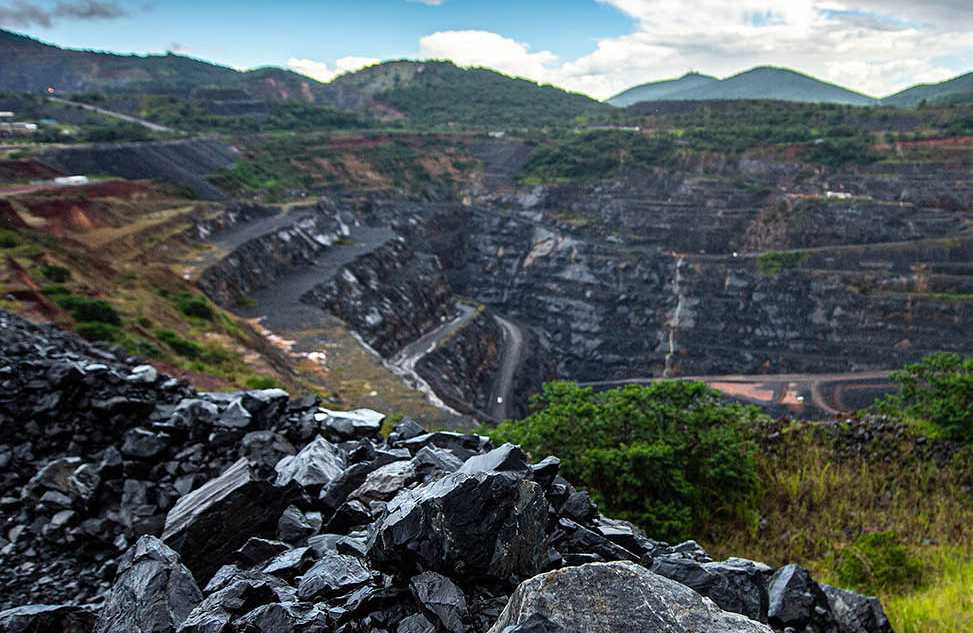
During the trial, prosecutors presented video evidence showing environmental damage in Siguiri prefecture, including polluted rivers and dried-up streams.
The prosecution also referred to regional environmental and legal frameworks, including ECOWAS conventions, in arguing that those responsible for overseeing mining activities had failed to fulfil their obligations.
Siguiri is one of Guinea’s most important artisanal gold-producing regions and has long been associated with informal mining activities that contribute to the wider regional gold trade.
The case highlights the environmental risks associated with poorly regulated artisanal mining, particularly where mining operations affect water resources, agricultural land and surrounding ecosystems.
Wider Implications for African Mining Governance
The convictions signal increased scrutiny of the responsibilities of government officials in regulating artisanal and small-scale mining across Guinea.
Special Prosecutor Alphonse Charles Wright described the ruling as a warning to public officials and individuals involved in illegal mining, emphasising that those entrusted with positions of responsibility must ensure compliance with the law.
He also indicated that more than 400 district chiefs would be questioned in the coming days, suggesting that investigations could extend further into local administrative structures.
The case raises broader questions about accountability, environmental monitoring and the enforcement of mining regulations across Africa, where artisanal and small-scale mining remains an important source of livelihoods but can also contribute to deforestation, land degradation and water pollution when inadequately regulated.
For Guinea, the challenge will be to strengthen environmental protection and mining oversight while addressing the economic dependence of local communities on artisanal gold production.
Appeals and Further Investigations
Defence lawyers said they would consult their clients before deciding whether to appeal the sentences.
Meanwhile, the planned questioning of district chiefs is expected to provide further insight into the extent of local administrative involvement in illegal mining activities.
The developments also have regional implications, particularly for Burkina Faso and Mali, which are receiving returning miners following Guinea’s deportation operations.
As investigations continue, the Siguiri case places renewed focus on the need for stronger governance, responsible mineral extraction and environmental accountability in Africa’s gold mining sector.
Source: DNE Africa, with reporting from Guineematin, Guinee360, RFI
Share this content: