East Africa’s Critical Minerals Boom Raises Environmental Concerns

East Africa’s growing role in the global critical minerals market is creating new economic opportunities, but experts warn that rapid mining expansion could come at a significant environmental cost.
As demand for minerals essential to the energy transition continues to rise, countries across the region are attracting increased investment in resources such as copper, cobalt, lithium, nickel, manganese and graphite. These minerals are vital for electric vehicles, renewable energy technologies, advanced electronics and artificial intelligence applications.
The mining boom has helped strengthen trade and export earnings across East Africa. Rising mineral exports, particularly copper and precious metals, have contributed to increased economic activity and improved trade performance in several countries.

However, environmental researchers are raising concerns about the long-term impact of expanding mining operations on forests, biodiversity and local communities. Recent studies suggest that mining activities are contributing to significant deforestation across parts of sub-Saharan Africa, with the effects extending well beyond the physical footprint of mines.
According to researchers, mining development often triggers secondary activities such as settlement growth, agricultural expansion and infrastructure construction, leading to additional forest loss in surrounding areas. Experts argue that these indirect impacts can be far greater than the land cleared directly for mining operations.
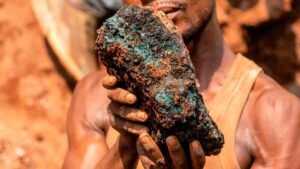
The Democratic Republic of the Congo (DRC), home to some of the world’s largest reserves of cobalt and copper, faces one of the most complex balancing acts. While the country’s mineral wealth is central to global clean energy supply chains, it also contains a large portion of the Congo Basin rainforest, one of the planet’s most important carbon sinks and biodiversity hotspots.
Environmental advocates are calling for stronger oversight of mining projects, including stricter enforcement of environmental impact assessments and greater accountability from mining companies. They argue that governments must ensure economic benefits are not achieved at the expense of long-term environmental sustainability.
Industry analysts note that critical minerals present a major opportunity for East Africa to accelerate industrialisation, increase export revenues and attract investment. However, they stress that responsible mining practices, improved governance and stronger environmental protections will be essential to ensuring sustainable development.
Governments across the region are increasingly seeking ways to balance mineral exploitation with conservation objectives. Measures such as enhanced monitoring, tighter regulations and reforestation programmes are being promoted as part of broader efforts to minimise environmental damage while supporting economic growth.
As global competition for critical minerals intensifies, East Africa finds itself at the centre of a rapidly evolving industry. The challenge for policymakers will be ensuring that the race to supply the world’s energy transition does not undermine the natural ecosystems that are equally critical to the region’s future.
Share this content: