Zambia Positions Itself as a Leading Renewable Energy Investment Destination

LUSAKA, Zambia – Zambia is emerging as one of Africa’s most attractive renewable energy investment markets in 2026, supported by economic reforms, rising mining-sector electricity demand, market liberalisation and innovative financing mechanisms designed to accelerate private sector investment.
According to energy strategist Dominic Goncalves, the country’s renewable energy sector has gained momentum following macroeconomic stabilisation, improved sovereign creditworthiness and lessons learned from the severe 2023–2024 drought, which exposed Zambia’s heavy dependence on hydropower.
Mining drives demand for reliable power

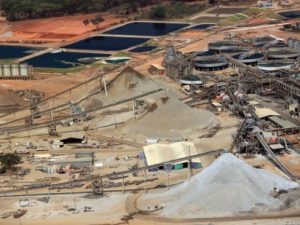
The outlook is closely linked to Zambia’s ambition to expand copper production from 890,000 tonnes in 2025 to 3 million tonnes annually by 2031, increasing demand for reliable, affordable and low-carbon electricity across the Copperbelt.
Mining companies, together with agricultural, commercial and industrial users, are increasingly seeking dispatchable renewable energy solutions that reduce dependence on diesel generation and mitigate seasonal hydropower shortages.
The 2023–2024 drought reduced hydroelectric generation by approximately 50%, triggering widespread load shedding and highlighting the need to diversify the country’s electricity mix through solar, wind and battery energy storage systems (BESS).
Growing market for dispatchable renewables
Developers are increasingly investing in renewable energy projects capable of providing firm, round-the-clock electricity by combining solar generation with large-scale battery storage.
The trend is reflected in projects such as CrossBoundary Energy’s solar and battery installation serving the Kamoa-Kakula copper complex in the Democratic Republic of Congo, demonstrating the commercial viability of dispatchable renewable energy for large mining operations.
Zambia has also financed two merchant utility-scale solar projects without traditional long-term utility power purchase agreements, signalling growing confidence in merchant power markets and regional electricity trading.
As a member of the Southern African Power Pool (SAPP), Zambia is well positioned to benefit from expanding cross-border electricity trading, allowing independent power producers, traders and large electricity consumers to participate in increasingly integrated regional power markets.
Policy reforms strengthen investor confidence
To attract additional private investment, Zambia’s Ministry of Energy introduced a Competitive Procurement Framework for Private Sector Investment in Renewable Energy in May 2026.
The framework proposes competitive renewable energy bidding rounds modelled on South Africa’s Renewable Energy Independent Power Producer Procurement Programme (REIPPPP), with the first procurement windows expected to begin in 2026.
The framework also introduces two innovative financing mechanisms aimed at improving project bankability:
- The Renewable Energy Liquidity Mechanism (RELM) is designed to reduce utility payment risks and improve investor confidence without relying heavily on sovereign guarantees.
- The Carbon Feed-in Programme (CFIP), supported by the Government of Norway, will provide a 10-year revenue premium for eligible dispatchable renewable energy projects that incorporate battery storage and demonstrate a financing gap.
In addition, Stanbic Bank Zambia is developing the proposed ZAMWatt procurement programme, which seeks to aggregate electricity demand from multiple mining companies and other large consumers. The model is intended to diversify off-taker risk, improve financing conditions for independent power producers and accelerate renewable energy project development.
Challenges remain
Despite the positive outlook, investors continue to monitor several risks, including the financial position of state utility Zesco, foreign exchange volatility, transmission infrastructure constraints and the implementation of open-access electricity market reforms. Zambia also faces political uncertainty ahead of its 2026 elections.
Nevertheless, strengthening macroeconomic fundamentals, increasing mining investment, expanding regional electricity markets and supportive renewable energy policies are positioning Zambia as one of Africa’s most promising destinations for utility-scale solar, wind, battery storage and energy trading investments.
Share this content: