Guinea Bans Raw Gold Exports to Boost Local Refining and Value Addition

Guinea has announced an immediate ban on the export of raw gold as part of a new strategy to strengthen domestic mineral processing, increase value addition and ensure the country derives greater economic benefits from its gold resources.
President Mamadi Doumbouya unveiled the policy during a meeting with industrial and artisanal gold producers, as well as representatives of gold-buying offices operating across the country.
The move marks a significant shift in Guinea’s mining policy and aligns with a growing trend among African resource-rich nations seeking to process more of their minerals domestically before exporting them to international markets.

Guinea Seeks Greater Value from Gold Resources
Speaking during the meeting, President Doumbouya said Guinea has long exported gold in its raw form while the economic benefits associated with refining, certification and value addition have largely accrued elsewhere.
He noted that despite possessing some of the largest gold reserves in West Africa, the country has not fully capitalised on opportunities within the downstream segment of the gold value chain.
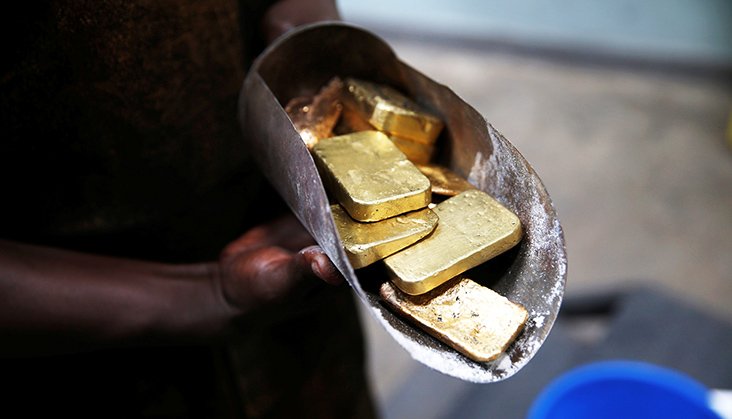
Under the new policy, all gold produced in Guinea will be required to undergo processing and certification within the country before being exported.
According to the president, raw gold exports will no longer be permitted, with authorities moving to enforce the new regulations immediately.
Gold to Be Refined Locally Before Export
The government plans to channel all gold exports through a newly established refining facility located in the capital, Conakry.
Officials say the refinery will serve as the central hub for melting, refining and certifying Guinean gold before it reaches international markets.
The policy is expected to create new opportunities for industrial development, job creation and technology transfer while strengthening oversight of gold production and exports.
By refining gold domestically, Guinea also aims to capture a larger share of revenues generated from its mineral resources and reduce dependence on foreign processing facilities.
Government Warns of Strict Enforcement
President Doumbouya indicated that companies failing to comply with the new requirements could face severe penalties.
He warned that operators who continue exporting raw gold in violation of the directive risk having their licences suspended and mining agreements terminated.
The announcement signals the government’s determination to ensure compliance as it seeks to reshape the country’s mining sector and maximise the economic impact of its natural resources.
Industry stakeholders are expected to engage with authorities in the coming months to understand implementation timelines and operational requirements under the new framework.
Guinea Among Africa’s Leading Gold Producers
While Guinea is globally recognised as the world’s largest producer of bauxite, the country also possesses significant gold resources and remains one of Africa’s major gold-producing nations.
The mining sector includes large-scale industrial operations, semi-industrial producers and a substantial artisanal mining industry that contributes significantly to overall production.
Major gold producers operating in Guinea include Société Aurifère de Guinée, a subsidiary of AngloGold Ashanti, alongside several other mining companies and hundreds of artisanal miners.
According to official government figures, combined gold exports from industrial, semi-industrial and artisanal producers reached more than 22,000 kilograms during the first quarter of 2026.
Industry data places Guinea among the continent’s leading gold producers and highlights the strategic importance of the sector to national economic development.
Local Processing Drive Gains Momentum Across Africa
Guinea’s decision reflects a broader policy shift occurring across several African countries that are seeking to increase local beneficiation and reduce the export of raw minerals.
Governments across the continent are increasingly introducing policies aimed at encouraging domestic processing, refining and manufacturing activities linked to mining resources.
Supporters argue that local value addition can generate employment opportunities, increase export revenues and strengthen industrial development.
However, mining industry analysts note that successful implementation often requires substantial investments in infrastructure, energy supply, technical expertise and regulatory capacity.
Potential Impact on Gold Industry
The new export restrictions could have significant implications for mining companies, traders and artisanal producers operating in Guinea.
While the policy may create opportunities for local refining and industrial growth, operators may also face adjustments to existing export procedures and supply chain arrangements.
Market observers will be watching closely to see how quickly the refining infrastructure can accommodate national production levels and whether the transition affects export volumes in the short term.
The success of the initiative will likely depend on efficient implementation, industry cooperation and the capacity of domestic refining facilities to process increasing quantities of gold.
Government Pushes for Greater Economic Benefits
Guinea’s latest move underscores the government’s broader ambition to retain more value from the country’s vast mineral wealth.
By requiring gold to be refined and certified locally, authorities hope to strengthen the mining sector’s contribution to economic growth while creating a more integrated and value-driven mineral industry.
As one of West Africa’s most resource-rich nations, Guinea is positioning itself to play a larger role not only in mineral extraction but also in downstream processing and export activities.
The policy could become a defining step in the country’s efforts to transform its mining sector and increase the long-term economic benefits generated from its gold resources.
Share this content: