G Mining Raises 2026 Cost Forecast On Higher Labour And Royalty Expenses
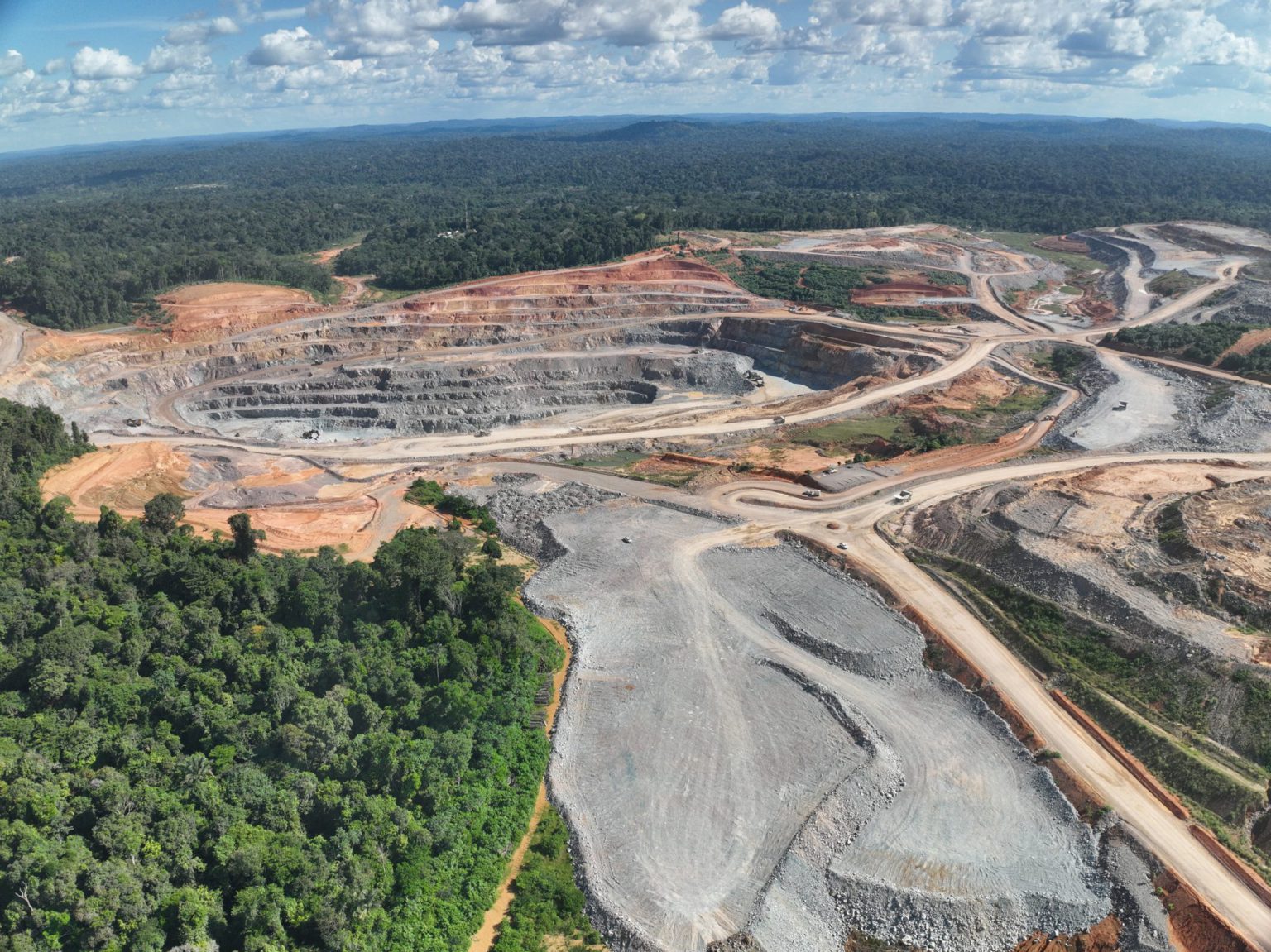
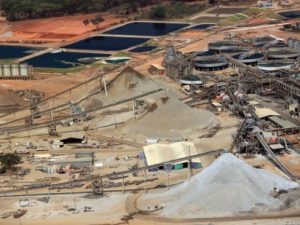
Aerial view of the Tocantinzinho gold mine in Brazil. Credit: G Mining Ventures.
Gold producer G Mining Ventures has increased its 2026 cost guidance by approximately 12%, citing higher labour expenses, royalty payments, maintenance costs and currency movements.
The Canada-based company now expects total cash costs of $836 to $965 per ounce sold, compared with its previous forecast of $736 to $865 per ounce.

Its all-in sustaining costs (AISC) have also been revised upward to $1,330–$1,544 per ounce, from the previous guidance of $1,230–$1,444 per ounce.
The revised outlook was released alongside the company’s second-quarter financial results.
Production Target Remains Unchanged
Despite the higher cost outlook, G Mining maintained its 2026 gold production guidance of between 160,000 and 190,000 ounces.
The company expects approximately 61% of its annual production to be generated during the second half of the year as mining progresses into higher-grade mineralisation at its Tocantinzinho gold mine in Brazil.
Tocantinzinho entered commercial production in September 2024 and remains the company’s primary producing asset.
The higher cost guidance overshadowed what was otherwise a stronger-than-expected quarterly performance, with analysts highlighting the increase of more than $100 per ounce in the company’s cost forecast.
G Mining shares fell 4.2% to C$47.72 in Toronto following the announcement, giving the company a market value of approximately C$14 billion.
Oko West Becomes Second Growth Engine
G Mining is also expanding its South American portfolio following the completion of its C$3 billion acquisition of Guyana-focused developer G2 Goldfields.
The transaction brought G Mining’s Oko West project and G2 Goldfields’ neighbouring Oko-Ghanie project under common ownership.
Oko West is expected to begin producing gold in late 2027 and is positioned to become G Mining’s second major growth engine alongside Tocantinzinho.
The company has previously indicated that Oko West and Oko-Ghanie together could support more than 500,000 ounces of annual gold production over their respective mine lives.
Construction at Oko West was approximately 28% complete at the end of June, with more than $423 million spent against an approved initial capital budget of approximately $973 million.
Detailed engineering was approximately 90% complete, while procurement had reached 99%.
Higher Gold Prices Increase Royalty Costs
Several factors are contributing to the revised cost outlook.
G Mining has adjusted its Brazilian real-to-US dollar exchange-rate assumption to 5.15, compared with 5.55 previously.
The company has also increased its assumed gold price to $4,300 per ounce, from $4,000.
While a higher gold price supports revenue, it also increases royalty payments, contributing to the higher cost forecast.
In addition, increased maintenance spending and labour-cost inflation are putting further pressure on operating expenses.
Second-quarter total cash costs reached $1,046 per ounce sold, up 1% from the first quarter, while AISC increased 6% to $1,690 per ounce.
Despite the revised operating costs, G Mining maintained its 2026 capital expenditure guidance of between $583 million and $649 million.
Exploration expenditure is expected to range from $42 million to $50 million.
Tocantinzinho Production Improves
Tocantinzinho produced 36,845 ounces of gold during the second quarter, representing a 16% increase from the previous quarter.
Gold sales increased 11% to 37,439 ounces, while the average realised gold price reached $4,197 per ounce.
First-half production stood at 68,691 ounces.
The company has been processing lower-grade ore while accelerating waste stripping and advancing the mine towards higher-grade material.
G Mining expects production to increase during the second half of the year as higher grades are accessed, with the improved ore profile also expected to help reduce unit costs.
Gurupi Development Continues
G Mining is continuing work on its Gurupi project in Brazil, where an updated mineral resource and preliminary economic assessment are planned before the end of 2026.
The updated assessment will incorporate results from an ongoing five-rig drilling programme.
The company also expects to submit an environmental and societal impact assessment during the fourth quarter.
Strong Financial Position
Despite the higher cost environment, G Mining ended June with $225.7 million in cash and approximately $33 million in long-term debt, giving the company a net cash position of around $192.7 million.
Second-quarter adjusted net income more than doubled to approximately $79.5 million, or 33 cents per share, compared with $36.5 million, or 16 cents per share, a year earlier.
The result exceeded analyst expectations of approximately 31 cents per share.
G Mining therefore enters the second half of 2026 with a strong production pipeline and significant development opportunities, although controlling operating costs will remain an important priority as the company advances its expansion across Brazil and Guyana.
Share this content: