Sibanye-Stillwater Puts South African Mining At The Heart Of Its Growth Strategy

Sibanye-Stillwater is turning its attention back to South Africa after years of international expansion, with the company’s new leadership positioning the country’s platinum, gold and chrome assets as the foundation of its next phase of growth.
The shift marks a significant change in direction for the precious-metals producer. At the height of its expansion in 2021, Sibanye-Stillwater was valued at approximately $16 billion on the Johannesburg Stock Exchange and was pursuing major investments across Brazil, Finland and the United States.
The strategy subsequently came under pressure as platinum group metal prices weakened sharply, exposing the risks associated with the company’s international expansion and putting pressure on its balance sheet.

Richard Stewart, Sibanye-Stillwater’s new CEO, is now pursuing a more conservative approach centred on assets and opportunities the company already knows well.
South Africa Becomes The Core Growth Market
Sibanye-Stillwater’s revised strategy focuses on three key areas: expanding its South African platinum group metals operations, extending gold production for as long as market conditions support it, and building chrome into a significant business in its own right.
The company still maintains international operations and projects, including its Keliber lithium operation in Finland and assets in Australia and the United States.
However, South Africa is increasingly being positioned as the main source of future growth and cash generation.
Stewart has argued that Sibanye-Stillwater already has a highly competitive PGM portfolio and that the company can generate additional production by expanding within its existing South African mining footprint rather than pursuing major acquisitions.
The strategy follows the company’s 2023 acquisition of Valterra Platinum’s stake in a joint venture, which gave Sibanye-Stillwater greater control over contiguous areas around its Kroondal and Rustenburg operations.
By removing boundaries between neighbouring assets and increasing mechanisation, the company believes it can increase production from its existing mineral resources.
PGM Production Could Rise Again
Sibanye-Stillwater’s current planning indicates that PGM production could decline to approximately 1.2 million ounces a year by 2030, compared with 1.7 million ounces in its most recent financial year.
However, the company’s expansion programme could increase that figure to approximately 1.5 million ounces annually by 2030.
Management believes production could potentially reach 1.8 million ounces a year if market conditions justify further investment.
The strategy involves seven PGM projects that have previously been presented to investors, creating a development pipeline that allows the company to allocate capital towards its existing South African operations.
The approach is intended to reduce the risks associated with acquisitions and unfamiliar jurisdictions while allowing Sibanye-Stillwater to leverage infrastructure, geological knowledge and operational experience already established in South Africa.
Billions Needed for Expansion
The strategy will require significant investment.
Sibanye-Stillwater estimates that approximately R25 billion to R26 billion in total project expenditure will be required, although only around R8 billion has so far been approved.
The company’s capital requirements also exclude approved spending required to complete the Keliber lithium project, as well as other international opportunities such as underground development at the Stillwater mine in the United States and the Mt Lyell copper project.
Sibanye-Stillwater believes approximately half of its unapproved projects could potentially be funded from internally generated cash.
Analysts at RMB Morgan Stanley estimate that the company could allocate around R4 billion towards growth capital during the 2026 financial year while generating approximately R12 billion in free cash flow, with the remainder directed towards debt reduction and dividends.
Investors Focus On Execution
The strategy has received a generally positive response from analysts, although execution remains a major consideration.
Nedbank Securities analyst Arnold van Graan said the company’s strategy had become clearer and more streamlined, arguing that successful implementation could support a rerating of the company’s shares.
However, analysts have also raised questions about Sibanye-Stillwater’s ability to deliver the projected growth while controlling costs.
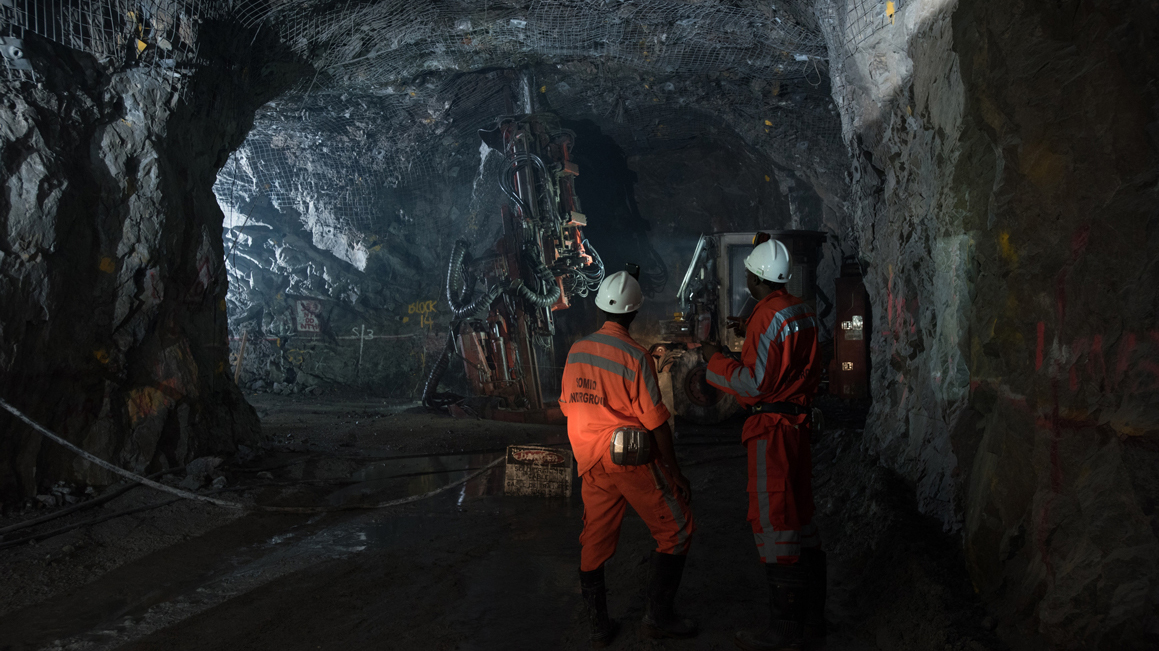
Mechanisation will become increasingly important as the company expands into additional orebodies. Sibanye-Stillwater expects the proportion of its operations using mechanised mining methods to increase from approximately 38% to 64% by 2035.
While mechanisation can improve productivity and efficiency, the company will need to demonstrate that replacing older conventional operations with newer mechanised mines produces sustainable cost advantages.
Medium-term capital expenditure is expected to average approximately R7 billion annually, according to RMB Morgan Stanley analysts.
Chrome Emerges As A Major Opportunity
One of the most significant elements of Sibanye-Stillwater’s new strategy is its decision to treat chrome as a commercial business rather than simply a by-product of PGM production.
The company produced approximately 2.3 million tonnes of chrome last year, equivalent to around 10% of South Africa’s production.
South Africa remains the dominant global chrome supplier, accounting for approximately 60% of global supply.
Sibanye-Stillwater believes its chrome production could potentially double under its revised strategy.
A renegotiated chrome marketing agreement with Glencore has improved the economics of increasing production, while the existing agreement is due to end in 2031.
If the company’s planned PGM expansion progresses as expected, Sibanye-Stillwater could potentially become a producer of approximately four million tonnes of chrome a year.
That would significantly strengthen its position in the global chrome market.
From By-Product To Strategic Business
Management now views chrome as more than a secondary product generated alongside PGM mining.
The company sees the metal as an additional revenue stream capable of improving margins and strengthening the economics of future mining projects.
The potential expansion would also diversify Sibanye-Stillwater’s South African operations while allowing the company to extract greater value from its existing mineral resources.
Analysts at RMB Morgan Stanley have suggested that Sibanye-Stillwater could become significantly larger than its nearest peer in the global chrome industry if its expansion plans are implemented.
Gold And M&A Remain On The Radar
Gold remains part of Sibanye-Stillwater’s strategy, although management appears more selective about allocating capital to the commodity.
The company continues to hold a 50.1% stake in DRDGold and has indicated that expanding its gold exposure in Africa remains an option.
However, Sibanye-Stillwater does not currently view major gold acquisitions as its most attractive source of returns.
With gold assets commanding high valuations, the company believes its best opportunities currently lie within its existing PGM portfolio.
That represents a fundamental shift from the acquisition-driven strategy that characterised Sibanye-Stillwater’s earlier expansion.
A More Focused Sibanye-Stillwater
Sibanye-Stillwater’s strategy represents a return to the company’s South African roots after several years of international expansion.
Rather than pursuing growth through large acquisitions and new jurisdictions, the company is now seeking to extract more value from assets it already owns and understands.
The approach could reduce transaction and jurisdictional risks while allowing Sibanye-Stillwater to focus capital on PGM expansion, gold production and the development of a much larger chrome business.
For South Africa’s mining industry, the strategy could also provide a significant boost to domestic mineral production and investment.
If Sibanye-Stillwater successfully executes its plans, the company’s next chapter may prove that its most valuable growth opportunities were closer to home all along.
Share this content: