Op-Ed: Could Ethiopia’s Hidden SEDEX Potential Be Part of Africa’s Next Great Basin?
By Nicholas Vafeas
To make a decent loaf of bread, you need three foundational things: flour, water and a baking tin. Leave out any one of them, and you end up with a mess on your kitchen countertop.
Sedimentary exhalative deposits, better known as SEDEX deposits, work much the same way.

Strip away the boardrooms, capital expenditure projections, political hype and mining cycles, and these giant lead-zinc-copper systems boil down to an elegant geological recipe: a source of metals, a deep saline fluid, a heat source and, ultimately, a chemical trap capable of forcing those metals out of solution into concentrated deposits.
It is not merely speculation. Where those ingredients align, extraordinary mineral deposits can form.
Ireland’s Navan became Europe’s largest zinc mine because hot saline fluids encountered the right carbonate host. Alaska’s Red Dog became one of the world’s richest zinc districts because metal-bearing brines interacted with chemically favourable sediments. Australia’s McArthur River helped transform an entire basin into one of the defining SEDEX provinces in global mining.
Even the Central African Copperbelt, although not a classic SEDEX system, demonstrates the same first-principles lesson. One of the world’s great copper and cobalt provinces developed because fluids, metals and chemical traps repeatedly met within favourable basin architecture.
The recipe matters more than the postcode.
And then there is Ethiopia.
Ingredient 1: The water
For much of its history, the Horn of Africa’s mineral story has centred on gold and, increasingly, potash.
The headlines have often focused on the evaporites of the Afar Depression and the narrow-vein, shear-hosted gold systems distributed across the Arabian-Nubian Shield.
For those looking at the bigger geological picture, however, one word deserves particular attention: evaporites.
Evaporitic environments demonstrate the region’s ability to generate dense, saline brines—the same type of fluids that play a central role in many major sediment-hosted mineral systems.
These brines can act as delivery systems, carrying metals through kilometres of crust before encountering the geological and chemical conditions required to deposit them.
That raises an intriguing question: could Ethiopia’s ancient basin architecture preserve evidence of similar processes operating millions of years ago?
Ingredient 2: The metal source
A brine is only as useful as what it carries. Otherwise, it is simply salty water.
Ethiopia sits across one of Earth’s great tectonic laboratories. The Arabian-Nubian Shield preserves numerous Neoproterozoic volcano-sedimentary belts, while the East African Rift provides deep crustal structures capable of supporting long-lived hydrothermal circulation.
In mature SEDEX systems, dense saline fluids can circulate through volcanic rocks, red beds and basement lithologies, acquiring metals such as copper, zinc and lead before moving upward along major faults.
Ethiopia’s basement contains a complex mixture of volcanic, intrusive and metamorphic rocks that have been repeatedly deformed and reworked over geological time.
That complexity creates no shortage of potential structural pathways for hydrothermal fluids.
Ingredient 3: The chemical trap
The next ingredient is non-negotiable.
Think of it as the baking tin without which the loaf cannot form.
In geological terms, this is the reduction trap: a horizon where metal-bearing fluids encounter a chemical environment that makes it difficult for them to continue carrying metals in solution.
The result can be the precipitation of metal sulphides and the concentration of minerals into economically significant bodies.
In many SEDEX systems, carbonate rocks or carbonaceous shale can provide favourable chemical conditions for this process.
Ethiopia’s regional geology includes carbonate platforms and calcareous sedimentary rocks overlying or occurring near Proterozoic basement rocks.
Where these units intersect major structures capable of tapping deeper parts of the crust, the geological setting presents a compelling exploration hypothesis: metals could potentially be mobilised from depth and concentrated when fluids encounter chemically favourable horizons.
That is the hypothesis worth testing.
The oven: Ethiopia’s active geological plumbing
Bread still needs an oven.
Geologically, Ethiopia has no shortage of heat and tectonic activity.
The country sits within one of the most dynamic regions of continental crust on Earth. The Afar Rift, in particular, provides a remarkable natural laboratory where continental breakup and the earliest stages of ocean formation can be observed.
More importantly, modern hydrothermal systems can provide clues to older geological environments preserved elsewhere in the region.
There is already evidence that hydrothermal plumbing has operated in this part of the world.
At En Kafala, documented iron-manganese-barium deposits formed when the Afar Depression was connected to the Red Sea. The geological sequence includes basaltic basement, reef limestones and hydrothermal activity associated with the seafloor.
En Kafala is not a giant zinc deposit, and it should not be presented as proof that Ethiopia hosts a major SEDEX province.
But it does demonstrate something important: the geological oven works.
The question is whether similar hydrothermal processes operated in older sedimentary basins under conditions favourable to the formation of large base-metal deposits.
So why isn’t everyone talking about Ethiopia’s SEDEX potential?
If the geological ingredients are compelling, why are major mining companies not already competing to test the hypothesis?
Part of the answer is simple: mining is an industry built around managing risk.
Companies routinely invest heavily in established mineral provinces where geological models, infrastructure and permitting frameworks are relatively well understood.
Exploration in less-proven environments requires a different appetite for geological and financial uncertainty.
That dynamic is visible in Ethiopia.
Rather than testing whether older basin architecture could host large sediment-hosted systems, much of the country’s exploration activity has focused on exposed rocks of the Arabian-Nubian Shield, where companies are pursuing VMS copper-zinc systems and shear-hosted gold deposits.
Sun Peak Metals has been exploring copper-zinc systems in northern Tigray, East Africa Metals is advancing the Harvest Project, and Askari Metals has been revisiting copper discoveries around Nejo in western Ethiopia.
These companies may be pursuing entirely rational geological strategies.
But they are largely asking variations of the same question: what mineralisation can we find in the rocks already exposed at surface?
A potentially more consequential question is whether Ethiopia’s less-exposed, older basin architecture contains a much larger sediment-hosted system.
China’s role goes beyond the mine
The other intriguing part of Ethiopia’s mineral story is not only who is exploring, but who is positioned around the infrastructure required to develop a future discovery.
There is a recurring pattern across African mining: Chinese capital, partnerships and strategic involvement often extend beyond the mine itself and into infrastructure.
Zijin Mining’s involvement with the Harvest Project is one example of Chinese participation in Ethiopia’s mining sector.
But the bigger picture includes the infrastructure that would ultimately determine whether a major copper or zinc discovery could be developed commercially.
A large-scale base-metal operation needs to move concentrate, not simply drill core.
That requires roads, railways, ports, power and bulk logistics.
The Ethio-Djibouti Railway is a critical export corridor connecting Ethiopia with Djibouti’s Port of Doraleh. The railway was financed and constructed with substantial Chinese involvement and forms part of a broader infrastructure relationship between Ethiopia and China.
This matters because mineral economics are ultimately about more than geology.
A world-class deposit in a remote location can remain undeveloped if there is no commercially viable route to market. Conversely, infrastructure can significantly reduce the barriers facing a future discovery.
This is where China’s approach to African minerals becomes particularly interesting.
Rather than treating geology, infrastructure and capital as entirely separate decisions, Chinese state-linked and commercial actors have frequently approached them as interconnected parts of a broader economic system.
That does not mean China has somehow predicted Ethiopia’s next major mineral discovery.
It means that infrastructure and strategic positioning can be established before the geological outcome is certain.
Could Ethiopia host Africa’s next great basin?
The central question is whether Ethiopia’s older basins preserve the complete geological recipe required for a major sediment-hosted base-metal system.
The evidence does not prove that such a deposit exists.
But it does suggest that the hypothesis deserves more systematic attention.
The geological clues are scattered across volcanic belts, basement structures, carbonate successions and hydrothermal systems.
The challenge is connecting those clues into a coherent exploration model and then testing that model through modern geophysics, geochemistry, basin analysis and drilling.
If Ethiopia’s overlooked basins eventually deliver a major sediment-hosted copper, zinc or lead discovery, today’s exploration maps could look obvious in hindsight.
For now, the geological kitchen is stocked.
The recipe is plausible.
What remains uncertain is whether someone is willing to put it in the oven.
And that uncertainty may be precisely what makes Ethiopia’s SEDEX potential so interesting.
Nicholas Vafeas is the founder and director of BluMelt Mineral Consulting Limited, an independent consultancy specialising in geological assurance, critical minerals and investment de-risking.
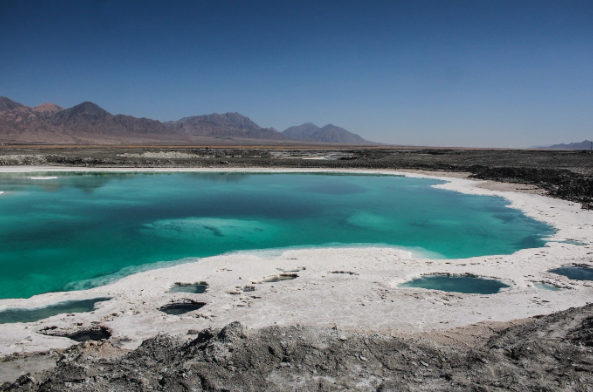
Submitted image. Credit: Lan Yao.
Share this content: