South African Mining Sector Faces AI Adoption Challenges Amid Skills and Data Gaps
A new report by PwC South Africa has revealed that artificial intelligence (AI) adoption remains limited across the country’s mining industry, with a lack of digital skills and poor data management emerging as the biggest barriers to implementation.
The report, Ten Insights into 4IR in South African Mining 2026: AI – Powering the Future, found that two-thirds of mining chief executives have not yet deployed AI within their operations. Nearly 70% of mining companies surveyed also rated their AI readiness as either poor or very poor, highlighting the industry’s slow progress toward digital transformation.
Skills Shortages Slow AI Implementation

According to PwC, the biggest challenge is not access to AI technology but the shortage of skilled workers capable of implementing and managing digital solutions.
The report emphasizes that mining companies are increasingly shifting their focus from labour availability to workforce capability, creating demand for employees with expertise in AI, data analytics and digital technologies.
Rather than replacing workers, mining executives see AI as a tool that enhances employee productivity, improves operational performance and creates new revenue opportunities.
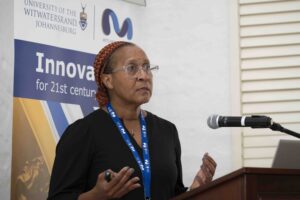
PwC Associate Director for Mining Transformation Ian Mackay said AI should be viewed as a way to strengthen human capabilities rather than reduce workforce numbers. Industry leaders interviewed for the report also stressed that AI is intended to improve business performance instead of serving as a cost-cutting measure.
Leadership Must Drive Digital Transformation
PwC noted that successful AI implementation begins with strong leadership. The report found that almost half of mining CEOs rated their organisations’ AI strategies as only average, while fewer than one-quarter believed their companies had well-defined AI strategies aligned with business objectives.
The findings mirror broader trends across Africa, where many organisations are still developing comprehensive AI roadmaps and governance frameworks.
The report argues that digital transformation cannot be delegated solely to information technology departments and must instead be driven by executive leadership with clear business objectives.
Weak Data Management Limits AI Benefits
Data quality remains another significant obstacle.
More than 85% of respondents rated their organisations’ data management capabilities as average or poor, limiting their ability to generate reliable real-time insights needed for AI-driven decision-making.
PwC warned that AI initiatives are unlikely to deliver meaningful results unless mining companies first strengthen their data governance, improve data quality and ensure information is accessible to decision-makers.
Executives interviewed during the study also highlighted the importance of turning raw operational data into actionable business intelligence rather than simply collecting larger volumes of information.
Mining Companies Taking a Cautious Approach
Despite growing global interest in AI, many South African mining companies are adopting a cautious strategy.
Rather than investing in large-scale digital transformation projects, most operators are evaluating smaller, practical AI applications that deliver measurable operational value before expanding implementation.
This cautious approach contrasts with broader industry expectations that AI technologies such as predictive maintenance, autonomous equipment, digital twins and AI-powered exploration will become increasingly important in improving mining productivity, safety and operational efficiency.
Building the Foundation for Future Growth
PwC concluded that South Africa’s mining industry stands at a critical stage in its digital transformation journey.
The report recommends increased investment in digital skills development, stronger data governance, improved change management and executive leadership to unlock the full value of AI.
As mining companies continue to modernise operations, those that successfully combine skilled employees, quality data and strategic leadership will be better positioned to improve productivity, strengthen safety and remain competitive in an increasingly technology-driven global mining industry.
Share this content: